

Commentary
Israeli-Lebanese talks have stalled, and the reason is that the United States and Israel want to impose normalization.
Michael Young
{
  "authors": [
    "Ashley J. Tellis"
  ],
  "type": "legacyinthemedia",
  "centerAffiliationAll": "",
  "centers": [
    "Carnegie Endowment for International Peace"
  ],
  "collections": [],
  "englishNewsletterAll": "",
  "nonEnglishNewsletterAll": "",
  "primaryCenter": "Carnegie Endowment for International Peace",
  "programAffiliation": "",
  "programs": [
    "Asia"
  ],
  "projects": [],
  "regions": [
    "North America",
    "United States",
    "East Asia",
    "China",
    "Taiwan"
  ],
  "topics": [
    "Security",
    "Military",
    "Foreign Policy"
  ]
}
China's recent antisatellite test was not a protest against U.S. space policy, but rather, was part of a loftier strategy to combat U.S. military superiority and one that China will not trade away in any arms-control regime.
Source: Survival

Far from a response to assertive U.S. space policies, Tellis contends in "China's Military Space Strategy" that the ASAT test was part of a more ambitious goal--namely, defeating superior U.S. conventional forces, both in a potential war over Taiwan, as well as other long-term, geopolitical scenarios. The author states that Chinese analyses of U.S. military operations since Desert Storm concluded that U.S. military might depends inordinately on space-based systems for its operational effectiveness and hence must be targeted if China is to be able to stand up to the enormity of U.S. conventional military power.
In February 2008, Survival invited a group of scholars to respond to Tellis' article. See "China's Military Space Strategy: An Exchange" in the right sidebar for more.
Carnegie does not take institutional positions on public policy issues; the views represented herein are those of the author(s) and do not necessarily reflect the views of Carnegie, its staff, or its trustees.

Israeli-Lebanese talks have stalled, and the reason is that the United States and Israel want to impose normalization.

Michael Young

Baku may allow radical nationalists to publicly discuss “reunification” with Azeri Iranians, but the president and key officials prefer not to comment publicly on the protests in Iran.

Bashir Kitachaev

The country’s leadership is increasingly uneasy about multiple challenges from the Levant to the South Caucasus.

Armenak Tokmajyan
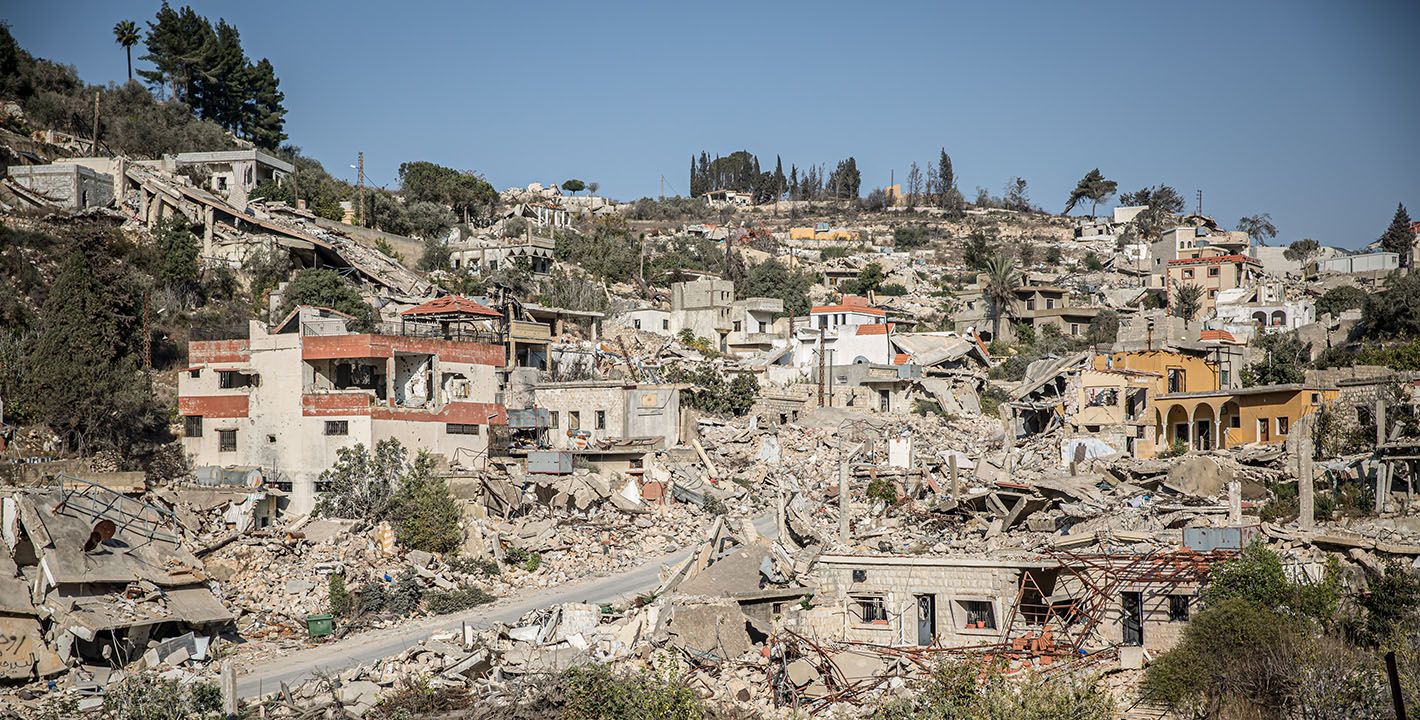
The U.S. is trying to force Lebanon and Syria to normalize with Israel, but neither country sees an advantage in this.
Michael Young

The countries of the region have engaged in sustained competition that has tested their capacities and limitations, while resisting domination by rivals. Can a more stable order emerge from this maelstrom, and what would it require?


Hamza Meddeb, Mohamed Ali Adraoui