• Research
  • Emissary
  • About
  • Experts
Carnegie Global logoCarnegie lettermark logo
Democracy
  • Donate
{
  "authors": [
    "Alexander Gabuev",
    "Polina Ivanova",
    "Henry Foy"
  ],
  "type": "commentary",
  "centerAffiliationAll": "",
  "centers": [
    "Carnegie Endowment for International Peace",
    "Carnegie Russia Eurasia Center"
  ],
  "collections": [
    "Coronavirus"
  ],
  "englishNewsletterAll": "",
  "nonEnglishNewsletterAll": "",
  "primaryCenter": "Carnegie Endowment for International Peace",
  "programAffiliation": "",
  "programs": [],
  "projects": [],
  "regions": [],
  "topics": []
}
Commentary

Podcast: Has Russia’s COVID Vaccine Gotten Lost In Politics?

This episode looks at the domestic and international reception of Russia’s Sputnik V vaccine.

Link Copied
By Alexander Gabuev, Polina Ivanova, Henry Foy
Published on Mar 30, 2021

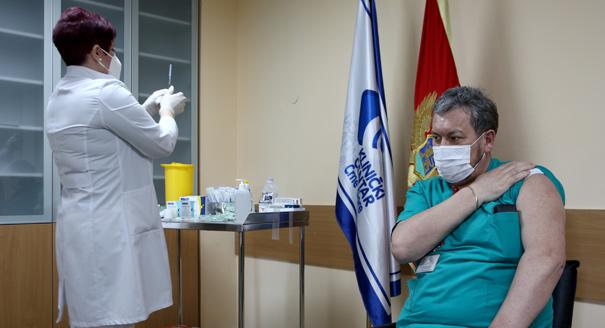
Is Russia’s Sputnik V coronavirus vaccine as successful as the Kremlin claims? Are political considerations really preventing it from getting approval in Western countries? Why is the vaccination rate so low in Russia, and why didn’t Putin get vaccinated sooner? Podcast host Alex Gabuev is joined by Henry Foy, Moscow bureau chief of the Financial Times; and Polina Ivanova, a special correspondent for Reuters in Moscow.

Listen or download: SoundCloud | Subscribe: iTunes, Google Podcasts, Google Play, Spotify, RSS

Authors

Alexander Gabuev
Director, Carnegie Russia Eurasia Center
Alexander Gabuev
Polina Ivanova
Foreign correspondent for the Financial Times
Polina Ivanova
Henry Foy

Carnegie does not take institutional positions on public policy issues; the views represented herein are those of the author(s) and do not necessarily reflect the views of Carnegie, its staff, or its trustees.

More Work from Carnegie Endowment for International Peace

  • Commentary
    Russia’s Response to Its Spiraling COVID-19 Crisis Is Too Little, Too Late

    As Russia weathers a fourth surge of COVID-19 cases, the country’s management of the public health challenge has yet to improve. What factors led the country here, and what does this mean for the Putin regime and the Russian people going forward?

      Paul Stronski

  • Paper
    Civil Society and the Global Pandemic: Building Back Different?

    Civil society groups are simultaneously responding to the pandemic’s direct impacts and looking to a post-pandemic future. Many economic, political, and geostrategic challenges are shaping their thinking and their strategies.

      Carnegie Civic Research Network

  • Commentary
    Is There Any COVID-19 Vaccine Production in Africa?

    Efforts are being made to ramp up production of COVID-19 vaccines in Africa to address the continent’s low rate of vaccination. As of September 2021, there are at least twelve COVID-19 production facilities set up or in the pipeline across six African countries.

      Zainab Usman, Juliette Ovadia

  • Commentary
    How the Global Vaccine Divide Is Fueling Indonesia’s Coronavirus Catastrophe

    As Indonesia reels under staggering rates of COVID-19, an ambitious mass inoculation drive offers hope. But limited access to effective vaccines is trapping the Asian giant in an impossible choice between saving lives and livelihoods.

      Sana Jaffrey

  • Commentary
    Russia’s Vaccine Diplomacy Is Mostly Smoke and Mirrors

    Russian scientists rolled out the country’s COVID-19 vaccine last summer, beating Western vaccine producers to the finish line. But scarce data, broken promises, and corruption have led the vaccine to lose its luster.

      Grace Kier, Paul Stronski

Get more news and analysis from
Carnegie Endowment for International Peace
Carnegie global logo, stacked
1779 Massachusetts Avenue NWWashington, DC, 20036-2103Phone: 202 483 7600Fax: 202 483 1840
  • Research
  • Emissary
  • About
  • Experts
  • Donate
  • Programs
  • Events
  • Blogs
  • Podcasts
  • Contact
  • Annual Reports
  • Careers
  • Privacy
  • For Media
  • Government Resources
Get more news and analysis from
Carnegie Endowment for International Peace
© 2026 Carnegie Endowment for International Peace. All rights reserved.