

In The Media
Martha Brill Olcott
{
  "authors": [
    "Martha Brill Olcott"
  ],
  "type": "legacyinthemedia",
  "centerAffiliationAll": "dc",
  "centers": [
    "Carnegie Endowment for International Peace"
  ],
  "collections": [],
  "englishNewsletterAll": "ctw",
  "nonEnglishNewsletterAll": "",
  "primaryCenter": "Carnegie Endowment for International Peace",
  "programAffiliation": "russia",
  "programs": [
    "Russia and Eurasia"
  ],
  "projects": [],
  "regions": [
    "Central Asia"
  ],
  "topics": [
    "Security",
    "Foreign Policy"
  ]
}
REQUIRED IMAGE
Source: Carnegie
While U.S policymakers are busy putting down insurrections in Iraq and coping with growing unrest in Afghanistan, the regime of War on Terror ally, Islam Karimov is unraveling unnoticed in Uzbekistan.
A week of recent bombings, blamed on local new Uzbek recruits with loose ties to the Islamic Movement of Uzbekistan (IMU) and their al-Qaeda allies, comes just when Uzbekistan's western allies have lost patience with that country's refusal to reform.
After years of Tashkent's doing little to legalize participation of opposition groups and its pursuit of an economic policy which has limited competition rather than liberalized the market, last week the European Bank for Reconstruction and Development (EBRD) announced that it would cut assistance to Uzbekistan and refocus its programs to aid the population rather than the government. This at a time when U.S. policy-makers are deliberating cutting off all aid to Uzbekistan's government as well, for failure to make progress in the area of human rights.
Such actions are several years too late. The new EBRD strategy and threatened U.S. actions assume that the force-based regime of Islam Karimov will withstand violent attack, or that public pressure can be harnessed to move society in the direction of a secular democracy.
We have guessed wrong with Uzbekistan once before.
Washington was under little illusion as to the nature of the Karimov regime when they decided to open an air base near the Uzbek-Afghan border. But they believed that prodding and modest increases in assistance would prompt the Uzbeks to engage in political and economic reform, and if they did not Karimov's hold on power was secure enough to last until the situation in Afghanistan was stabilized and the War on Terror's major goals achieved.
Now U.S. and European policy-makers are using smaller sums of money as "bait" to try and influence Uzbek behavior. And, while things are quiet in Tashkent, we should not be lulled into a false sense of security.
The economic "reform" policy pursued by the Karimov regime has yielded new hardships, with negotiable currency becoming scarcer, consumer prices higher, and trade more restricted.
Today, Uzbekistan is a fertile field for those peddling extremist religious
ideologies, be they violent like the IMU, or peaceful like Hezb'ut Tahrir. With
increasing numbers of people living in poverty in this resource rich state,
many see the corrupt policies of their secular rulers as the cause, rulers who
demonstrated their contempt for Islam first by serving atheistic communist masters,
and now by allying with the Americans.
While the majority of Uzbeks reject the calls for the establishment of a Caliphate
that both groups advocate and have no interest in living in an Islamic state,
there is no effective secular opposition in the country. In the current restrictive
political environment even increased western funding to secular opposition groups
can have little effect in the short-run.
While President Islam Karimov is scheduled to remain in office until 2007, rumors
of his ill-health are rife, as are speculations that he will try to orchestrate
his political succession well before that. Opaque societies like Uzbekistan
are very difficult to read, but personnel changes in recent months suggest that
key political clans are vying for control, and will use all the tools at their
disposal, including those of the country's multiple security forces to gain
political advantage.
Terrorist attacks play into the hands of those groups within Uzbekistan's political elite that are against political reform, but so do the policy changes threatened by the U.S. and introduced by the EBRD, which will further isolate pro-reform elements within the Uzbek establishment.
It is easy to argue that ousting dictators makes way for democrats. But as
we are learning the hard way in Iraq and Afghanistan, absent strong popular
support, the process of democratic political institution building is extremely
difficult, even when large sums of money are available to work with.
Obviously every nation is different, but smooth transitions, like we saw in
Georgia are extremely rare, where corrupt elections fueled a popular protest,
and ousted President Eduard Shevernadze's successor Mihail Saakashvili was quickly
confirmed through popular election.
This is not a time to spend less money in Uzbekistan, but rather to offer the possibility of more. Cutting off foreign assistance to the Uzbek government can have no positive consequences unless it is coupled with far greater incentives for good performance. Otherwise we risk that pro-reform elements within Uzbekistan's political establishment will be further marginalized along with the pro-democracy opposition.
A policy of disengagement with the current Uzbek regime could turn out to have unintended consequences. Rather than leading to the development of a democratic society it could help create a power vacuum that chaos rushes in to fill.
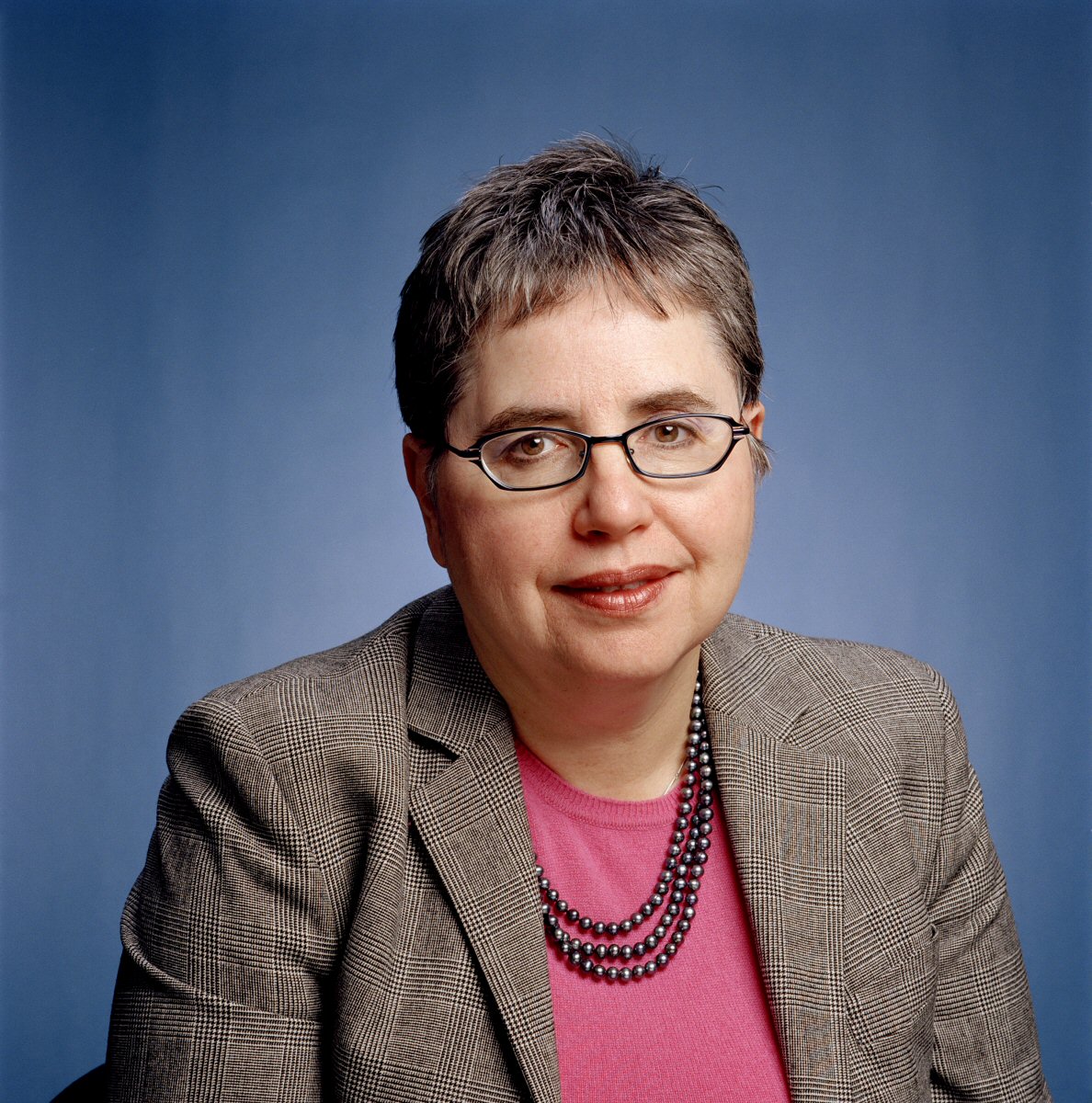
Former Senior Associate, Russia and Eurasia Program and, Co-director, al-Farabi Carnegie Program on Central Asia
Olcott is professor emerita at Colgate University, having taught political science there from 1974 to 2002. Prior to her work at the endowment, Olcott served as a special consultant to former secretary of state Lawrence Eagleburger.
Recent Work
Martha Brill Olcott
Martha Brill Olcott
Carnegie does not take institutional positions on public policy issues; the views represented herein are those of the author(s) and do not necessarily reflect the views of Carnegie, its staff, or its trustees.

European Commission President Ursula von der Leyen is about to give her annual address on the state of the EU. Here’s what she won’t—but should—say.

Rym Momtaz

The aftermath of the Ceuta crisis shows Europe has drawn the wrong lessons. Rather than doubling down on failed migration policies, the EU needs to address the underlying roots of such episodes.

Richard Youngs

Canadian Prime Minister Mark Carney has twice inspired praise for standing up to U.S. President Donald Trump: at the 2026 World Economic Forum in Davos and on Canada-U.S. trade negotiations. Is Carney showing a third way better than the EU has in dealing with the Trump administration?
Rym Momtaz, ed.

The EU’s responses to two recent incidents expose the gulf between European perceptions and capabilities. Unless the union can bridge that gap, it will never become a real geostrategic power.
Rym Momtaz

European states control several Overseas Countries and Territories around the world that carry strategic, economic, and environmental weight. As great powers challenge the rules-based order, defending them is a geopolitical imperative for Europe.

Marc Pierini