

In The Media
Michele Dunne, Robert Kagan
{
  "authors": [
    "Robert Kagan"
  ],
  "type": "legacyinthemedia",
  "centerAffiliationAll": "",
  "centers": [
    "Carnegie Endowment for International Peace"
  ],
  "collections": [],
  "englishNewsletterAll": "",
  "nonEnglishNewsletterAll": "",
  "primaryCenter": "Carnegie Endowment for International Peace",
  "programAffiliation": "",
  "programs": [],
  "projects": [],
  "regions": [],
  "topics": [
    "Foreign Policy"
  ]
}
REQUIRED IMAGE
Source: Carnegie
A World of Problems...
Reprinted from The Washington Post, April 10, 2000
Call me crazy, but I think it actually would serve the national interest if George W. Bush spent more time talking about foreign policy in this campaign. Not to slight the importance of his statements on the environment and the census. But perhaps Bush and his advisers can find time to pose a simple, Reaganesque question: Is the world a safer place than it was eight years ago?
A hundred bucks says even James Carville can't answer that question in the affirmative--at least not with a straight face. A brief tour d'horizon shows why.
Iraq. As the administration enters its final months, Saddam Hussein is alive and well in Baghdad, pursuing his quest for weapons of mass destruction, free from outside inspection and getting wealthier by the day through oil sales while the sanctions regime against him crumbles. The next president may see his term dominated by the specter of Saddam Redux.
The Balkans. You can debate whether things are getting better in Bosnia, or whether Kosovo is on its way to recovery or to disaster. And Clinton deserves credit for intervening in both crises. But Slobodan Milosevic is still in power in Belgrade, still stirring the pot in Kosovo and is on the verge of starting his fifth Balkan war in Montenegro. Milosevic was George Bush Sr.'s gift to Bill Clinton; he will be Clinton's gift to Al Gore or George Jr.
China-Taiwan. Even Sinologists sympathetic to the Clinton administration's policies think the odds of military conflict across the Taiwan Strait have increased dramatically. Meanwhile, the administration's own State Department acknowledges the steady deterioration of Beijing's human rights record. Good luck to Al Gore if he tries to call China policy a success.
Weapons proliferation. Two years after India and Pakistan exploded nuclear devices, their struggle over Kashmir remains the likeliest spark for the 21st century's first nuclear confrontation. If this is the signal failure of the Clinton administration's nonproliferation policies, North Korea's and Iran's weapons programs come in a close second and third. Even the administration's intelligence experts admit that the threat to the United States has grown much faster than Clinton and Gore anticipated. And where is the missile defense system to protect Americans in this frightening new era?
Haiti and Colombia. After nobly intervening in Haiti to restore a democratically elected president in 1994, the administration has frittered away the past 5 1/2 years. Political assassinations in Haiti are rife. Prospects for stability are bleak. Meanwhile, the war in Colombia rages, and even a billion-dollar aid program may not prevent a victory by narco-guerrillas. When the next president has to send troops to fight in Colombia or to restore order in Haiti, again, he'll know whom to thank.
Russia. Even optimists don't deny that the election of Vladimir Putin could be an ominous development. The devastation in Chechnya has revealed the new regime's penchant for brutality.
Add to all this the decline of the armed forces--even the Joint Chiefs complain that the defense budget is tens of billions of dollars short--and you come up with a story of failure and neglect. Sure, there have been some successes: NATO expansion and, maybe, a peace deal in Northern Ireland. Before November, Clinton could pull a rabbit out of the hat in the Middle East. But Jimmy Carter had successes, too. They did not save him from being painted as an ineffectual world leader in the 1980 campaign.
Bush may be gun-shy about playing up foreign policy after tussling with John McCain in the primaries. But Gore is no McCain. He is nimble on health care and education, but he is clumsy on foreign policy. Bush may not be a foreign policy maven, but he's got some facts on his side, as well as some heavy hitters. Colin Powell, Dick Cheney, George Shultz and Richard Lugar, instead of whispering in W.'s ear, could get out in public and help build the case. John McCain could pitch in, too.
The offensive can't start soon enough. The administration has been adept at keeping the American people in a complacent torpor: Raising the national consciousness about the sorry state of the world will take time. And if Bush simply waits for the next crisis before speaking out, he will look like a drive-by shooter. Bush also would do himself, his party and the country a favor if he stopped talking about pulling U.S. troops out of the Balkans and elsewhere. Aside from such talk being music to Milosevic's ears, Republicans in Congress have been singing that neo-isolationist tune for years, and the only result has been to make Clinton and Gore look like Harry Truman and Dean Acheson.
Some may say it's inappropriate to "politicize" foreign policy. Please. Americans haven't witnessed a serious presidential debate about foreign policy since the end of the Cold War. Bush would do everyone a service by starting such a debate now. He might even do himself some good. Foreign policy won't be the biggest issue in the campaign, but in a tight race, if someone bothers to wake the people up to the world's growing dangers, they might actually decide that they care.
Former Senior Associate
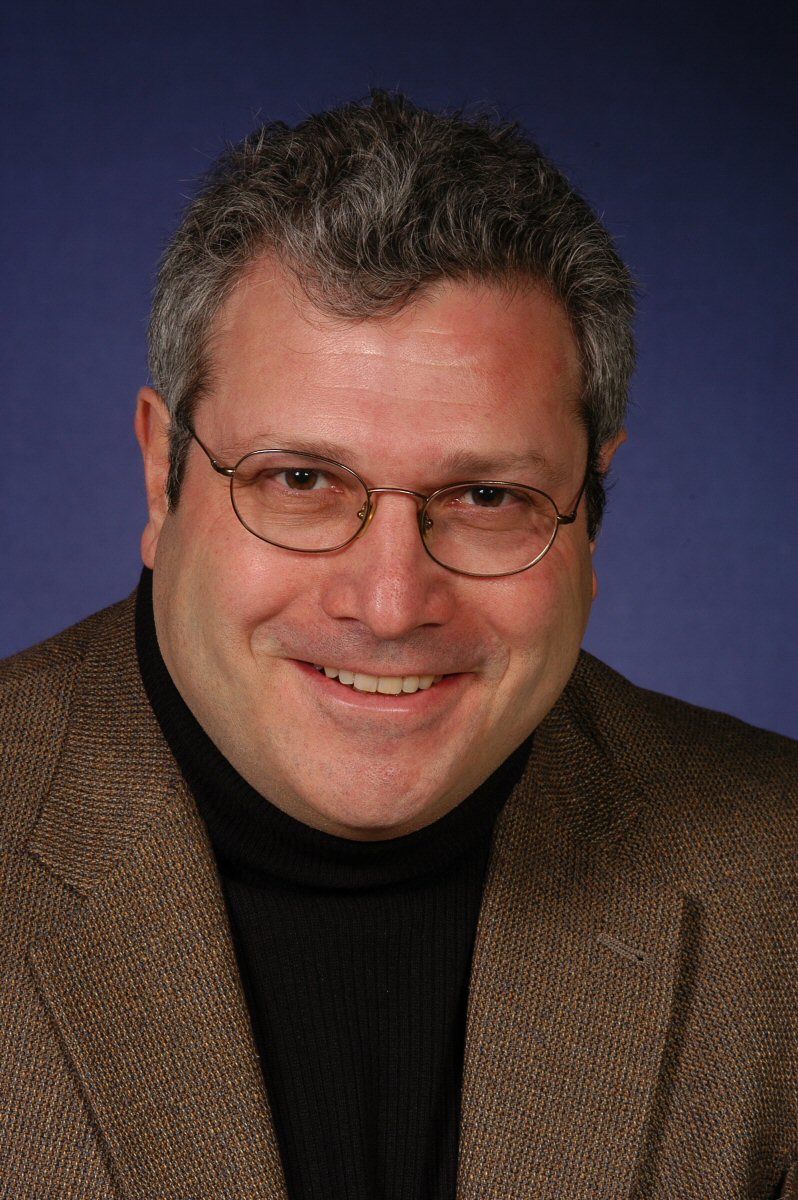
Kagan, author of the recent book, The Return of History and the End of Dreams (Knopf 2008), writes a monthly column on world affairs for the Washington Post and is a contributing editor at both the Weekly Standard and the New Republic.
Recent Work

Michele Dunne, Robert Kagan
Robert Kagan, Michele Dunne
Carnegie does not take institutional positions on public policy issues; the views represented herein are those of the author(s) and do not necessarily reflect the views of Carnegie, its staff, or its trustees.

Funding Ukraine remains a priority for European leaders. As Russia’s war of aggression heads into another winter, two feasible options to mobilize support for Kyiv should be fast-tracked.


Vladyslav Rashkovan, Gregory P. Wilson

While the EU and European governments are embracing the much-lauded middle-power moment, this entails three difficult conundrums.

Richard Youngs

Much has been said of the changes Brussels is trying to make to the EU enlargement process. Here’s why gradual integration might—or might not—be the answer.

Dimitar Bechev

The European Commissioner for Trade is headed to China. But after President Xi’s bridge-building visit to Washington, can a more isolated EU overcome Beijing’s stranglehold on critical raw materials? Who will blink first?

Rym Momtaz, ed.
European NATO countries are wrestling with the possibility of U.S. disengagement from the alliance. With the continent’s security increasingly uncertain, governments must restore the credibility of their collective defense.



Hans-Dieter Lucas, Adam Thomson, Pierre Vimont