


Commentary
Are Germany’s economic, industrial, and political struggles becoming a liability for the EU’s ability to rise to the geopolitical moment?
Rym Momtaz, ed.
{
  "authors": [],
  "type": "other",
  "centerAffiliationAll": "",
  "centers": [
    "Carnegie Endowment for International Peace"
  ],
  "collections": [],
  "englishNewsletterAll": "",
  "nonEnglishNewsletterAll": "",
  "primaryCenter": "Carnegie Endowment for International Peace",
  "programAffiliation": "",
  "programs": [],
  "projects": [],
  "regions": [
    "Central Asia"
  ],
  "topics": [
    "Security",
    "Nuclear Policy"
  ]
}
REQUIRED IMAGE
Source: Carnegie
Crisis Links
Below, we offer a wide-ranging and frequently updated list of publications and web resources on terrorism and related subjects. To add a resource for the list, please e-mail pubs@ceip.org.
• List
of Carnegie Experts
• Recent
Carnegie Publications and Events
• Map of Afghanistan
• Web Resources on Terrorism and Security Issues
• Web Resources on Islam
• Web Resources on Afghanistan and the Region
• Reading List
• Other Carnegie Resources

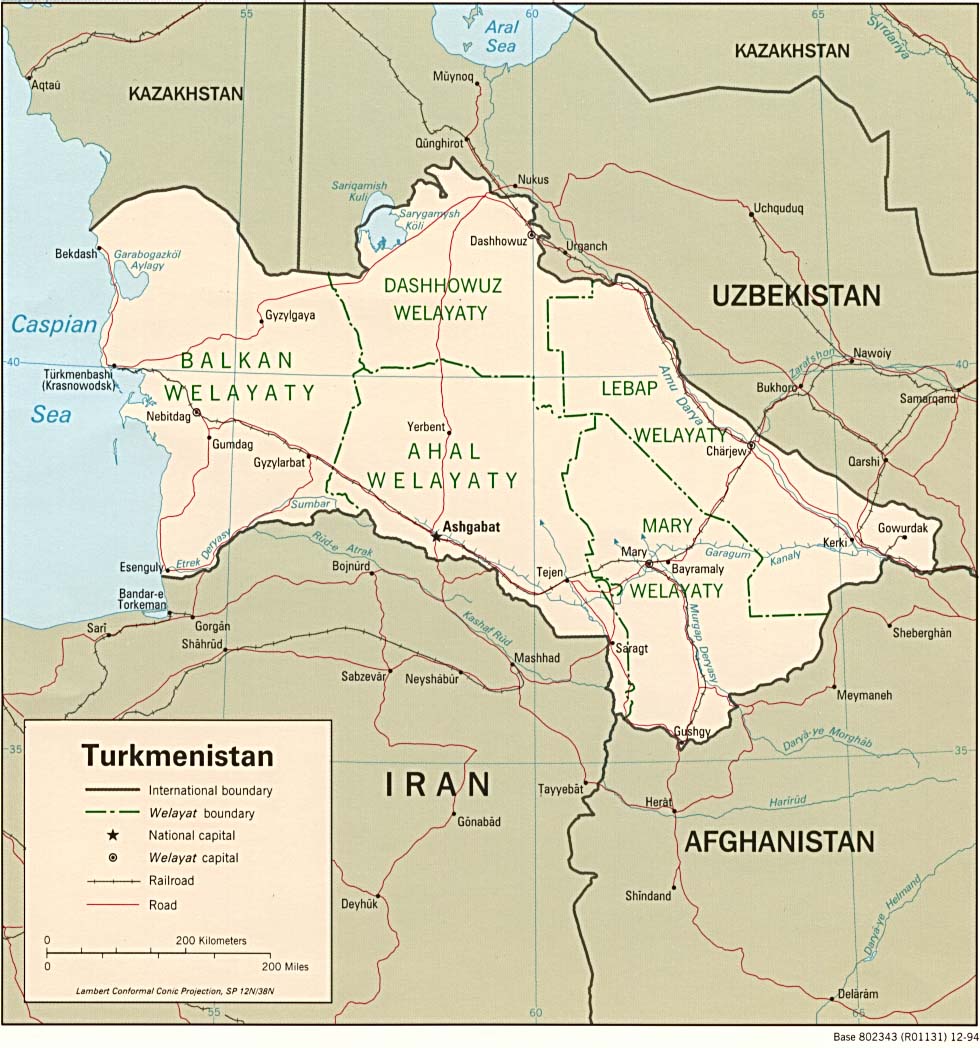
More maps: Pakistan, Turkmenistan, Iran, Tajikistan,
Web Resources on Terrorism and Security Issues
Non-Proliferation Project of the Carnegie Endowment - Terrorism Resources: Scroll down from top for full list. Sample entries:
• GAO
Testimony: Bioterrorism: Review of Public Health Preparedness Programs,
Janet Heinrich, Director, Health Care & Public Health Issues, House Subcommittee
on Oversight and Investigations, 10 October 2001 (pdf format, requires Adobe
Acrobat Reader)
• France,
the United States and the War on Terrorism, Philip Gordon, Brookings Institution
Audio clips from Foreign Policy magazine interview with four former military leaders
Country resources from the Carnegie Non-Proliferation Project: Tracks the weapons of mass destruction (WMD) programs from China, Iran, Iraq, South Asia, Korean Peninsula, Israel, Russia
Nuclear Numbers
from the Carnegie Non-Proliferation Project: Most recent information about
the composition of global nuclear weapons stockpiles.
SOLDIERS BEFORE MISSILES: MEETING THE CHALLENGE FROM THE WORLD'S STREETS. Anatol Lieven. Carnegie Endowment Policy Brief, 2001
PATTERNS OF GLOBAL TERRORISM. US Dept. of State, April 2001
State Department Office of the Coordinator for Counter-Terrorism
USIP links to Terrorism/Counter-Terrorism web sites
Countering the Changing Threat of International Terrorism by the National Commission on Terrorism. updated August 2000
Harvard Resources on Terrorism
Academic Info Afghanistan Studies
American Association of University Presses (AAUP): Bibliography of books related to crisis from university presses
ISLAM IN THE POST-SOVIET NEWLY INDEPENDENT STATES: Ed. by Alexei Malashenko and Martha Brill Olcott. The publication is in Russian. The link offers the English-language conclusion and contents.
Introduction to Islam by Professor M. Cherif Bassiouni, from the Middle East Institute web site
Columbia University Middle East Studies Islam Resources
Stanford Unviersity Resources on Islam
Council on American-Islamic Relations
Islamicity, a global muslim ecommunity
Web Resources on Afghanistan and the Region
Carnegie Non-Proliferation Project: Pakistan nuclear numbers
REVISITING THE 12 MYTHS OF CENTRAL ASIA. Martha Brill Olcott. Carnegie Endowment, 2001
DRUG TRAFFICKING ON THE GREAT SILK ROAD: THE SECURITY ENVIRONMENT IN CENTRAL ASIA. Martha Brill Olcott. Carnegie Endowment, 2000.
POLITICS AT THE HEART: THE ARCHITECTURE OF HUMANITARIAN ASSISTANCE TO AFGHANISTAN. Paula R. Newberg. Carnegie Endowment, 1999.
Afghanistan Overview from CIA World Fact Book
Pakistan Overview from CIA World Fact Book
USAMA BIN LADEN'S AL-QAIDA: PROFILE OF A TERRORIST NETWORK. Yonah Alexander and Michael S. Swetnam. Transnational Publishers, 2001.
THE NEW JACKELS: RAMZI YOUSEF, OSAMA BIN LADEN AND THE FUTURE OF TERRORISM. Simon Reeve. Northeastern University Press, 1999.
TALIBAN: MILITANT ISLAM, OIL AND FUNDAMENTALISM IN CENTRAL ASIA. Ahmed Rashid. Yale University Press, 2001.
THE SEARCH FOR PEACE IN AFGHANISTAN: FROM BUFFER STATE TO FAILED STATE. Barnett R. Rubin. Yale University Press, 1995.
UNHOLY WARS: AFGHANISTAN, AMERICA AND INTERNATIONAL TERRORISM. John K. Cooley, Pluto Press, 1999.
THE ULTIMATE TERRORISTS. Jessica Stern. Harvard University Press, 1999.
TERRORISM AND U.S. FOREIGN POLICY. Paul R. Pillar. Brookings Institution Press, 2001.
TOXIC TERROR : ASSESSING TERRORIST USE OF CHEMICAL AND BIOLOGICAL WEAPONS. Jonathan B. Tucker. MIT Press, 2000. (BCSIA studies in international security)
AMERICA'S ACHILLES HEEL: NUCLEAR, BIOLOGICAL, AND CHEMICAL TERRORISM AND COVERT ATTACKS. Richard A. Falkenrath, Robert D. Newman, and Bradley A. Thayer. MIT Press, 1998.
TERRORISM WITH CHEMICAL AND BIOLOGICAL WEAPONS: CALIBRATING RISKS AND RESPONSES. Brad Roberts,ed. Chemical and Biological Arms Control Institute, 1998.
SIX NIGHTMARES : REAL THREATS IN A DANGEROUS WORLD AND HOW AMERICA CAN MEET THEM. Anthony Lake. Little Brown & Co., 2000.
CRYING WOLF? ASSESSING UNCONVENTIONAL TERRORISM. MarianneVan Leeuwen. The Hague: Netherlands Institute of International Relations Clingendael, 2000.
THE FUTURE OF TERRORISM (Political Violence Series). Maxwell Taylor, John Horgan,eds. Frank Cass & Co., 2000.
COUNTERING THE NEW TERRORISM. Ian O. Lesser, Bruce Hoffman, John Arquilla, Michele Zanini, & David Ronfeldt. Rand, 1999.
TERRORISM AND AMERICA : A COMMONSENSE STRATEGY FOR A DEMOCRATIC SOCIETY. Philip B Heymann. MIT Press, 1998. (BCSIA studies in international security).
INSIDE TERRORISM. Bruce Hoffman. Columbia University Press, 1998.
CLOSE CALLS: INTERVENTION, TERRORISM, MISSILE DEFENSE, AND 'JUST WAR' TODAY. Ethics and Public Policy Center, 1998.
CATASTROPHIC TERRORISM : ELEMENTS OF A NATIONAL POLICY. Ashton B Carter, Stanford University &Harvard University, 1998. (Report of Visions of Governance for the Twenty-first Century a project of the John F. Kennedy School of Government Harvard University.)
BIN LADEN: THE MAN WHO DECLARED WAR ON AMERICA. Yossef Bodansky. Prima Publishing, 2001.
ISLAM AND THE WEST. Bernard Lewis. Oxford University Press, 1994.
THE MIDDLE EAST: A BRIEF HISTORY OF THE LAST 2,000 YEARS. Bernard Lewis. Touchstone Books, 1997.
GERMS: BIOLOGICAL, WEAPONS AND AMERICA'S SECRET WAR. Judith Miller, Stephen Engelberg and William J. Broad. Simon & Schuster, 2001
FROM BEIRUT TO JERUSALEM. Thomas Friedman. Anchor Books, 1990.
THE DREAM PALACE OF THE ARABS. Fouad Ajami. Vintage Books, 1999.
JIHAD VS McWORLD: HOW GLOBALISM AND TRIBALISM ARE RESHAPING THE WORLD. Benjamin Barber. Ballantine Books, 1996
US Government Resources
US GOVERNMENT POLICIES AND PROGRAMS TO COMBAT TERRORISM. Hearing before the Committee on Armed Services, United States Senate, One Hundred Sixth Congress, first session, March 9, 1999 / United States. Congress. Senate. Committee on Armed Services. -- Washington : US G.P.O. : For sale by the US GPO, Supt. of Docs., Congressional Sales Office, 2000.
INTERNATIONAL TERRORISM : A COMPILATION OF MAJOR LAWS, TREATIES, AGREEMENTS, AND EXECUTIVE DOCUMENTS. report / United States. -- Washington : US GPO : For sale by the US GPO, Supt. of Docs., Congressional Sales Office, July 2000. TERRORISM AND INTELLIGENCE OPERATIONS : hearing before the Joint Economic Committee, Congress of the United States, One Hundred Fifth Congress, second session, May 20, 1998 / United States. Congress. Joint Economic Committee. -- Washington : US GPO : For sale by the US GPO, Supt. of Docs., Congressional Sales Office, 1998.
Other Carnegie Endowment Resources
Carnegie Library Links for international affairs research
MANAGING GLOBAL ISSUES: LESSONS LEARNED. Read a chapter on crime, illicit markets and money laundering. P.J. Simmons and Chantal de Jonge Oudraat, editors. Carnegie Endowment, October, 2001.
SECRETS FOR SALE: HOW COMMERCIAL SATELLITE IMAGERY WILL CHANGE THE WORLD. Yahya A. Dehqanzada and Ann M. Florini. Carnegie Endowment, 2000.
Carnegie does not take institutional positions on public policy issues; the views represented herein are those of the author(s) and do not necessarily reflect the views of Carnegie, its staff, or its trustees.

Are Germany’s economic, industrial, and political struggles becoming a liability for the EU’s ability to rise to the geopolitical moment?

Rym Momtaz, ed.

European states control several Overseas Countries and Territories around the world that carry strategic, economic, and environmental weight. As great powers challenge the rules-based order, defending them is a geopolitical imperative for Europe.

Marc Pierini

Mounting economic strain and battlefield losses will not necessarily make the Kremlin less dangerous. They could instead push Moscow toward a more aggressive hybrid campaign designed to test NATO’s Eastern flank, exploit allied hesitation, and fracture European resolve.

Maksym Beznosiuk

Over the past ten years, NATO has held almost as many summits as it did during the entirety of the Cold War. Are they still useful, or is it time to stop holding annual meetings?
Rym Momtaz, ed.
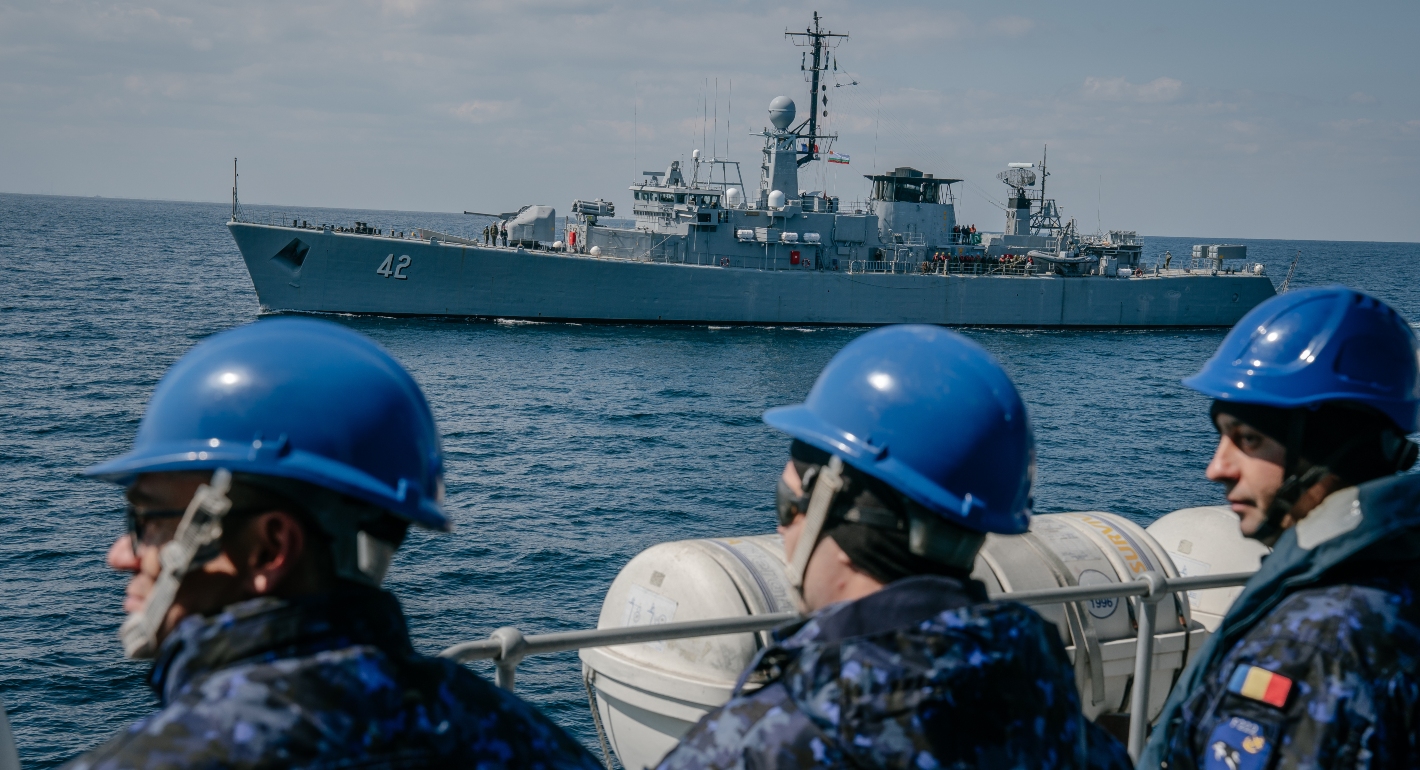
As Russia's war on Ukraine drags on, NATO is expanding its footprint in the Black Sea. Turkey, Romania, and Bulgaria are upgrading their fleets and deepening trilateral cooperation.

Dimitar Bechev