

Commentary
Rym Momtaz, ed.
{
  "authors": [
    "Rym Momtaz"
  ],
  "type": "commentary",
  "blog": "Strategic Europe",
  "centerAffiliationAll": "",
  "centers": [
    "Carnegie Endowment for International Peace",
    "Carnegie Europe"
  ],
  "englishNewsletterAll": "",
  "nonEnglishNewsletterAll": "",
  "primaryCenter": "Carnegie Europe",
  "programAffiliation": "",
  "regions": [
    "Europe",
    "United States",
    "Türkiye",
    "Ukraine"
  ],
  "topics": [
    "EU",
    "Foreign Policy",
    "NATO",
    "Security"
  ]
}

Source: Getty
Over the past ten years, NATO has held almost as many summits as it did during the entirety of the Cold War. Are they still useful, or is it time to stop holding annual meetings?
Director, Europe, Russia, and Eurasia Program, Center for Strategic and International Studies (CSIS)
I was firmly of the view that NATO needed a break from its summits. Yet, the outcomes at Ankara changed my mind. There were genuine breakthroughs of European cooperation on defense procurement and in areas critical to reducing dependence on the United States. The summit provided a forcing function to get these agreements done. That said, there is no need to have another meeting with U.S. President Donald Trump, with all the potential pitfalls that brings and the oxygen he absorbs. So, with war still raging in Europe, the continent’s leaders should have a defense summit next year—but there is no need for the U.S. president to attend.
Senior Program Manager, GLOBSEC
A lot has been said about the outcomes of the discussions, the length and content of the declaration, and the statements of President Trump at the Ankara NATO summit—yet the meeting proved its own undeniable value. In little over forty-eight hours, we secured a massive €70 billion ($80 billion) military assistance package for Ukraine, over €50 billion ($57 billion) in defense procurement contracts alongside a new drone edge initiative worth $40 billion ($46 billion), as well as a historic €27 billion ($31 billion) overhaul of the alliance’s eastern fuel supply chain.
These crucial breakthroughs show why a yearly rhythm is a strategic necessity. In an era of rapid hybrid warfare and unpredictably shifting global politics, a reactive alliance is a vulnerable one: We simply cannot wait two or three years to convene leaders and take these decisions.
Undoubtedly, the annual summit serves as an inescapable forcing mechanism, dragging world leaders away from their domestic distractions and internal electoral politics, and forcing them to explain how they are contributing to the collective defense of the alliance. In addition to the deterrence value of showing a strong and united front, face-to-face accountability is what compels immediate compromise, proving that keeping these summits annual is the only way to ensure our deterrence remains as dynamic as the threats we face.
Assistant Professor, Centre for Security, Diplomacy, and Strategy (CSDS) and Nonresident Senior Fellow, Real Instituto Elcano
Could this meeting have been an email? There may actually be many NATO leaders who wish the alliance’s summits could be dealt with by email—at least that might help suppress the theatrics and shocks of recent meetings.
Yet, the truth is, these gatherings are arguably the only moment in a calendar year when the alliance can communicate widely with a broader audience. Most citizens have no interest in the inner workings of the North Atlantic Council, the alliance’s main decisionmaking body, but they do care about the general direction and state of NATO, especially given the threat from Russia. So, if anything, NATO summits do serve the purpose of strategic communication—and what would we do without the intrigue and chance to decipher the body language of political leaders?
More seriously, summits are where allies agree on communiqués or declarations: At Ankara, many were pleased with the language of the final conclusions. However, we all know that aside from the formal agenda, there is always some more essential underlying conundrum to address—think Greenland, think Iran. So, these meetings will perhaps continue to be a common occurrence, although whether the U.S. administration turns up or not is an open question.
Research Fellow, French Institute of International Relations (IFRI)
During the Cold War, only ten summits were held, but from the 1990s onward, the pace increased steadily. A particularly notable acceleration occurred during the first Trump administration, when that increased frequency served to demonstrate NATO’s continued relevance to the United States. Annual summits have since become the norm, including after Russia’s invasion of Ukraine.
However, frequent gatherings leave less time for negotiating and drafting summit documents and place a heavier burden on the smaller delegations, which often lack the personnel to sustain such an intensive pace. Without entering into the current debate around reducing the number of summits purely to avoid potential public disputes between President Trump and the majority of allies, NATO must address the broader paradox of investing significant diplomatic and administrative resources in organizing annual summits to produce, at times, relatively modest outcomes. This was the case at the 2026 meeting in Ankara. It did not produce any decisions typically expected at NATO summits, such as revising the strategic concept or approving an enlargement.
Reducing the number of summits would help resolve this contradiction.
The absence of any reference in the Ankara communiqué to the location of the next summit suggest that NATO itself increasingly recognizes these institutional challenges.
Senior Fellow, Carnegie Europe
No, on the contrary. It is certainly true that not all NATO summits are equally important. Historic ones are few and far between. For instance, the alliance’s strategic concepts are adopted only once a decade. Other transformational decisions, like increases in defense spending, are also infrequent. And yet, the value of holding yearly gatherings lies elsewhere.
The summit remains the only transatlantic forum that brings together the leaders of allied nations to discuss developments related to security and defense. At a time when the American commitment to European security is being reassessed, it is all the more important to continue to hold them. They provide the annual possibility to openly discuss, in a multilateral format, strategic divergences within the transatlantic community.
This conversation is very much needed, as has also been demonstrated by the latest meeting in Ankara, where ultimately—and despite less benign conditions—America’s commitment to the alliance has been reasserted. One could opine that, had there been no summit or any of the accompanying opportunities for bilateral and minilateral meetings, the growing transatlantic rift in strategic visions would have become more difficult to address or possibly even to heal.
Senior Fellow, Council on Foreign Relations
Cancelling the annual NATO summits is a tempting response in times of Trump. If each one becomes a carefully orchestrated show only designed to please the U.S. president, what sense does this ritual still make for the substance of the alliance? Especially if there is always a risk that the president could be in a bad mood and throw NATO overboard altogether?
The reality is that, in the second Trump era, the meetings have one purpose only: to keep Washington in. And they are needed for exactly that reason. As long as Europeans remain unable to defend themselves without the United States, keeping Trump invested justifies any circus. There is no better way to demonstrate the value of NATO to the president than bringing all the allies together in an event for the top leaders, impressing the alliance’s prestige on him. These face-to-face meetings, in their group dynamic, are also important to prevent full alienation between the United States and Europe, as well as for European allies to take stock.
NATO summits are a tool of transatlantic relationship management. Europeans should treat it that way.
Director of Research and Policy, Munich Security Conference
NATO summits still matter. They give the alliance’s diplomatic machinery a deadline, forcing member states to hash out consensus on the issues that matter most. The lengthy negotiations behind summit declarations have long been how the alliance reaches agreement on its biggest questions and develops policies further.
The shift to annual meetings over the past decade made sense: A deteriorating security environment demanded it. NATO had to move fast, and the increased frequency helped.
But is an annual leaders’ summit still the right instrument today? Plenty of urgent work remains, yet gathering heads of state and government every single year carries real risk: It hands allies a stage to air grievances rather than resolve them—and in today’s transatlantic climate, that risk is not hypothetical.
NATO doesn’t need a leaders’ summit to make progress. Strengthening ministerial meetings, conferences of foreign and defense ministers, and regular meetings of the North Atlantic Council could do much of that work instead. That would also be a return to normalcy: A roughly biennial rhythm was the standard before Trump came along, and Cold War-era leaders met far less often still.
Time to go back to that pattern. Focus on the sherpa work, not the summits.
Nonresident Scholar, Carnegie Europe
Summits are instruments, not objectives.
NATO should not do away with its annual summits, but it is struggling to ensure that they are used wisely. The alternatives of having less frequent or no summits would not end the political motivations that have led to their abuse. It would just channel those motivations into other arenas. It is easy to acknowledge the irritation, but the annual gathering, as an instrument, is not responsible for that.
Used wisely, these meetings bring people together, focus attention, coordinate conversations, and manifest a mix of solidarity and determination.
When summits don’t work, irritations continue to accumulate, collaboration looks more like routine, initiatives gain little traction, and the rhetoric of togetherness falls flat. That kind of failure is no disaster: The day-to-day work of the alliance continues in either case. Even an irritated or distracted political leadership cannot subtract from the reality that NATO serves a vital purpose.
The challenge is when politicians use summits to underscore their disdain for the alliance. Even when people come together, there is no catharsis—only more irritation. Finding a way to work together becomes the goal and not the instrument for achieving a common good.
CEO, Geopolitics and Security Studies Center (GSSC)
If leaders need to meet, they should do so as soon as possible. But if there is no pressing strategic purpose, there is little sense in manufacturing an agenda simply because another annual summit is due. NATO summits should be political instruments, not rituals.
Annual meetings made sense after 2022. The alliance had to agree new regional defense plans, bring in new members, and raise spending targets while Europe faced its largest war since the Second World War.
Now, the task is more mundane, but also more complicated: Allies have to deliver. Countries must fill the capability gaps and build their readiness. We do not need a new historic declaration every year for that.
There is another problem. Political emotions, especially the ups and downs of transatlantic relations, can overwhelm the agenda. Summits then become exercises in smoothing over the latest dispute, while concrete deliverables receive less attention.
Still, these meetings have value. They bring the alliance closer to national populations. During the 2023 Vilnius summit, the whole of Lithuania lived and breathed NATO. The Dutch were excellent hosts, Washington marked the alliance’s anniversary, and Turkey made a real effort to ensure that every leader attended.
Subscribe to Strategic Europe, delivered every Tuesday and Thursday!

Editor in Chief, Strategic Europe
Rym Momtaz is the editor in chief of Carnegie Europe’s blog Strategic Europe. A multiple Emmy award-winning journalist-turned-analyst, she specializes in Europe and the Middle East and the interplay between those two spaces.
Recent Work
Rym Momtaz, ed.
Rym Momtaz
Carnegie does not take institutional positions on public policy issues; the views represented herein are those of the author(s) and do not necessarily reflect the views of Carnegie, its staff, or its trustees.
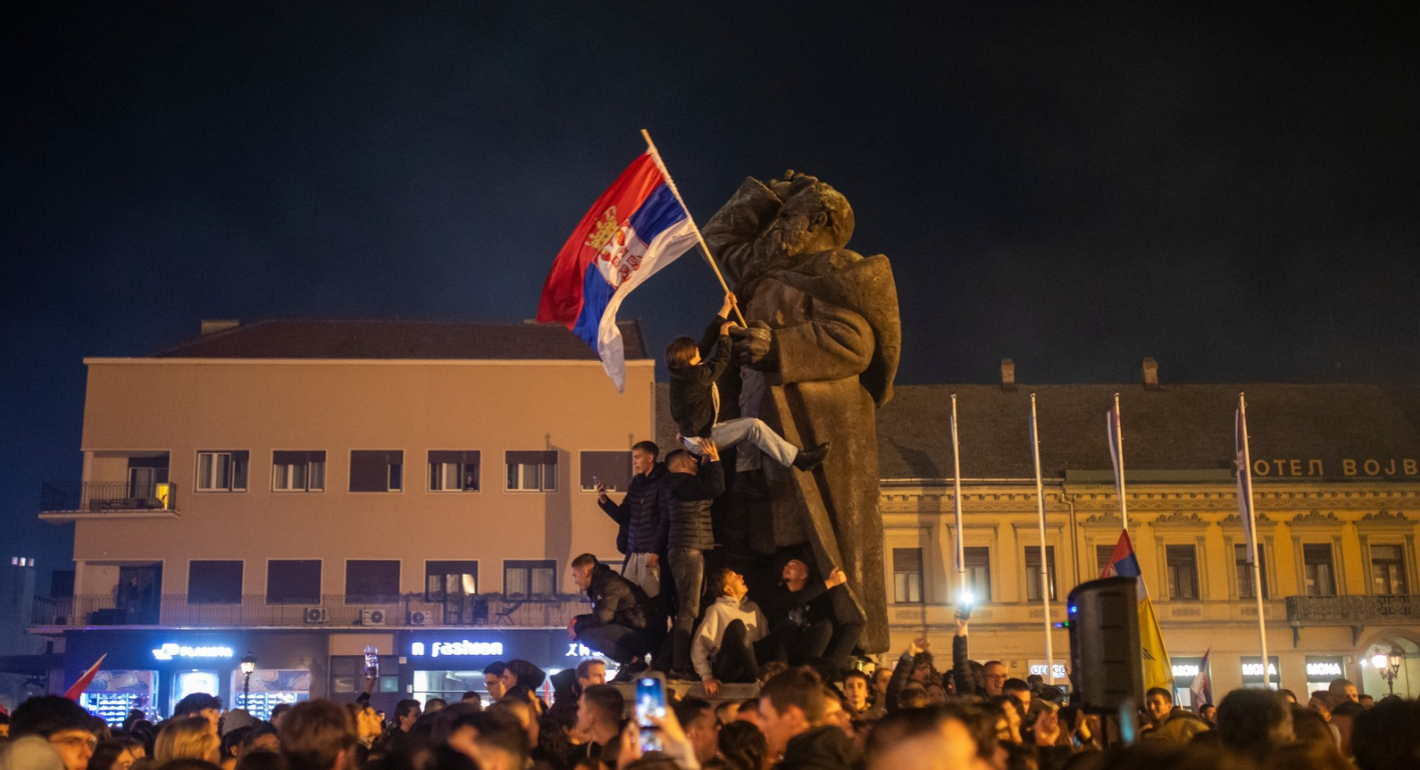
Excitement is in the air following Aleksandar Vučić’s defeat in Serbia. To build a truly democratic state, the movement that unseated the former president must learn from the mistakes of the past.

Ivan Vejvoda

The EU can impose sanctions but struggles to enforce them without the United States. With Washington increasingly disinterested in backing European interests, the bloc must now fend for itself.


Nicu Popescu, Tiago Antunes

Russia is testing the waters of NATO’s mutual defense clause. What do strikes in Romanian territorial waters mean for the alliance’s posture toward Moscow?

Dimitar Bechev

With its public finances in shambles, the far right polling at 35 percent ahead of the 2027 presidential election, and a growing protest movement, is France’s crisis a threat to the EU’s geopolitical awakening?
Rym Momtaz, ed.

Ahead of a tough winter for Ukraine, Donald Trump’s swing back toward Russia bodes ill. But instead of panicking, Kyiv’s European allies are focusing on action.
Rym Momtaz