

In The Media
Michele Dunne, Robert Kagan
{
  "authors": [
    "Robert Kagan"
  ],
  "type": "legacyinthemedia",
  "centerAffiliationAll": "",
  "centers": [
    "Carnegie Endowment for International Peace"
  ],
  "collections": [],
  "englishNewsletterAll": "",
  "nonEnglishNewsletterAll": "",
  "primaryCenter": "Carnegie Endowment for International Peace",
  "programAffiliation": "",
  "programs": [],
  "projects": [],
  "regions": [
    "United States",
    "Iraq"
  ],
  "topics": [
    "Security",
    "Military",
    "Foreign Policy"
  ]
}
REQUIRED IMAGE
Source: Carnegie
Reprinted with permission from the Washington Post, October 3, 2001
The Bush administration's war on terrorism has barely begun. But the war between Secretary of State Colin Powell and Deputy Secretary of Defense Paul Wolfowitz is already a brutal, take-no-prisoners affair -- at least on one side. Over the past two weeks, Powell and his allies have taken a Gatling gun to Wolfowitz in the media. A little over a week ago Powell brusquely rejected Wolfowitz's characterization of administration policy by saying Wolfowitz "can speak for himself." Powell's deputy Richard Armitage has publicly suggested Wolfowitz's views are irrelevant. The press, in turn, has been lapping up the Powell-Armitage spin like mother's milk.
The argument is over strategy and tactics in the war on terrorism. Wolfowitz wants to take a broad approach to the war, emphasizing military action in Afghanistan and the Persian Gulf to unseat the Taliban and, eventually, Saddam Hussein. Powell prefers economic and diplomatic pressure to military force. His focus is on coalition-building, and in that effort he has been willing to reach out to known sponsors of terrorism such as Iran and Syria and even the Taliban.
I happen to agree with Wolfowitz, but it ought to be clear that both sides have a point. You need sound diplomacy and economic pressures to fight terrorism effectively. But you also need to use military power. There is, as Powell says, a danger in trying to do too much. But there is also, as Wolfowitz says, a danger in trying to do too little. And it's always good to have as many allies as possible in any war, as Powell argues. But then there's always the danger that the search for allies, especially those of dubious backgrounds, can hinder effective action, as Wolfowitz argues. All in all, it's a good and legitimate debate for the administration to be having, right?
Well, not according to the American press corps. On the op-ed pages, commentators have chosen up sides as usual. But in the news pages, the top reporters of the New York Times, The Washington Post and the Wall Street Journal all think Powell is right and Wolfowitz is just a dangerous troublemaker. Therefore, they have enthusiastically lent themselves to the Powell-Armitage campaign of demonizing Wolfowitz. Coverage of the split within the Bush administration has been systematically slanted, and as always with such hidden editorializing, it's all in the way the journalists characterize the two sides.
Writing about Powell, the reporters have been using words like "patient," "calm" and "deliberate" (Wall Street Journal, Sept. 21); "pragmatic" and "careful" (New York Times, Sept. 20); "reassuring" and "commanding" (Washington Post, Oct. 1). Wolfowitz, on the other hand, never seems to have a flattering adjective anywhere near his name. He is "ideological" (Post). And, of course, he is "conservative" (Times) -- the ultimate negative signifier. These old Cold War dichotomies are a bit absurd in the present context. There is nothing inherently "ideological" about Wolfowitz's strategy, just as there is nothing inherently "pragmatic" about Powell's. What "ideology" is Wolfowitz promoting when he proposes fighting terrorism in the Persian Gulf as well as in Afghanistan? And if being pragmatic means seeing the world as it is, what exactly is "pragmatic" about trying to enlist Iran's ayatollahs and the Taliban in an American war on radical Islamic terrorists? Some might suggest it's a utopian fantasy.
The fact is, for reporters, words like "pragmatist" and "ideologue" are just journalistic code for "I agree with Powell" and "I disagree with Wolfowitz." And they're a substitute for serious thought. But it gets worse. It gets personal. For Wolfowitz, according to these reporters, is not only "ideological" and "conservative." He is also, they want us to believe, emotional, irrational, and just a tad unbalanced. While the "calm" Powell has "deliberate" strategies, Wolfowitz, according to the Wall Street Journal, has "impulses." And these impulses have deep psychological origins. Wolfowitz, we are told, is "eager to battle old nemeses," as if Saddam were his personal nemesis rather than the nation's. Wolfowitz "privately boils" about Powell's reluctance to take on Iraq. To drive home the attack, the Journal wheels out Powell pal Kenneth Duberstein to proffer this gem of geopolitical wisdom: "This is a time to belly up to the bar, but not a moment to settle old scores."
So while Powell is coolly bellying up to the bar, Wolfowitz is hot-headedly battling demons. And while The Post passes along the Powell-Armitage camp's nasty denigration of Wolfowitz as a mere intellectual, a "slide-rule prodigy" who "reads Commentary for fun," and therefore not one of those people "who do things," The Post also cannot give him credit for thinking. Wolfowitz, it seems, is "an interventionist by nature." Not by calm, careful, deliberate thought and conviction, mind you, just "by nature." You would never know from reading these accounts that Wolfowitz is an immensely accomplished public servant, having served in four of the past five administrations, including Jimmy Carter's back in the 1970s, as an ambassador, assistant secretary of state, undersecretary of defense and now as deputy secretary of defense. And you'd never know that the last time Wolfowitz and Powell had a big policy fight, Wolfowitz was profoundly right and Powell profoundly wrong. It was Powell who back in 1990 tried to persuade George Bush senior not to go to war against Saddam Hussein but to draw the line at Saudi Arabia and impose economic sanctions. It was Wolfowitz, along with Brent Scowcroft and Dick Cheney, who insisted on the necessity of driving the Iraqi army out of Kuwait. Surely in the present battle Wolfowitz has as at least much credibility as Powell.
So enough demonizing. The argument between Powell-Armitage and Wolfowitz is an argument among serious people with long experience and much accumulated wisdom. And it is an argument worth having. Reasonable people can differ on whether we should go after Saddam, but contrary to the personal opinions of American journalists it is not unreasonable to take the idea seriously. Certainly Richard Armitage takes it seriously. Three years ago Armitage joined Wolfowitz, Richard Perle, Donald Rumsfeld, Robert Zoellick and others in a letter to President Clinton pressuring him to "remove Saddam Hussein and his regime from power." When Clinton was the target, Armitage was shoulder to shoulder with Wolfowitz. Now the loyal Armitage is taking Powell's side. Okay. All's fair in love and bureaucratic war. But the reporters who cover the battle presumably work by a different code.
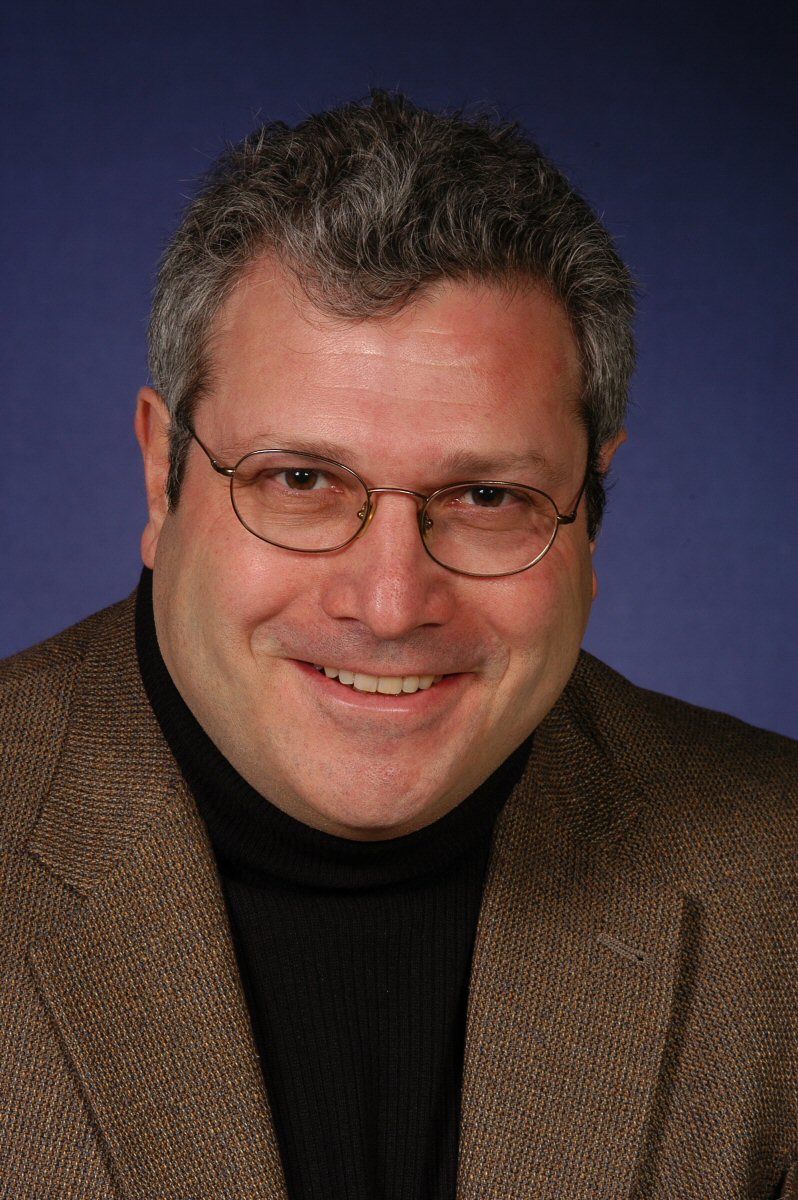
Former Senior Associate
Kagan, author of the recent book, The Return of History and the End of Dreams (Knopf 2008), writes a monthly column on world affairs for the Washington Post and is a contributing editor at both the Weekly Standard and the New Republic.
Recent Work

Michele Dunne, Robert Kagan
Robert Kagan, Michele Dunne
Carnegie does not take institutional positions on public policy issues; the views represented herein are those of the author(s) and do not necessarily reflect the views of Carnegie, its staff, or its trustees.

The new U.S.–Denmark–Greenland agreement will help Washington exert political, economic, and financial dominance under the guise of security. Yet, it acknowledged Copenhagen’s and Nuuk’s sovereignty on the island.

Marc Pierini

A summer of escalation in the Black Sea has hurt Ukraine economically and is exacerbating world food security. A truce is needed—as is a broader reframing of Europe’s Ukraine strategy.

Thomas de Waal

Are Germany’s economic, industrial, and political struggles becoming a liability for the EU’s ability to rise to the geopolitical moment?

Rym Momtaz, ed.

European Commission President Ursula von der Leyen is about to give her annual address on the state of the EU. Here’s what she won’t—but should—say.
Rym Momtaz

Radical-right parties are expected to do well in upcoming elections in four of the EU's biggest member states. If successful, they could prevent the union from addressing key challenges ahead.

Stefan Lehne