

Report
Mr. Husain Haqqani, Ashley J. Tellis
{
  "authors": [
    "Husain Haqqani"
  ],
  "type": "legacyinthemedia",
  "centerAffiliationAll": "dc",
  "centers": [
    "Carnegie Endowment for International Peace"
  ],
  "collections": [],
  "englishNewsletterAll": "ctw",
  "nonEnglishNewsletterAll": "",
  "primaryCenter": "Carnegie Endowment for International Peace",
  "programAffiliation": "russia",
  "programs": [
    "Russia and Eurasia"
  ],
  "projects": [],
  "regions": [
    "South Asia",
    "India",
    "Afghanistan"
  ],
  "topics": [
    "Political Reform",
    "Foreign Policy",
    "Nuclear Policy"
  ]
}
REQUIRED IMAGE
Source: Carnegie
Reprinted with permission from the The Indian Express, July 24, 2002
The recent diplomatic mission to South Asia by British Foreign Secretary Jack
Straw reflects continuing international concern over the prospect of conflict
between India and Pakistan. Although the US and British governments acknowledge
Pakistan’s cooperation in restraining militant infiltration along the LoC,
India is far from fully convinced. New Delhi feels that it can keep Pakistan
under pressure and it is, therefore, keeping up the pressure. General Pervez
Musharraf feels that he can withstand the pressure, which means that brinkmanship
continues despite considerable de-escalation.
The problem that the two sides have failed so far to address is mutual mistrust.
India feels it cannot trust General Musharraf in view of his role in Kargil
and what New Delhi sees as his hostility towards India. General Musharraf, on
the other hand, cannot risk befriending India without some quid pro quo especially
in the wake of his abandonment of the Taliban not too long ago.
The general’s self confidence notwithstanding, he has too much mistrust to contend with. India does not like him. Pakistani politicians remain suspicious of his intentions. His switching of support from the Taliban and Islamic militants to the United States has infuriated the Islamists. They are now threatening his life as well as targets in Pakistan with increasing ferocity. There has been at least one major terrorist act in Pakistan almost every month since the beginning of 2002.
That leaves only the west supporting him but only barely. The mood in Washington and London seems to be that there is a question mark looming over the extent to which he will fulfil his promises on relations with India and on domestic reform.
If General Musharraf was less of a risk-taker, he would have handled his domestic critics first. He would have started genuine dialogue instead of playing games, such as nominating anti-PPP politicians to the Sindh cabinet or working overtime to disqualify politicians he dislikes. He would also have been a little more honest and forthcoming about his rigged referendum. But he has chosen to take the high road in his pronouncements (‘‘Trust me’’) and the low road of manipulative politics in his actions.
After an honest deal with the political forces, Musharraf could also have levelled with the mainstream political Islamists. He could have told them that he went along with the jihadi worldview for as long as it was sustainable but now it is no longer so. Pakistan religious parties were not really jihadi to start with. They were more like religiously-motivated political parties seeking political power.
General Musharraf could have asked these groups to revert to their original form, isolating the hardcore militants who would then have been easier to deal with. Instead, he chose to occasionally mock all maulanas, ensuring that anyone with an Islamic bent of mind finds it difficult to support him even if he agrees with his reasoning.
With the home front consolidated, General Musharraf could approach India. He could tell New Delhi Pakistan had paid a price for not confronting terrorists in the past. India needs a settlement over Kashmir as much as Pakistan needs it. ‘‘We will help you get rid of violence if you will help us by agreeing to a political process,’’ he could say. And until such time as he can win India’s trust, he could ask his friends in Washington to act as guarantors of his word.
Due to the credibility gap that has arisen from Pakistan’s roller coaster ride since September 11, several issues are no longer receiving international attention. New Delhi’s denial of access to Jammu and Kashmir for international media and human rights groups limits the potential for agitating Kashmiri rights through political means. India’s refusal to discuss Kashmir’s future with Pakistan has been accompanied by international indifference over the issue.
This in turn has led to the belief in Islamabad that militancy and violence may be the only means of internationalising what Islamabad considers to be the core issue in India-Pakistan relations. Perhaps a balanced acknowledgement—‘‘While Pakistan is at fault in the way it handled militancy, India has not handled Kashmir as a political issue the way it should have’’—would find more takers than outright denials.
Pakistan’s involvement with jihadi groups and its tolerance of armed extremist religious groups has contributed to ineffective law enforcement. Sectarian and ethnic murders as well as unexplained bombings have been a common occurrence for the last several years. According to an estimate by the Human Rights Commission of Pakistan, six million weapons are in circulation in the country in private hands. The most notable of these is the Kalashnikov assault rifle, the weapon of choice during the anti-Soviet Afghan resistance.
Even if a final decision is taken to root out Islamic militancy, it will be years before the terrorist networks are completely eliminated. Resources of the police and intelligence-gathering agencies are over-stretched as the military government uses them to stay in power. The terrorists know that and take advantage of the state’s weakness. They have nothing to protect, only targets to destroy.
To get out of the corner where everyone but his closest advisers think he is, General Musharraf should move towards normalising relations with India besides winning the confidence of Pakistani politicians. From Pakistan’s point of view, normalisation of ties with India would involve the beginning of a process of dialogue over the future status of Jammu and Kashmir. The international community can encourage such a process, even without an immediate resolution of the dispute.
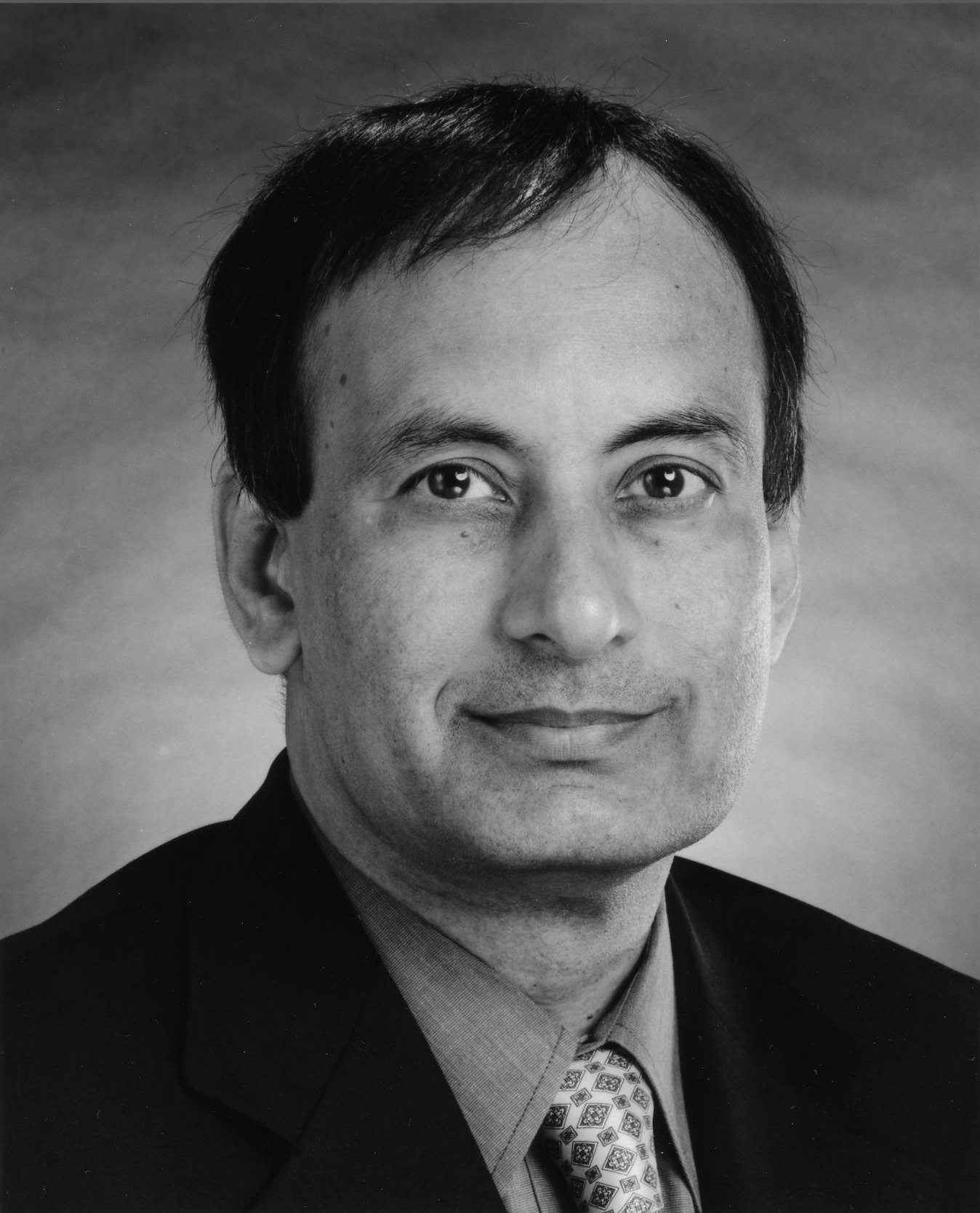
Husain Haqqani is a Visiting Scholar at the Carnegie Endowment for International
Peace in Washington. He served as adviser to Pakistani Prime Ministers Nawaz
Sharif and Benazir Bhutto and as Pakistan’s Ambassador to Sri Lanka
Former Visiting Scholar
Recent Work
Mr. Husain Haqqani, Ashley J. Tellis
Mr. Husain Haqqani
Carnegie does not take institutional positions on public policy issues; the views represented herein are those of the author(s) and do not necessarily reflect the views of Carnegie, its staff, or its trustees.

A summer of escalation in the Black Sea has hurt Ukraine economically and is exacerbating world food security. A truce is needed—as is a broader reframing of Europe’s Ukraine strategy.

Thomas de Waal

Are Germany’s economic, industrial, and political struggles becoming a liability for the EU’s ability to rise to the geopolitical moment?

Rym Momtaz, ed.

European Commission President Ursula von der Leyen is about to give her annual address on the state of the EU. Here’s what she won’t—but should—say.
Rym Momtaz

The aftermath of the Ceuta crisis shows Europe has drawn the wrong lessons. Rather than doubling down on failed migration policies, the EU needs to address the underlying roots of such episodes.

Richard Youngs

Canadian Prime Minister Mark Carney has twice inspired praise for standing up to U.S. President Donald Trump: at the 2026 World Economic Forum in Davos and on Canada-U.S. trade negotiations. Is Carney showing a third way better than the EU has in dealing with the Trump administration?
Rym Momtaz, ed.