

Q&A
- +2
Judy Dempsey, Alexander Gabuev, Rose Gottemoeller, …
{
  "authors": [
    "Rose Gottemoeller"
  ],
  "type": "legacyinthemedia",
  "centerAffiliationAll": "dc",
  "centers": [
    "Carnegie Endowment for International Peace"
  ],
  "collections": [],
  "englishNewsletterAll": "ctw",
  "nonEnglishNewsletterAll": "",
  "primaryCenter": "Carnegie Endowment for International Peace",
  "programAffiliation": "russia",
  "programs": [
    "Russia and Eurasia"
  ],
  "projects": [],
  "regions": [
    "Ukraine"
  ],
  "topics": [
    "Foreign Policy",
    "Nuclear Policy"
  ]
}
REQUIRED IMAGE
Source: Carnegie
Originally appeared in The New York Times on April 26, 2003.
The clash between American and North Korean negotiators this week reminded me of another push to get rid of nuclear weapons: not the 1994 talks with North Korea, which did not succeed in the end, but those with Ukraine, which did. After months at the table with Russia and the United States, the Ukrainians let their 1,900 warheads go to Russia for destruction.
Although no one expected this week's talks to go smoothly, I sometimes hear that the Ukrainian accord is irrelevant to North Korea because it was a cakewalk. But as an architect of the Ukraine accord, I don't remember it that way. At the time, the Ukrainian Parliament was full of deputies who were determined to hold on to the country's leftover Soviet weapons, to protect themselves from Russia. Former Soviet Rocket Forces officers were swearing allegiance to their new country and claiming they could run an independent nuclear arsenal.
If Ukraine had kept the warheads, it would have become a source of profound instability in its region. Instead, Ukraine decided to embrace Europe and its neighbors. There have been disappointments in the ensuing years, but Ukraine's economy is growing fast and it is on track to being part of the European system.
Three factors were the most important in American success in the Ukrainian case. First, an unequivocal goal, to get the nuclear weapons out of Ukraine, but in a way that ensured Ukraine's security and future in Europe. Second, remorseless attention from the president and vice president — whenever they were needed to muscle or cajole the negotiating partners, they were willing to do so. Third, hard, clear demands on all parties, with deadlines and penalties.
The other nuclear accord reached that year, the Agreed Framework, in which North Korea agreed to freeze its nuclear weapons program in exchange for fuel oil and Western-financed nuclear reactors, broke down because many of those elements were absent — and because the North Koreans have been much less trustworthy than the Ukrainians. Adopting those elements is probably the only chance we have that talks with North Korea will succeed. In future negotiations, the United States should also consider the Ukraine deal as a template for North Korea in these areas:
Security assurances. These were critical in persuading Ukraine to sign on to the accord. Once it became a nonnuclear-weapon state under the Nonproliferation Treaty, Ukraine received security assurances from the three repository states, the United States, Russia and Britain, joined by France. The assurances were accompanied by an "agreement to consult" should Ukraine be threatened. North Korea, if it recommitted to being a nonnuclear-weapon state, could receive the same assurances from the repository states, joined by China.
Assistance for weapons elimination. Ukraine got financing under the Nunn-Lugar Cooperative Threat Reduction Program to dismantle its missiles once their warheads had been removed. Ukraine signed Strategic Arms Reduction Treaty I, whose provisions were followed in organizing and monitoring the dismantlement.
North Korea could receive help in ending its nuclear program, including sending any plutonium, fuel rods and enriched uranium out of the country. In this case, financing could come from the G-8 industrialized countries, which has a new program aimed at halting the spread of weapons. Elimination and monitoring provisions would still need to be developed.
Energy assistance. Ukraine got fuel rods for its nuclear power plants in exchange for the enriched uranium in its warheads. This was a straight exchange, since the uranium had a commercial value that could be translated into fuel rods.
North Korea, by contrast, won't be so simple, because its plutonium does not have commercial value. An energy deal with North Korea would be more complicated, but it could involve the resumption of fuel oil shipments; Russia's taking North Korea's nuclear materials in exchange for international financing of light water reactors; and the development of a single grid to transmit energy from the new power plants across borders.
Clearly, a program similar to Ukraine's could work in the North Korean case, although it would be tough to negotiate and tough to organize. As in a business deal, there would be something in it for all players, as long as they delivered.
Rose Gottemoeller is a senior associate at the Carnegie Endowment for International Peace. In 1994, she was a director on the National Security Council staff.
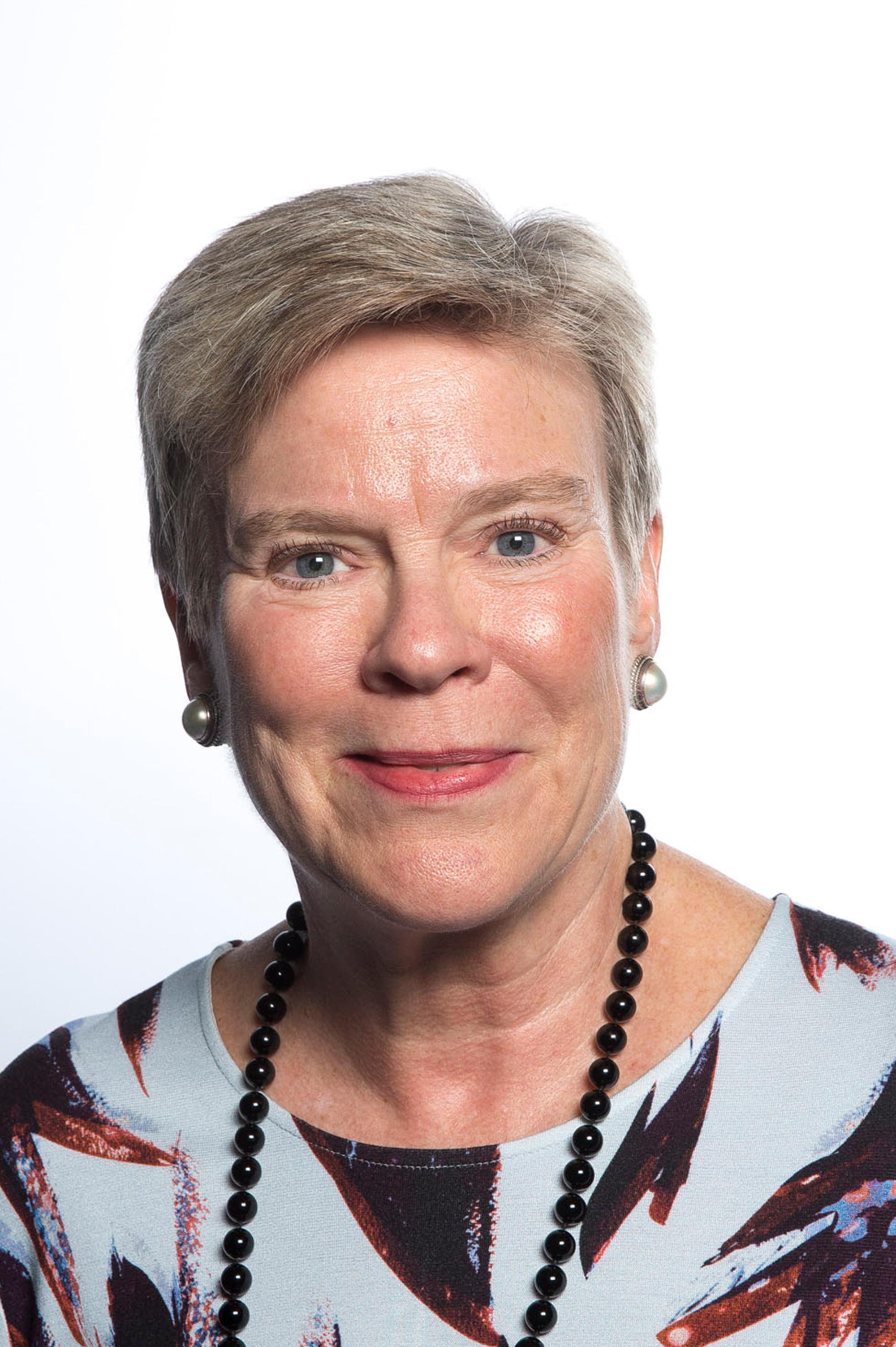
Nonresident Senior Fellow, Nuclear Policy Program
Rose Gottemoeller is a nonresident senior fellow in Carnegie’s Nuclear Policy Program. She also serves as lecturer at Stanford University’s Freeman Spogli Institute for International Studies and is a research fellow at the Hoover Institution. Ambassador Gottemoeller served as the deputy secretary general of NATO from 2016 to 2019.
Recent Work


Judy Dempsey, Alexander Gabuev, Rose Gottemoeller, …
Carnegie does not take institutional positions on public policy issues; the views represented herein are those of the author(s) and do not necessarily reflect the views of Carnegie, its staff, or its trustees.

The domestic impacts of how long it is taking to end the war in Ukraine have pushed the French electorate to the political extremes and compromised the country’s diplomatic capacity.

Rym Momtaz

Before the next wave of EU enlargement takes place, the union needs to grapple with thorny questions of how power is distributed among its members.


Emil Sondaj Hansen, Ditte Brasso Sørensen

The new U.S.–Denmark–Greenland agreement will help Washington exert political, economic, and financial dominance under the guise of security. Yet, it acknowledged Copenhagen’s and Nuuk’s sovereignty on the island.

Marc Pierini

A summer of escalation in the Black Sea has hurt Ukraine economically and is exacerbating world food security. A truce is needed—as is a broader reframing of Europe’s Ukraine strategy.

Thomas de Waal

Are Germany’s economic, industrial, and political struggles becoming a liability for the EU’s ability to rise to the geopolitical moment?
Rym Momtaz, ed.