

Article
Marina Ottaway, Omar Hossino
{
  "authors": [
    "Marina Ottaway"
  ],
  "type": "legacyinthemedia",
  "centerAffiliationAll": "dc",
  "centers": [
    "Carnegie Endowment for International Peace"
  ],
  "collections": [],
  "englishNewsletterAll": "democracy",
  "nonEnglishNewsletterAll": "",
  "primaryCenter": "Carnegie Endowment for International Peace",
  "programAffiliation": "DCG",
  "programs": [
    "Democracy, Conflict, and Governance"
  ],
  "projects": [],
  "regions": [
    "Middle East",
    "Iraq"
  ],
  "topics": [
    "Political Reform",
    "Democracy",
    "Economy"
  ]
}
REQUIRED IMAGE
Source: Carnegie
Iraq: One Country, Two Plans
Originally published July/August 2003 in Foreign Policy.
The United States cannot turn to a ready-made model of occupation and reconstruction
in postwar Iraq because none fits the country’s condition. Turning Iraq
into a politically and economically stable nation is as complex a task as planning
for war. U.S. military superiority, which made success of the war a foregone
conclusion, does not ensure successful reconstruction.
Making an intrinsically difficult task even more complex, the United States is currently guided by two conflicting models of political reconstruction, each subject to a different logic and different imperatives. Under the first, the United States would help Iraq create a decentralized, participatory democracy; under the second, the United States would swiftly give control to an interim Iraqi government.
Iraq has all the characteristics that have impeded democratic transitions elsewhere:
a large, impoverished population deeply divided along ethnic and religious lines;
no previous experience with democracy; and a track record of maintaining stability
only under the grip of a strongly autocratic government. The United States enjoys
no clear advantage in trying to develop a new political system for Iraq. It
has no historical ties to the country and little understanding of Iraqi culture
and society. Many Iraqis resent the United States as an occupying power. And
the factor that made the war so successful—reliance on a relatively small,
mobile force whose strength lay in technological superiority rather than manpower—is
a serious liability to reconstruction. Stabilizing a country requires a large,
visible presence on the ground, not sophisticated weapons.
Before the war, when U.S. President George W. Bush was trying to win domestic
and international support for intervention, his administration committed itself
to the democratic reconstruction of Iraq and the region. “America’s
interests in security, and America’s belief in liberty, both lead in the
same direction: to a free and peaceful Iraq,” declared Bush in February
2003. In the following weeks, administration officials outlined how they intended
to achieve that goal.
The plans presented during this period exuded confidence that the United States had the capacity not only to replace Iraqi President Saddam Hussein’s regime but to alter the character of the state and the very social fabric of Iraq. Under U.S. military occupation, U.S. officials and contractors would vet the Iraqi civil service. They would exclude hard-line members of the regime and the Baath party and rehabilitate those not overly tainted by association with the former government. The United States would also create and train a Baath-free military and police force.
The U.S. Agency for International Development (USAID), which is charged with implementing reconstruction, outlined an extraordinarily ambitious program in its “Vision for Post-Conflict Iraq.” U.S. contractors would oversee the rehabilitation of physical infrastructure and government services, restoring health services to 25 percent of the population in 60 days and to 50 percent (but to 100 percent of women and children) in six months; they would implement a new educational curriculum for the schools within a year; and they would restore the country’s roads and electrical grids with equal speed. [See chart, “The Cost of Iraq'sreconstruction.”]
The plans for political reconstruction were even more remarkable. USAID stated that “the national government will be limited to essential national functions, such as defense and security, monetary and fiscal matters, justice, foreign affairs, and strategic interests such as oil and gas.” Local government would be responsible for everything else and would be “required to operate in an open, transparent, and accountable matter.” Citizens would participate in planning the future of their communities and would control the civil administration through elected local assemblies. At a sweep of the U.S. pen, Iraq would turn from a centralized, hierarchical country into a model of participatory democracy.
But this vision for Iraq was completely uninformed by the situation on the ground. As soon as U.S. and British troops entered Iraqi cities, it became clear that the coalition did not have complete control and could only establish it with a much larger U.S. presence and the use of repression. Initial conditions could not be ignored. With resentment toward the occupation mounting even before the war ended, the United States could either stick to the original reconstruction plan and pacify the country by force or take a new approach. Unwilling to increase the size of the occupation force, the U.S. government opted for a new policy.
Within days of the first rumblings of opposition to the U.S. presence, Bush administration officials began discussing a short, light-handed occupation and the swift transfer of power to an Iraqi interim authority (as if that was what they had envisaged all along). Forgetting the detailed plans for a decentralized, participatory system, U.S. officials declared that the United States would not impose a particular political order on Iraq.
Quietly, however, the original, highly interventionist plans for political reconstruction proceeded. In mid-April, USAID awarded the Research Triangle Institute, a North Carolina contractor that often implements USAID projects, a $7.9 million contract, expected to grow to as much as $167.9 million over 12 months, to strengthen “management skills and capacity of local administrations and civic institutions to improve delivery of essential municipal services such as water, health, public sanitation and economic governance; includes training programs in communications, conflict resolution, leadership skills and political analysis.” Huge by the standards of political reconstruction programs, such a contract shows that the administration has not abandoned the technocratic project of remaking Iraq into a decentralized, participatory system—despite the United States’ lack of full control.
Also in early April, USAID issued an invitation to contractors to bid on a 12-month, $70 million Iraq Community Action Program, which “will create community committees responsible for identifying and prioritizing community needs, mobilizing community and other resources, and monitoring project implementation.” This agenda is not the program of a light-handed occupation.
Thus, consciously or not, the United States is simultaneously applying two contradictory reconstruction policies in Iraq. Each has a separate logic and coherence, but combining the two renders both illogical and incoherent. Where the United States has little control, invasive projects of social and political transformation cannot succeed. U.S. contractors cannot channel political participation through the new structures they are supposed to create unless there is an occupying force large enough to curb the influence of religious and tribal leaders. Hoping that a light occupation and a quick transfer of power will result in the democracy the United States promised the world is either deeply cynical or excessively optimistic. Hiding a heavy-handed American occupation behind the facade of a quickly formed Iraqi interim authority could theoretically reconcile the two approaches.
Yet Iraqis are likely to notice the strings and turn on both the puppets and the puppeteer.
In the coming months, developments on the ground will reveal whether, after
some initial confusion, the Bush administration is making a serious attempt
to turn Iraq into a more democratic country, rather than simply one friendly
to the United States. One strong indicator will be whether the military finally
takes responsibility for establishing and maintaining law and order in the country,
thus giving civilian administrators, U.S. contractors, and Iraqi citizens a
chance to undertake the physical and political reconstruction process. If the
United States insists that what is left of the Iraqi police can and must do
the job, it does not matter whether a civilian or a military administrator is
in charge of Iraq, or how many contracts USAID signs. The reconstruction of
Iraq will de facto be undertaken, as in many other countries, by the strong
and the ruthless.

Former Senior Associate, Middle East Program
Before joining the Endowment, Ottaway carried out research in Africa and in the Middle East for many years and taught at the University of Addis Ababa, the University of Zambia, the American University in Cairo, and the University of the Witwatersrand in South Africa.
Recent Work
Marina Ottaway, Omar Hossino
Marina Ottaway
Carnegie does not take institutional positions on public policy issues; the views represented herein are those of the author(s) and do not necessarily reflect the views of Carnegie, its staff, or its trustees.
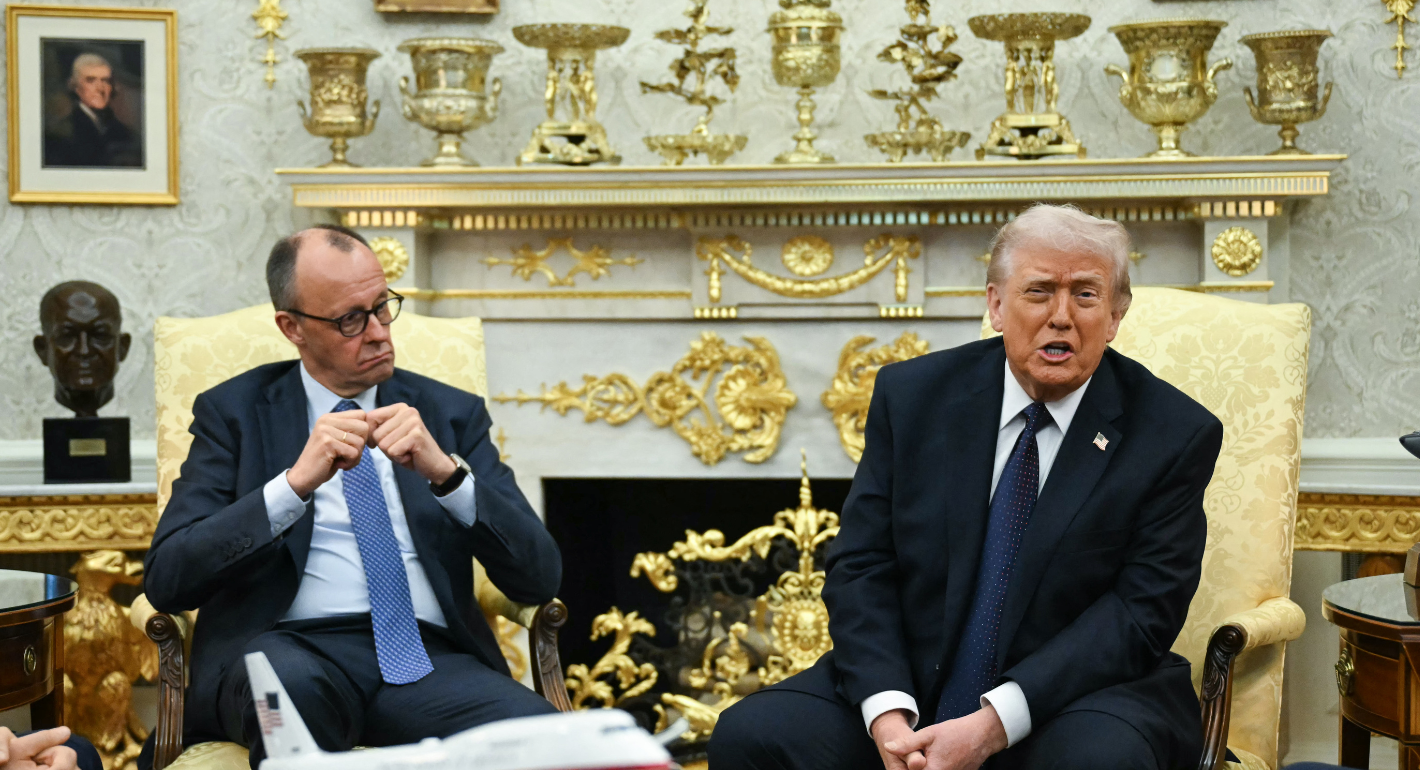
European reactions to the war in Iran have lost sight of wider political dynamics. The EU must position itself for the next phase of the crisis without giving up on its principles.

Richard Youngs
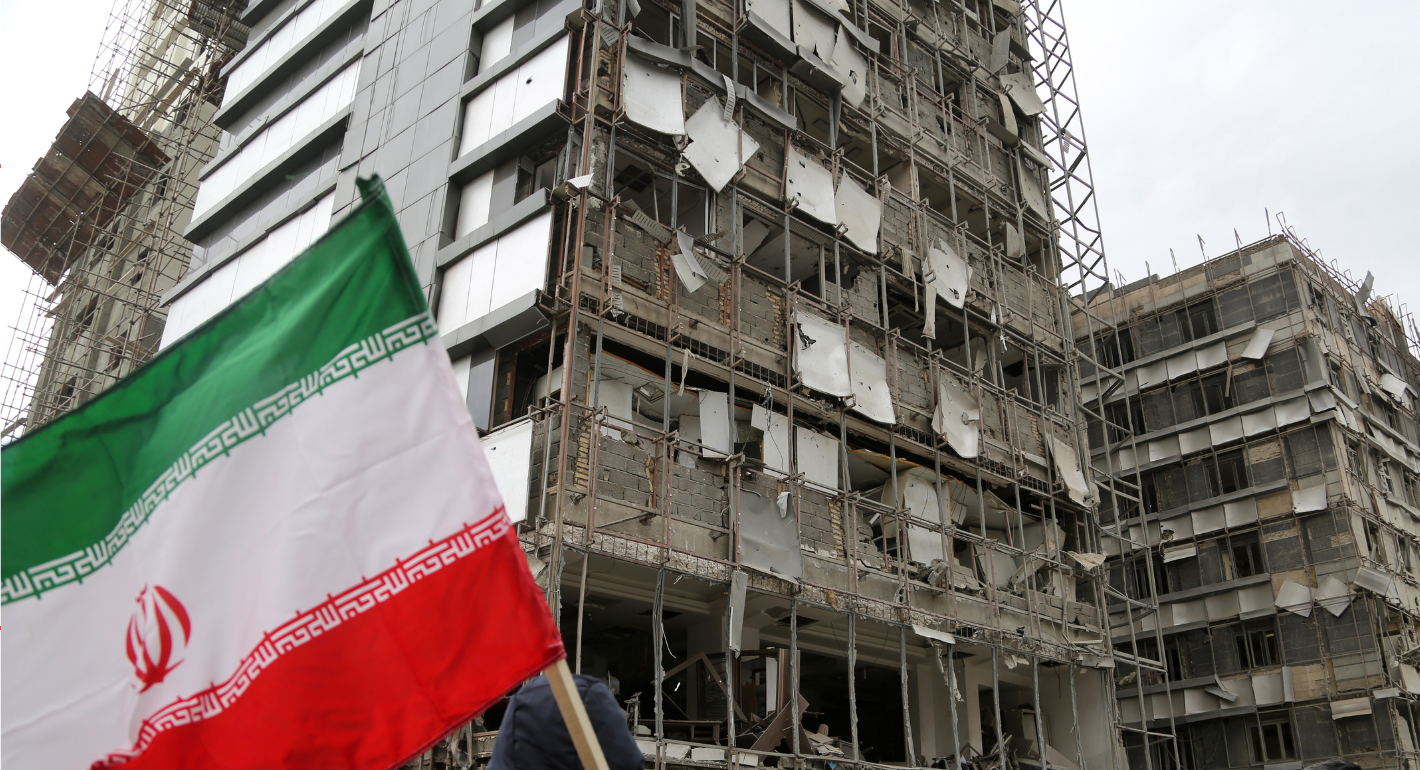
Europe’s reaction to the war in Iran has been disunited and meek, a far cry from its previously leading role in diplomacy with Tehran. To avoid being condemned to the sidelines while escalation continues, Brussels needs to stand up for international law.

Pierre Vimont

New thinking is needed on how global civil society can be protected. In an era of major-power rivalry, competitive geopolitics, and security primacy, civil society is in danger of getting squeezed – in some countries, almost entirely out of existence.
Richard Youngs, ed., Elene Panchulidze, ed.
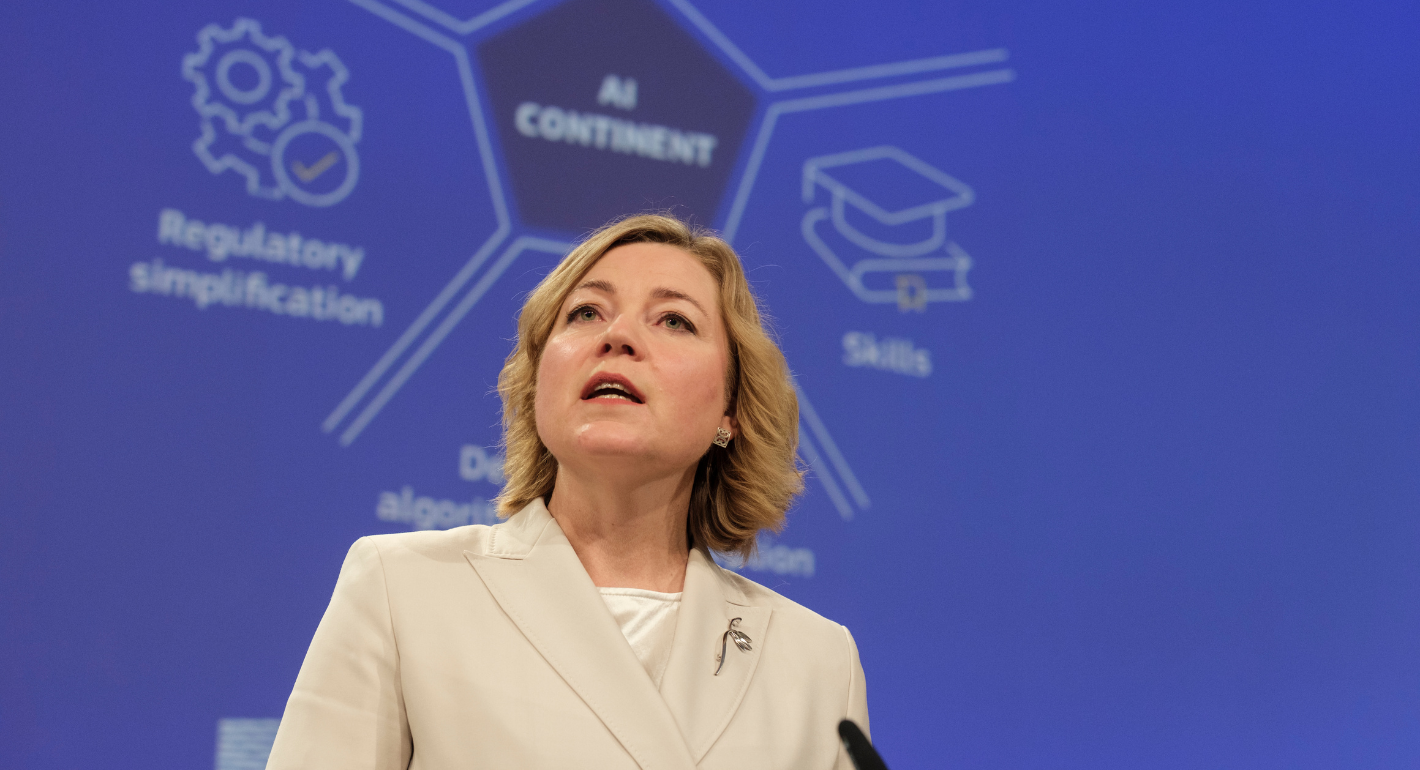
Integrating AI into the workplace will increase job insecurity, fundamentally reshaping labor markets. To anticipate and manage this transition, the EU must build public trust, provide training infrastructures, and establish social protections.

Amanda Coakley
Europe’s interests in Syria extend beyond migration management, yet the EU trails behind other players in the country’s post-Assad reconstruction. To boost its influence in Damascus, the union must upgrade its commitment to ensuring regional stability.

Bianka Speidl, Hanga Horváth-Sántha