

In The Media
Minxin Pei
{
  "authors": [
    "Minxin Pei"
  ],
  "type": "legacyinthemedia",
  "centerAffiliationAll": "dc",
  "centers": [
    "Carnegie Endowment for International Peace"
  ],
  "collections": [],
  "englishNewsletterAll": "asia",
  "nonEnglishNewsletterAll": "",
  "primaryCenter": "Carnegie Endowment for International Peace",
  "programAffiliation": "AP",
  "programs": [
    "Asia"
  ],
  "projects": [],
  "regions": [
    "China"
  ],
  "topics": [
    "Political Reform",
    "Democracy"
  ]
}
REQUIRED IMAGE
Source: Carnegie
Power grows out of a populist agenda
By Minxin Pei
Originally published in the Financial Times, October 8, 2003
The forthcoming plenum of the Chinese communist party's central committee has
drawn an unusual amount of attention. In the past, such gatherings were typically
treated as non-events. Inside the party, decision-making power is concentrated
in the nine-person standing committee of the politburo. Plenums of the central
committee routinely and predictably endorse the important decisions already
made by the standing committee.
But these are hardly ordinary times in Beijing. China's leadership transition, which officially began a year ago, remains a murky and uncertain process. Jiang Zemin, the former communist party chief, retains enormous power, both as the commander-in-chief of China's armed forces and as patron of a majority of the politburo standing committee members. He has also predetermined the agenda for his successors by laying down a nebulous ideological formulation, known as the "Three Represents", as the guiding principle for the party.
Even seen in the most charitable light, such machinations have created a dilemma for Mr Jiang's successors, President Hu Jintao and Premier Wen Jiabao. On the one hand, as new leaders, they are not strong enough to challenge Mr Jiang's authority or to alter the balance of power at the top. On the other hand, if they were to be completely subservient to Mr Jiang's wishes and to implement his agenda, they would disappoint their own supporters and dash hopes of change while not necessarily endearing themselves to Mr Jiang.
This has left them with two strategies for survival. The first is to demonstrate effective leadership, so that they can prove their abilities and establish merit-based authority. The epidemic of severe acute respiratory syndrome last spring, initially viewed as a potential disaster for China and its new leaders, was seized on by Mr Hu and Mr Wen as an opportunity to assert their authority. Their success in handling the crisis has enhanced their political standing.
The second strategy is to pursue a distinct policy agenda even as they show deference to Mr Jiang. Because Mr Jiang is a master in personnel politics - the art of placing loyalists in key positions - Mr Hu and Mr Wen must offset their disadvantages by presenting a more appealing agenda. A new agenda closely attuned to popular needs may resonate more with the public, and even with party members.
Over the past 11 months, elements of such an agenda have emerged. Economically, the new leaders have begun to emphasise a more balanced and sustainable development strategy, mainly to ameliorate the huge social deficits (such as rising inequality, regional disparity and underinvestment in public health, education and the environment) that have accumulated under the policy of "growth at all costs". Politically, Mr Hu and Mr Wen are cultivating a new populist image. Mr Hu has ordered several symbolic - and well received - measures to demonstrate his aversion to official privileges (such as cancelling the central government's summer retreat at an exclusive resort and curtailing media coverage of senior leaders).
More significantly, in the forthcoming party plenum the politburo is to make a formal work report to the central committee, an unprecedented, albeit minor, move towards making the politburo more accountable. The gathering is also expected to discuss possible amendments to the Chinese constitution that may grant protection to private property.
Most surprisingly, on the eve of the National Day (October 1), Mr Hu made a speech to the politburo on the need to pursue democratic reforms. In this widely reported speech, Mr Hu called for "continuously, actively and carefully pushing for political systemic reforms and expanding Chinese citizens' orderly political participation". In the short excerpt of his speech that was reprinted in the People's Daily, the word "democratic" appeared 14 times.
Although Mr Hu did not mention any specifics, the prominence he gave to the idea of democratic political reform - a dirty phrase in elite Chinese circles - has raised hopes that political openness may be on the new agenda as well.
Whether the new agenda amounts to a repudiation of the policies pursued under Mr Jiang depends on how or indeed whether it is implemented. It is not even clear that the central committee will embrace it completely at the plenum.
But in the power games that take place inside China's leadership hierarchy, the ability to seize the political agenda can give new leaders substantial leverage. A quarter of century ago, Deng Xiaoping, the late leader, used a similar plenum to present his reform agenda and gained political supremacy.
Obviously, Mr Hu and Mr Wen must overcome huge odds if they are successfully to seize the political momentum. Apart from incurring Mr Jiang's suspicions, shifting the party's policy priorities means hurting powerful interest groups and thereby mobilising their resistance.
Mr Hu's rhetoric of political reform could come back to haunt him, as well. By talking democracy before consolidating power, he may raise false expectations and alarm his colleagues. In the 1980s, the two communist party chiefs who attempted political reform under Mr Deng's shadow both lost their jobs. One can only hope that history will not repeat itself.
The writer is a senior associate at the Carnegie Endowment for International Peace.
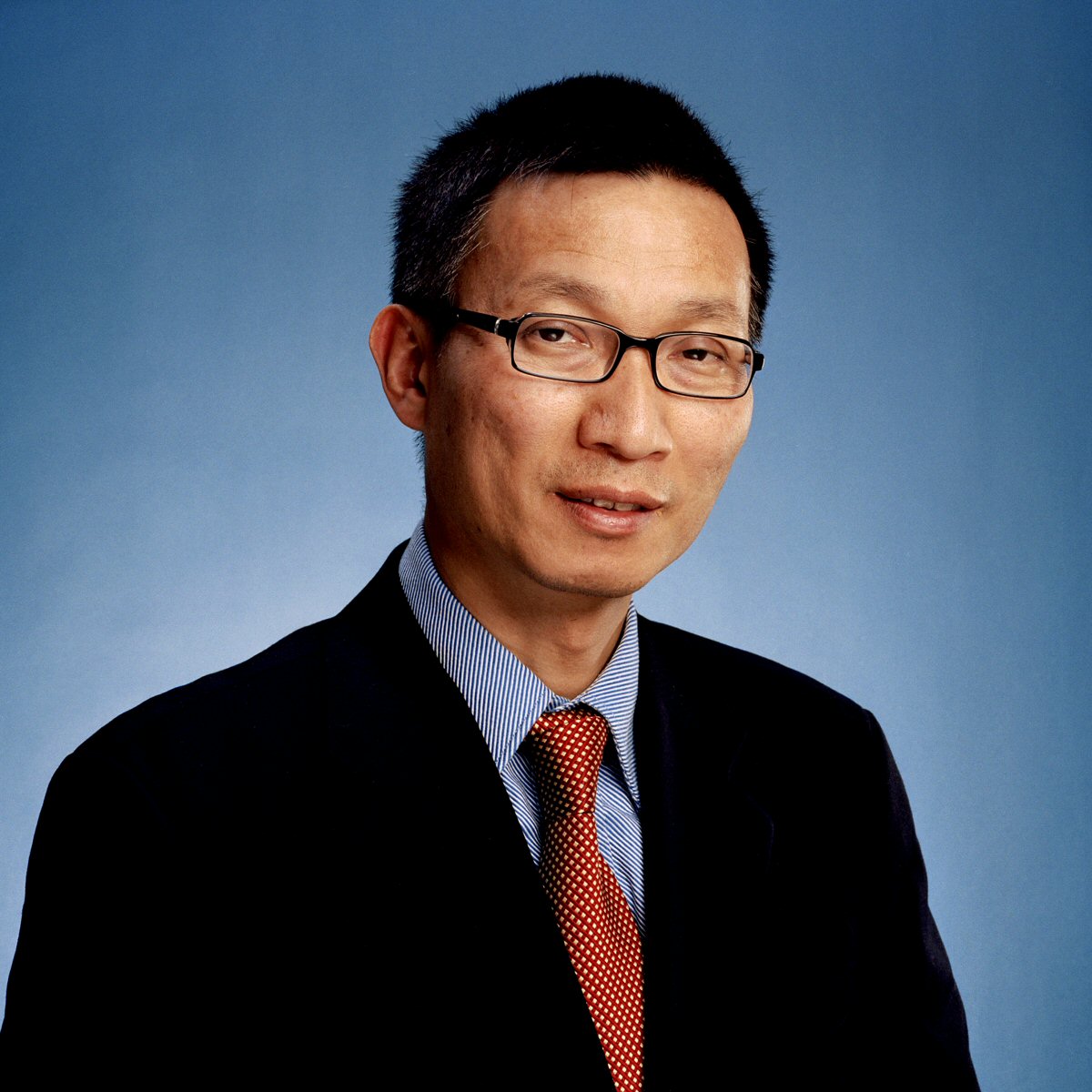
Former Adjunct Senior Associate, Asia Program
Pei is Tom and Margot Pritzker ‘72 Professor of Government and the director of the Keck Center for International and Strategic Studies at Claremont McKenna College.
Recent Work
Minxin Pei
Minxin Pei
Carnegie does not take institutional positions on public policy issues; the views represented herein are those of the author(s) and do not necessarily reflect the views of Carnegie, its staff, or its trustees.

Radical-right parties are expected to do well in upcoming elections in four of the EU's biggest member states. If successful, they could prevent the union from addressing key challenges ahead.

Stefan Lehne

An overwhelming victory by a far-right-wing party in a small state in eastern Germany will have major repercussions for Chancellor Friedrich Merz’s coalition.

Judy Dempsey

In supporting Europe’s far-right, MAGA and Russia both want the same thing: a weaker EU. Europe must defend itself without abandoning the openness these forces exploit.

Armida van Rij

The hybrid warfare landscape is evolving rapidly, leaving policymakers without clear strategies. To better inform their work in addressing emerging challenges, governments must dig deeper into the underlying dynamics at play.


Raluca Csernatoni, Alicia Wanless

As the EU confronts profound challenges, several leaders have called for fundamental reform to the union’s model—but only modest, superficial changes have resulted. What if Europe really could be reimagined from zero today: What should such a redesigned European order look like?

Richard Youngs, ed.