

In The Media
Michele Dunne, Robert Kagan
{
  "authors": [
    "Robert Kagan"
  ],
  "type": "legacyinthemedia",
  "centerAffiliationAll": "",
  "centers": [
    "Carnegie Endowment for International Peace"
  ],
  "collections": [],
  "englishNewsletterAll": "",
  "nonEnglishNewsletterAll": "",
  "primaryCenter": "Carnegie Endowment for International Peace",
  "programAffiliation": "",
  "programs": [],
  "projects": [],
  "regions": [
    "Caucasus",
    "Russia"
  ],
  "topics": [
    "Military",
    "Foreign Policy"
  ]
}
Source: Getty
Source: Washington Post

Putin's decision on Monday to end the system of direct popular election of Russia's governors, and to have the Russian parliament elected on the basis of slates chosen by national party leaders he mostly controls, is an unambiguous step toward tyranny in Russia. It cannot be justified as part of the war on terrorism. Putin has had these plans ready for months. He is cynically using the horrific terrorist attack in Beslan as his excuse.
Nor is there any complexity or fuzziness about the significance of Putin's actions. Putin is imposing dictatorship the old-fashioned way, in the manner of a Ferdinand Marcos, an Anastasio Somoza or a Park Chung Hee. He claims that he needs to strengthen the state to face its enemies. So did they. Russia does need to fight terrorism. But eliminating elections and quashing Putin's political opponents has nothing to do with that fight.
The question now: Does President Bush care about the fate of democracy in Russia? Ever since Sept. 11 he has proclaimed a grand strategy of promoting democracy worldwide. He has rightly made this his goal in Iraq, and despite the faulty performance of his Pentagon advisers, it remains his primary objective. Bush has also trumpeted plans for promoting democracy in the greater Middle East. And again, despite sometimes less than impressive practical efforts to meet the lofty rhetoric, this has been a worthy and important goal. In Afghanistan more than 10 million people have registered to vote in the Oct. 9 presidential elections, a stunning and unexpected success.
The president's commitment to democracy has been derided by realist foreign policy thinkers as dangerously idealistic. Even Democrats, who used to believe in promoting democracy, have regarded Bush's efforts with cynicism and hostility. Bush, to his credit, has persevered.
Throughout the past couple of years, however, the Bush administration has turned a blind eye to anti-democratic trends in Russia. Secretary of State Colin Powell made a strong statement against Putin's treatment of opponents last spring, and he expressed concerns about Putin's actions yesterday. But the White House has been relatively quiet. And the president's voice, the only one that really matters, has not yet been heard.
A great deal is riding on whether President Bush can muster the will to denounce the man he has regarded as an ally in the war on terrorism. Some will argue, and Bush may feel, that Putin is "with us." But now Bush needs to make a different calculation. Putin is not really "with us." With Russians confronting vicious terrorists, Putin is consolidating his own power. How, exactly, does that help us win the war on terrorism?
In fact, it will hurt. Failure to take sides with democratic forces in Russia will cast doubt on Bush's commitment to worldwide democracy. A White House official commented to the New York Times that Putin's actions are "a domestic matter for the Russian people." Really? If so, then the same holds for all other peoples whose rights are taken away by tyrants. If the Bush administration holds to that line, then those hostile to democracy in the Middle East will point to the glaring U.S. double standard; those who favor democracy in the Middle East will be discredited. That will be a severe blow to what Bush regards as a central element of his war on terrorism.
Nor should the president and his advisers doubt that vital U.S. interests are at stake in the Russian struggle. Fighting the war on terrorism should not and cannot mean relegating other elements of U.S. strategy and interests to the sidelines. A dictatorial Russia is at least as dangerous to U.S. interests as a dictatorial Iraq. If hopes for democratic reform in Russia are snuffed out, Russia's neighbors in Eastern and Central Europe will be rightly alarmed and will look to the United States for defense.
And there is an even more fundamental reality that the president must face: A Russian dictatorship can never be a reliable ally of the United States. A Russian dictator will always regard the United States with suspicion, because America's very existence, its power, its global influence, its democratic example will threaten his hold on power.
Finally, there is the matter of the Russian people themselves. Did the United States help undo Soviet communism only to watch as tyranny takes its place? Is that the legacy President Bush wants to leave behind?
Much depends on what Bush does and says in the coming days. No one should imagine there are any easy answers. If Bush denounces Putin, we will pay a price. If he goes further, as he should, and begins taking tangible actions in the economic and political spheres to express U.S. disapproval of Putin's latest moves, we may suffer a loss of Russian cooperation. These are chances we will have to take, however.
Perhaps in the face of global pressure, led by the United States but including Europe, Putin might feel compelled to back down. In any case, President Bush needs to try. He must remain true to his stated principles, both for the sake of principle and for the sake of U.S. interests.
Former Senior Associate
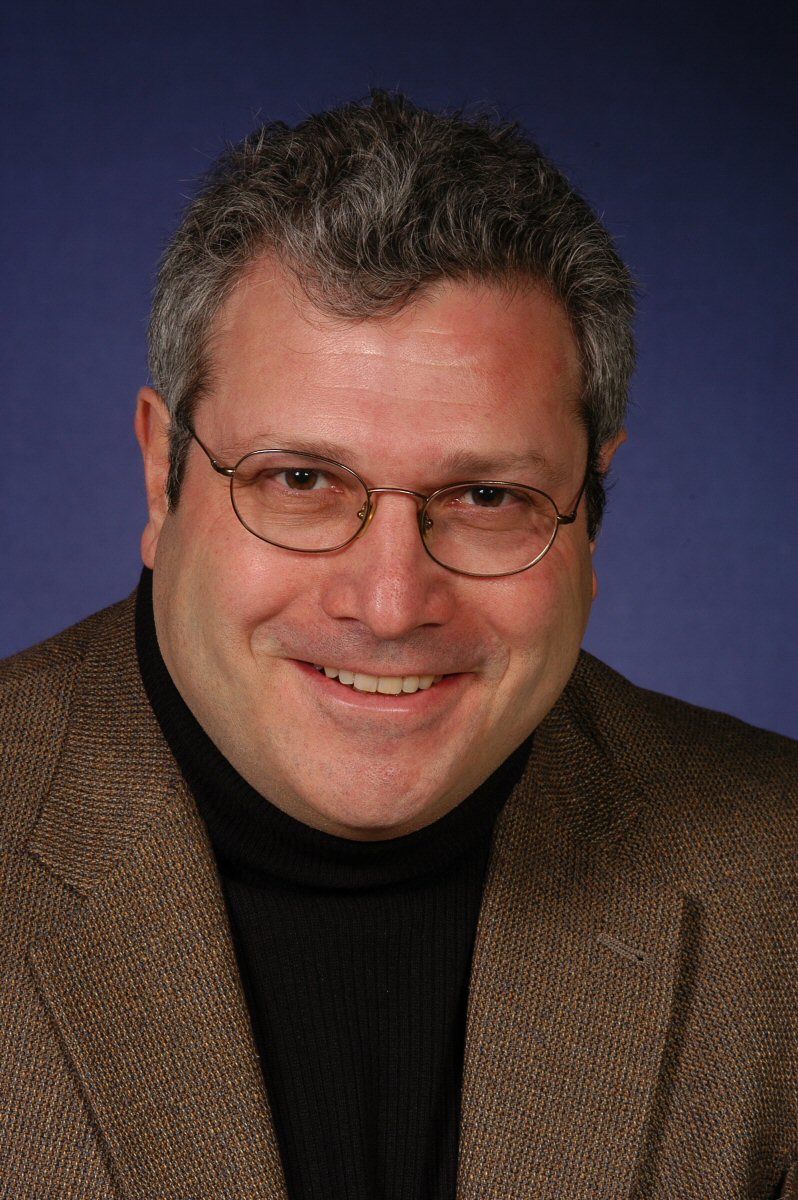
Kagan, author of the recent book, The Return of History and the End of Dreams (Knopf 2008), writes a monthly column on world affairs for the Washington Post and is a contributing editor at both the Weekly Standard and the New Republic.
Recent Work

Michele Dunne, Robert Kagan
Robert Kagan, Michele Dunne
Carnegie does not take institutional positions on public policy issues; the views represented herein are those of the author(s) and do not necessarily reflect the views of Carnegie, its staff, or its trustees.

The new U.S.–Denmark–Greenland agreement will help Washington exert political, economic, and financial dominance under the guise of security. Yet, it acknowledged Copenhagen’s and Nuuk’s sovereignty on the island.

Marc Pierini

A summer of escalation in the Black Sea has hurt Ukraine economically and is exacerbating world food security. A truce is needed—as is a broader reframing of Europe’s Ukraine strategy.

Thomas de Waal

Are Germany’s economic, industrial, and political struggles becoming a liability for the EU’s ability to rise to the geopolitical moment?

Rym Momtaz, ed.

European Commission President Ursula von der Leyen is about to give her annual address on the state of the EU. Here’s what she won’t—but should—say.
Rym Momtaz

The aftermath of the Ceuta crisis shows Europe has drawn the wrong lessons. Rather than doubling down on failed migration policies, the EU needs to address the underlying roots of such episodes.

Richard Youngs