

In The Media
Martha Brill Olcott
{
  "authors": [
    "Martha Brill Olcott"
  ],
  "type": "legacyinthemedia",
  "centerAffiliationAll": "dc",
  "centers": [
    "Carnegie Endowment for International Peace"
  ],
  "collections": [],
  "englishNewsletterAll": "ctw",
  "nonEnglishNewsletterAll": "",
  "primaryCenter": "Carnegie Endowment for International Peace",
  "programAffiliation": "russia",
  "programs": [
    "Russia and Eurasia"
  ],
  "projects": [],
  "regions": [
    "Central Asia",
    "Uzbekistan"
  ],
  "topics": [
    "Political Reform",
    "Democracy",
    "Security"
  ]
}
Source: Getty
The situation in this strategically located Central Asian state can no longer be answered with platitudes about Islamic threats or empty exhortations to democratic reform. If the Uzbek regime can't or won't fix its problems, then the world community will soon face the choice between intervention and chaos.
Source: Washington Post
The handsome young man who received me last month in a government office in the Uzbek town of Fergana was working for the area's governor as a state "watchdog" for supervising Islam, but he didn't look or act the part. Rather than lecture me on the evils of religion, he told me that he had spent a year studying at an Islamic university in Cairo . And he gave me a copy of a book that was a Uzbek runaway bestseller.
The book, "Religion: There Is a Proper Way ," is a guide to bringing Uzbeks back to their true faith through prayer. Moreover, it is being taught in an experimental public school program about the "history of religion." Its author, Sheik Muhammad Sadyk Muhammad Yusuf, fled Uzbekistan in fear of his life in 1993. He had been fired as the country's senior cleric for, among other things, being too tolerant of the Islamic fundamentalists in his native Fergana Valley . But he's back, and the government's decision to allow the open sale of his book was part of an effort to encourage "good" Muslims and discourage "bad" ones, like those tied to Hizb ut-Tahrir, an alleged terrorist group the sheik criticizes.
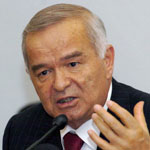
These distinctions were a small step forward for the regime of Uzbekistan 's secular president, Islam Karimov, who for most of the past decade has repressed Muslims of every stripe while currying favor with the United States and Russia for his stand against religious extremism. However, after a prison break, a popular demonstration and an army crackdown in the eastern town of Andijon last weekend that took at least 169 lives, Karimov is blaming Islamic extremists again.
There are dangerous Islamic extremists in Uzbekistan , including some who want to oust the secular government and establish a caliphate, but my visit to the fertile Fergana Valley , where cotton and discontent seem to grow side by side, suggested that the Karimov regime's troubles run much broader and deeper than that.
Poverty, corruption, repressive security agents, price controls on cotton sales, steep taxes on small businesses and restrictions on small traders have created a disgruntlement that has nothing to do with religion. Karimov's cronies have monopolized industries for their own advantage.
And Karimov himself, the former first secretary of the Communist Party in this former Soviet republic, who was elected president in 1991, has extended his term by referendum rather than face any opposition.
But instead of restoring public confidence by offering concrete economic reforms, the Uzbek president continues to blame his problems on Islamic terrorists and the foreigners who support them. He snipes at Western critics who are pressuring him to liberalize. And he shows no signs of wavering in his commitment to an ambiguous policy of "evolution, not revolution." The latter, he says, comes when leaders show weakness, not strength.
Karimov is right about one thing at least: His country won't have one of those "color" revolutions on which he heaps such scorn. Despite international expectations that Uzbekistan could become the next democratic domino among the former Soviet republics, power there will never be transferred the way it was in Georgia 's Rose Revolution, Ukraine 's Orange Revolution, or even Kyrgyzstan 's Tulip Revolution, where crowds were unruly and the outcome uncertain.
Popular frustration may be even greater in Uzbekistan than it was in any of these countries. But their revolutions coalesced around opposition figures who had administrative experience and widespread support, and who were able to use flawed electoral processes to unseat entrenched leaders.
In contrast, Uzbek public figures who criticize their regime are few and far between. The three most serious challengers to Karimov are Shukrulla Mirsaidov, a former prime minister who has been living under house arrest in the capital of Tashkent since 1992; Muhammad Salih, a poet who ran against Karimov for president in December 1991 and who lives in Norway, where he leads a pro-democracy group called Erk , or Liberty; and Abdurahim Polat, a scientist and leader of a pro-democracy group called Birlik , or Unity, who has shuttled between the United States and Turkey ever since a near-fatal beating in Tashkent in 1994.
The pro-democracy groups exist entirely in exile. Uzbekistan 's new parliament, which has very limited powers, was chosen by a process that left virtually no room for participation by critics of the regime. Karimov may congratulate himself for oppression efficient enough to have eliminated serious rivals, but this risks dire chaos when a day of transition inevitably arrives.
There are pro-reform elements within Uzbekistan 's ruling elite -- in economic ministries, parliament, the private sector, the diplomatic service, even the military -- but to name these people would put their jobs at risk. There is no evidence that they are organized and many may not know of each others' existence.
Uzbekistan 's powerful ministers -- of internal affairs, state security and defense -- help keep a distance between Karimov and the closet reformers who serve him. In theory, these ministers could be strong enough to oust the president, a la Nicolae Ceaucescu in Romania . But cooperation has never been their strong suit.
Even if they were to make common cause, there is little reason to expect that their president-designate would be any more pro-reform than his predecessor. True reform would cost them the economic benefits and perquisites of power that they would be seeking to preserve. It is far more likely that they might embrace religion in the hope that an empowered Islamic establishment would prevent Islamic militants from persecuting their secular benefactors.
Karimov is already turning to Islam to increase his regime's popularity. Sheik Muhammad Sadyk spoke on national television in recent days, railing against Hizb ut-Tahrir for using violence against the state in the name of Islam. Such speeches may have a calming influence in the short run, but they will not redress economic grievances nor create the political safety valves Uzbeks need to let off steam.
The use of force to put down popular protest may buy a regime a little more time if disturbances are small and uncoordinated. Cutting off telephones or the Internet simply delays the spread of news, but does not stop it. Each time unarmed civilians are killed, a measure of public support for the regime dies, whether or not the press is allowed to report on it. Inevitably there will come a day when force does not prevail.
In Uzbekistan that would be a prelude to turmoil. Regional figures, bolstered by support from local clerics, would likely vie for the right to form a new national government, using remnants of competing state security forces to advance their cause. Unlike in Iraq , or Afghanistan , no international force would be prepared to step in to fill the vacuum. Even Russia would be reluctant to offer help because of how this would be seen by its own Muslim population and by the international community.
Political disarray in Uzbekistan could rapidly destabilize the border regions of Kyrgyzstan and Tajikistan , and undermine the security of their governments. It will end any prospect for democratic reform in Kazakhstan , which would almost certainly impose martial rule in its politically unreliable south.
The tragedy of tyranny is that tyrants wake up too late -- if at all.
Before the bloody crackdown on Andijon protests last weekend, Karimov showed a glimmer of realization that he needed to appeal to moderate Muslims. During my visit to Fergana , where I was researching the history of Islamic terrorism, I was permitted to meet six former members of the Islamic Movement of Uzbekistan, another terrorist group. I met these men in their homes in dusty villages near Namangan and Kokand . Sitting on the floor drinking tea, they told me of their experiences in Tajikistan , Kyrgyzstan and al Qaeda-sponsored camps in Afghanistan and Pakistan , from 1994 through 2001.
At least two, both former commanders, were battle-hardened -- with few, if any, moral hesitations about using their skills. These men had decided to come home, sworn that they personally "had no blood on their hands" and received amnesty.
But the Karimov regime shows little sign of making reconciliation of that kind with other Islamists or its secular critics.
That puts the United States in an awkward position. Supporting the end of the Karimov government would undermine a U.S. military ally without being sure that something better would follow. The best hope for long-term peace and prosperity in the region is for the international community to press the Karimov regime to change.
An important first step would be for the Uzbek government to accept an international investigation into what happened in Andijon. Back-channel diplomacy to get Karimov's acquiescence to this should include promises of international assistance to help the country cover its budget deficits while shrinking the role of the state in the economy. In return, Uzbek authorities would have to permit registration of foreign nongovernmental organizations and promise to step up the pace of civic institution building.
The loss of life in Andijon cannot be effaced. But the scores or hundreds of deaths can serve as a wakeup call, if not for the Uzbeks, then at least for the United States and its allies. The situation in this strategically located Central Asian state can no longer be answered with platitudes about Islamic threats or empty exhortations to democratic reform. If the Uzbek regime can't or won't fix its problems, then the world community will soon face the choice between intervention and chaos.
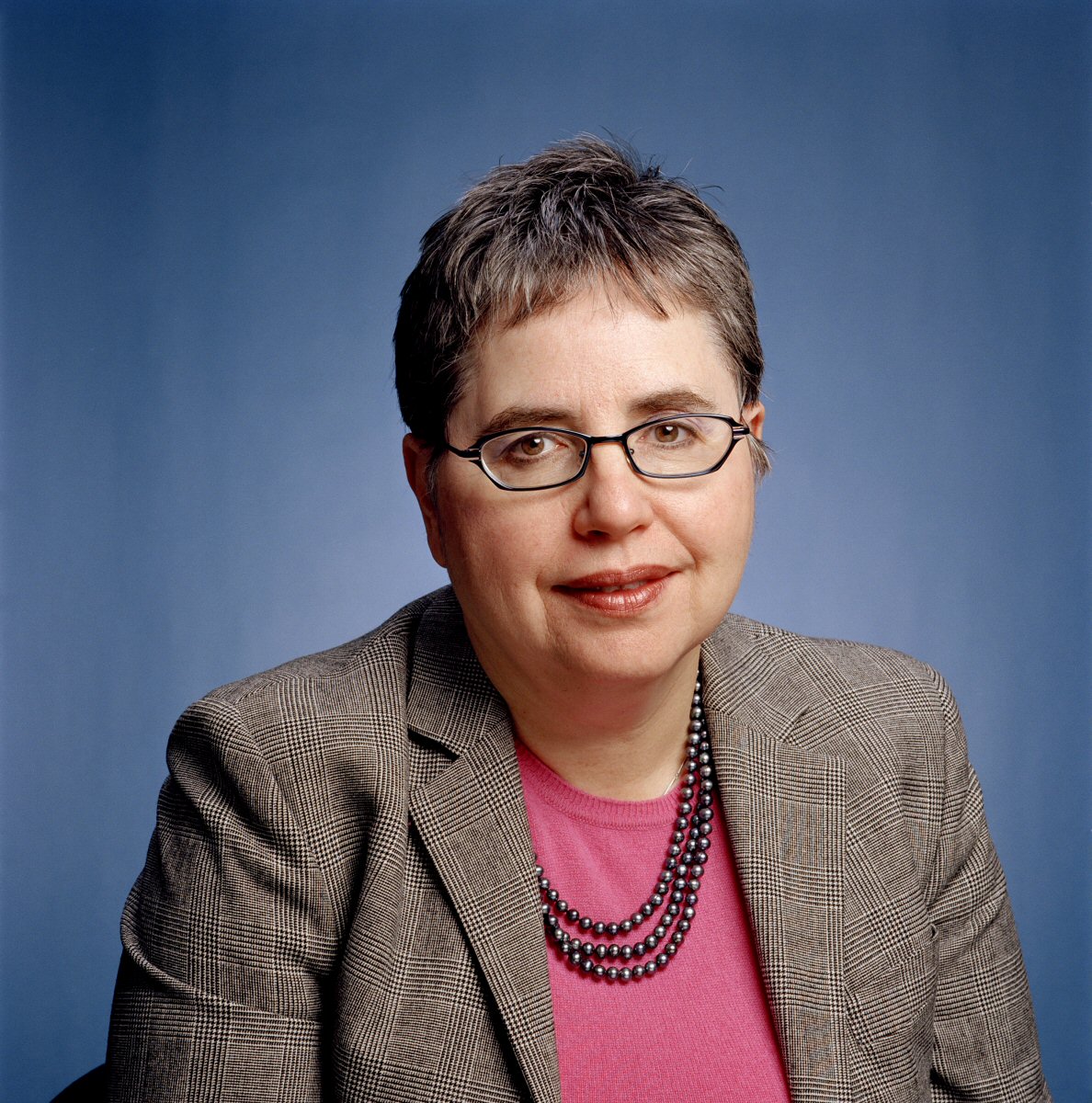
Martha Brill Olcott is a senior associate at the Carnegie Endowment for International Peace. She is the author of the forthcoming "Central Asia 's Second Chance" (Carnegie Endowment).
Former Senior Associate, Russia and Eurasia Program and, Co-director, al-Farabi Carnegie Program on Central Asia
Olcott is professor emerita at Colgate University, having taught political science there from 1974 to 2002. Prior to her work at the endowment, Olcott served as a special consultant to former secretary of state Lawrence Eagleburger.
Recent Work
Martha Brill Olcott
Martha Brill Olcott
Carnegie does not take institutional positions on public policy issues; the views represented herein are those of the author(s) and do not necessarily reflect the views of Carnegie, its staff, or its trustees.

French President Emmanuel Macron has unveiled his country’s new nuclear doctrine. Are the changes he has made enough to reassure France’s European partners in the current geopolitical context?

Rym Momtaz, ed.
The drone strike on the British air base in Akrotiri brings Europe’s proximity to the conflict in Iran into sharp relief. In the fog of war, old tensions in the Eastern Mediterranean risk being reignited, and regional stakeholders must avoid escalation.

Marc Pierini
European reactions to the war in Iran have lost sight of wider political dynamics. The EU must position itself for the next phase of the crisis without giving up on its principles.

Richard Youngs

Europe’s reaction to the war in Iran has been disunited and meek, a far cry from its previously leading role in diplomacy with Tehran. To avoid being condemned to the sidelines while escalation continues, Brussels needs to stand up for international law.

Pierre Vimont

New thinking is needed on how global civil society can be protected. In an era of major-power rivalry, competitive geopolitics, and security primacy, civil society is in danger of getting squeezed – in some countries, almost entirely out of existence.
Richard Youngs, ed., Elene Panchulidze, ed.