

Paper
George Perkovich
{
  "authors": [
    "George Perkovich"
  ],
  "type": "other",
  "centerAffiliationAll": "dc",
  "centers": [
    "Carnegie Endowment for International Peace"
  ],
  "collections": [
    "U.S. Nuclear Policy"
  ],
  "englishNewsletterAll": "ctw",
  "nonEnglishNewsletterAll": "",
  "primaryCenter": "Carnegie Endowment for International Peace",
  "programAffiliation": "NPP",
  "programs": [
    "Nuclear Policy",
    "South Asia"
  ],
  "projects": [],
  "regions": [
    "North America",
    "United States",
    "India"
  ],
  "topics": [
    "Foreign Policy",
    "Nuclear Policy"
  ]
}
REQUIRED IMAGE
At their July summit meeting in Washington, D.C., U.S. President George W. Bush and Indian Prime Minister Manmohan Singh announced potentially major departures in U.S. and Indian nuclear policies. President Bush promised to win congressional approval to change U.S. nonproliferation and export control laws and policies that heretofore have blocked full nuclear cooperation with India. In seeking to end restrictions on such cooperation, the United States wants India to be accepted globally as a responsible possessor of nuclear weapons even though India will not join the Nuclear Non-Proliferation Treaty (NPT). For its part, India committed to “assume the same responsibilities and practices” as the acknowledged nuclear weapons states. This includes distinguishing India’s military nuclear facilities from civilian ones and putting all civilian facilities under International Atomic Energy Agency (IAEA) safeguards. India also agreed to extend its moratorium on nuclear testing.
The nuclear deal was hatched by a handful of top officials from both governments. The key U.S. officials involved—Secretary of State Condoleezza Rice, Undersecretary Nicholas Burns, and counselor Philip Zelikow—minimized interagency review, congressional briefings and international consultations. Rice, Burns, Zelikow, and, ultimately, President Bush had made up their minds to lead a bold departure from long-standing policies toward India and toward U.S. and international rules governing nuclear technology commerce. They knew that extended vetting would suck the boldness out of their strategy. They wanted to move quickly to herald their new initiative during Singh’s state visit to Washington and to enable implementation to begin in time for President Bush’s expected visit to India in early 2006.
Click on the link above for the full text of this Carnegie publication.

Japan Chair for a World Without Nuclear Weapons, Senior Fellow
George Perkovich is the Japan Chair for a World Without Nuclear Weapons and a senior fellow in the Carnegie Endowment for International Peace’s Nuclear Policy Program. He works primarily on nuclear deterrence, nonproliferation, and disarmament issues, and is leading a study on nuclear signaling in the 21st century.
Recent Work
George Perkovich
George Perkovich
Carnegie does not take institutional positions on public policy issues; the views represented herein are those of the author(s) and do not necessarily reflect the views of Carnegie, its staff, or its trustees.
Donald Trump’s repudiation of NATO goes against the Make America Great Again vision of a U.S.-centered foreign policy. If the goal is to preserve the alliance by boosting Europe’s commitments, leaning into France’s vision is the most America First way forward.

Rym Momtaz
The wars in Ukraine and the Middle East are existential threats to Europe as a peace project. Leaders and citizens alike must reaffirm their solidarity to face up to today’s multifaceted challenges.

Marc Pierini
The U.S.-sponsored TRIPP deal is driving the Armenia-Azerbaijan peace process forward. But foreign and domestic hurdles remain before connectivity and economic interdependence can open up the South Caucasus.


Thomas de Waal, Areg Kochinyan, Zaur Shiriyev
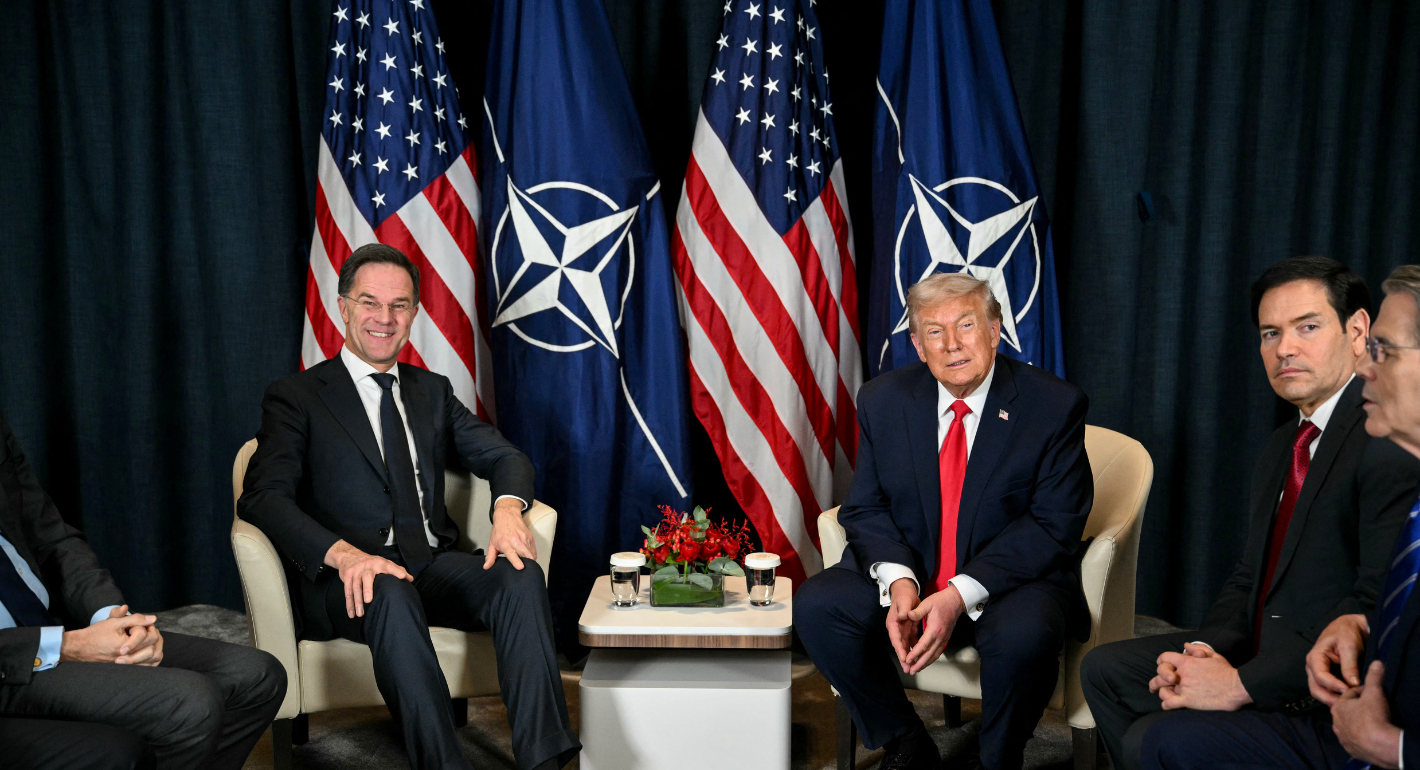
Donald Trump has demanded that European allies send ships to the Strait of Hormuz while his war of choice in Iran rages on. He has constantly berated NATO while the alliance’s secretary-general has emphatically supported him.
Rym Momtaz, ed.
The EU is structurally incapable of reacting to today’s foreign policy crises. The union must fold the EEAS into the European Commission and create a security council better prepared to take action on the global stage.

Stefan Lehne