

In The Media
David Rothkopf
{
  "authors": [
    "David Rothkopf"
  ],
  "type": "legacyinthemedia",
  "centerAffiliationAll": "",
  "centers": [
    "Carnegie Endowment for International Peace"
  ],
  "collections": [],
  "englishNewsletterAll": "",
  "nonEnglishNewsletterAll": "",
  "primaryCenter": "Carnegie Endowment for International Peace",
  "programAffiliation": "",
  "programs": [],
  "projects": [],
  "regions": [],
  "topics": [
    "Economy"
  ]
}
REQUIRED IMAGE
Source: Newsweek International
Nov. 21, 2005 issue - The failure of the recent Summit of the Americas in Mar del Plata, Argentina, and the unrest in the streets surrounding it were further evidence that despite years of ballyhooed attempts at reform, the political wedge issue in Latin America remains as it has for decades: social inequity. Democracy, it turns out, is not in and of itself enough to enfranchise the poorest or to knit fragmented societies together. Not even when linked with freer markets. Not even when tied to stirrings of growth, albeit sporadic growth. What's more, the frustrations of the Mar del Plata marchers—the latest wave in a backlash against globalization and the American-style capitalism it's associated with—is not limited to the streets of the Americas. Read your newspapers regardless of where you may live. Theirs is a global lament.
The formulas that international financial institutions have offered to transform the less-fortunate nations of the world have generally failed to do the one thing necessary to win lasting advocates for reform: enable those who are poor to join the middle class or even to realistically aspire to it. The absolute income levels of the poorest may be creeping up. But with the notable exceptions of India and China and a few others, which show some heartening middle-class growth, we are doing a very bad job of building the middle classes, which are the foundation of stability and the antidote to the boom-bust cycles that bedevil much of the emerging world.
The picture is clearest when you look at the number and fate of the world's middle- class countries (rather than middle-class individuals, although the story there is not so terrific, either). For all the great progress of the past four decades or so, from the end of colonialism and communism to the birth of the Information Age, only four economies—South Korea, Singapore, Hong Kong and Taiwan—have managed to join the ranks of "high income" nations, now defined by the World Bank as countries with a per capita gross national income (GNI) of more than $10,066. That is to say that, by Western standards, on average their citizens are now reasonably comfortable.
Most others have faltered. In fact, writes World Bank economist Branko Milanovic in his recent book, "Worlds Apart," the number of countries in the comfortable zone has fallen from 41 in 1960 to 31 today, and the number of rich non-Western nations has fallen from 19 to nine. At the same time, incomes of the richest countries, which were 16 times higher than those of the poorest countries in the 1960s, grew to be 35 times higher by 1999.
This purging of the ranks of middle-class nations has been accompanied by an unhealthy stability in the ranks of the poorest states. In 1960 there were 25 countries in the Fourth World, the poorest segment of countries, those with a GDP per capita less than $1,067. Only two have escaped: Botswana and Egypt. Downward mobility has been more common worldwide than upward mobility. Among 22 nations that, according to Milanovic, qualified during the 1960s as "contenders," meaning they could have reasonably aspired to join the club of the rich within a generation, more than 90 percent ended up regressing deeper into poverty.
This foiled aspirant class of states is a polyglot group spanning the Caribbean, Latin America, Eastern Europe, Central Asia and Africa. In Latin America, real incomes are now the same as in the 1980s, and a recent U.N. report finds that 23 million Latin Americans slipped from the middle class into poverty in the past six years. In the former communist countries of Eastern Europe and Russia, which had been known as the Second World for income levels that were lower than the United States' and Western Europe's but higher than most other countries', real incomes have fallen in the post-1989 transition. The middle classes in the region shrank by more than 7 percent through the mid-1990s.
Among some of the common reasons for declining incomes, according to Milanovic, are political instability and civil conflict. Nicaragua and Iran, for example, both contenders in Milanovic's terminology, experienced a dramatic decline in income after nearly a decade of war apiece. In 1988, Nicaragua's GDP per capita stood at $2,300—down from $5,000 in 1977. (Today it has fallen further, to only $476.) Over the same period Iran's GDP per capita fell from $7,900 to $4,300. This pushed Iran into the Third World and Nicaragua into the Fourth World, the development basement. Similarly, Argentina's "Dirty War" secured the influence of a corrupt, ineffective military junta, which only intensified the country's economic problems.
The instability that befell these and other contender nations placed severe constraints on planning and development, which played out over a decade where the cold war intensified in proxy conflicts across a number of these troubled regions. Unfortunately, the end to these conflicts has not helped. Indeed, despite the wave of highly touted reforms of the late '80s and '90s in much of the emerging world, results have come up short because elites who embraced privatization and trade liberalization refused to go the next step. They did not transform ownership structures to give more citizens a chance to raise capital, or to own businesses.
The turning point Milanovic cites also happens to be roughly the beginning of the quarter-century-long era of Reaganism and Thatcherism, of a global focus on trusting markets more than governments to heal all wounds. As it turns out, markets may drive growth, but they also favor those blessed with access to capital and other advantages. In a recent paper, economist and president of the Washington-based Center for Global Development Nancy Birdsall notes that even the middle that has been created in Latin America is hardly a middle at all. In the United States, the median income is about 90 percent of the average income. In Brazil, the median is only about 30 percent of the average, and that is typical for most Latin American countries—because such a huge share of income goes to the rich, they skew the average upward.
The consequence of such inequality is a renaissance of populists who appeal to the single most important political force in an increasingly democratic world: the have-nots. From Nestor Kirchner in Argentina to Hugo Chavez in Venezuela, from Vladimir Putin in Russia to Robert Mugabe in Zimbabwe, the winning ticket in many countries is a cocktail of nationalism, neostatism and anti-globalism, often served with an authoritarian twist. During the next 12 months in Latin America alone, elections in Bolivia, Peru, Ecuador, Mexico, Brazil and Nicaragua may illustrate the growing appeal of illiberal platforms for opportunistic politicians.
Of course, the choice need not be between populists and proto-capitalists. The place to focus is on the middle ground. As the New America Foundation's Sherle Schwenninger argues, "Extending the system of mass affluence found in the United States and Europe to the developing world is the key to both world economic growth and global political stability in the decades ahead." This means building market mechanisms that create stakeholders in national economies. This could be the development of mortgage markets in places like Latin America, where they are rare, or the expansion of programs that make loans to the little guy, or give workers an equity stake in their businesses, or open up universities to the underprivileged.
Development institutions ought to shift their lending from governments to people. They ought to identify and emulate the success stories of those cities and provinces and countries that have managed to do better—the Singapores and Taiwans, for example. In addition, we need to recognize the lesson of India and China: that size attracts investment and that the backlash against trade liberalization that knits together fragmentary smaller markets is dangerous and counterproductive for rich and poor alike. Finally, and perhaps most controversially, we need to recognize that there is a role for government in all this. Markets favor the strong.
Just as growth does not necessarily translate into greater equity, poverty does not always translate into impotence. If we allow the ranks of the most economically vulnerable to grow, then the pain will be felt all across the economic continuum. And we among the privileged of the world need to recognize that even if, as Deng Xiaoping once said, "to be rich is glorious," giving others the chance to simply be comfortable and offer a better future for their children is the bedrock upon which our collective futures must be built.
Rothkopf is a visiting scholar at the Carnegie Endowment for International Peace and is the author of "Running the World," a history of U.S. foreign-policy making since the second world war.
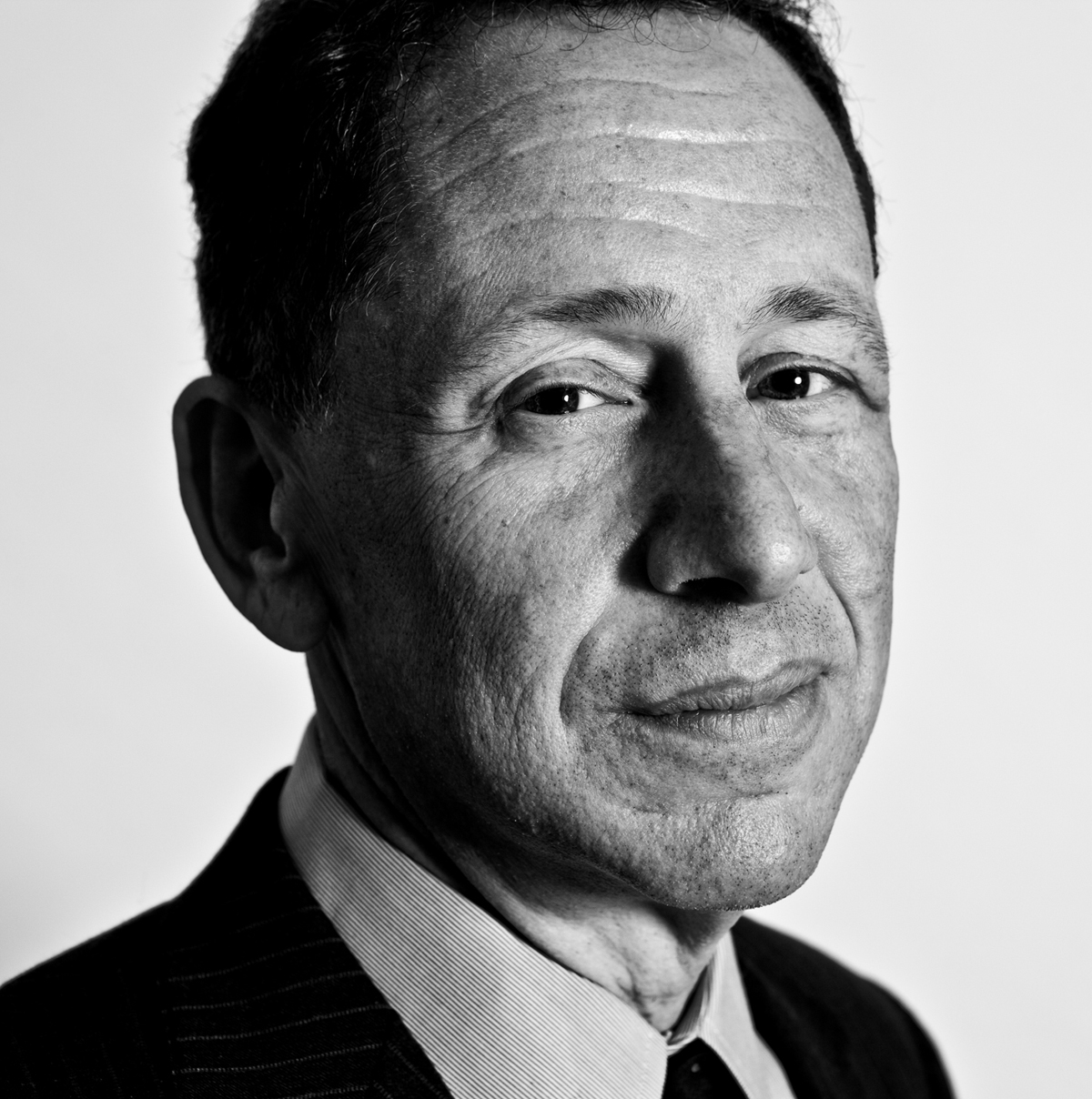
Former Visiting Scholar
David Rothkopf was a visiting scholar at the Carnegie Endowment as well as the former CEO and editor in chief of the FP Group.
Recent Work
David Rothkopf
David Rothkopf
Carnegie does not take institutional positions on public policy issues; the views represented herein are those of the author(s) and do not necessarily reflect the views of Carnegie, its staff, or its trustees.

A summer of escalation in the Black Sea has hurt Ukraine economically and is exacerbating world food security. A truce is needed—as is a broader reframing of Europe’s Ukraine strategy.

Thomas de Waal

As geopolitical rivalry weaponizes global supply chains, the EU’s true vulnerability lies in emerging-risk imports. For these goods, suppliers are growing more concentrated, substitution more difficult, and political risk is looming.

Sinan Ülgen

The EU is putting together a new security strategy to meet today’s myriad challenges. But for any proposal to be effective, the union needs to grapple with its identity and ambitions.

Pierre Vimont
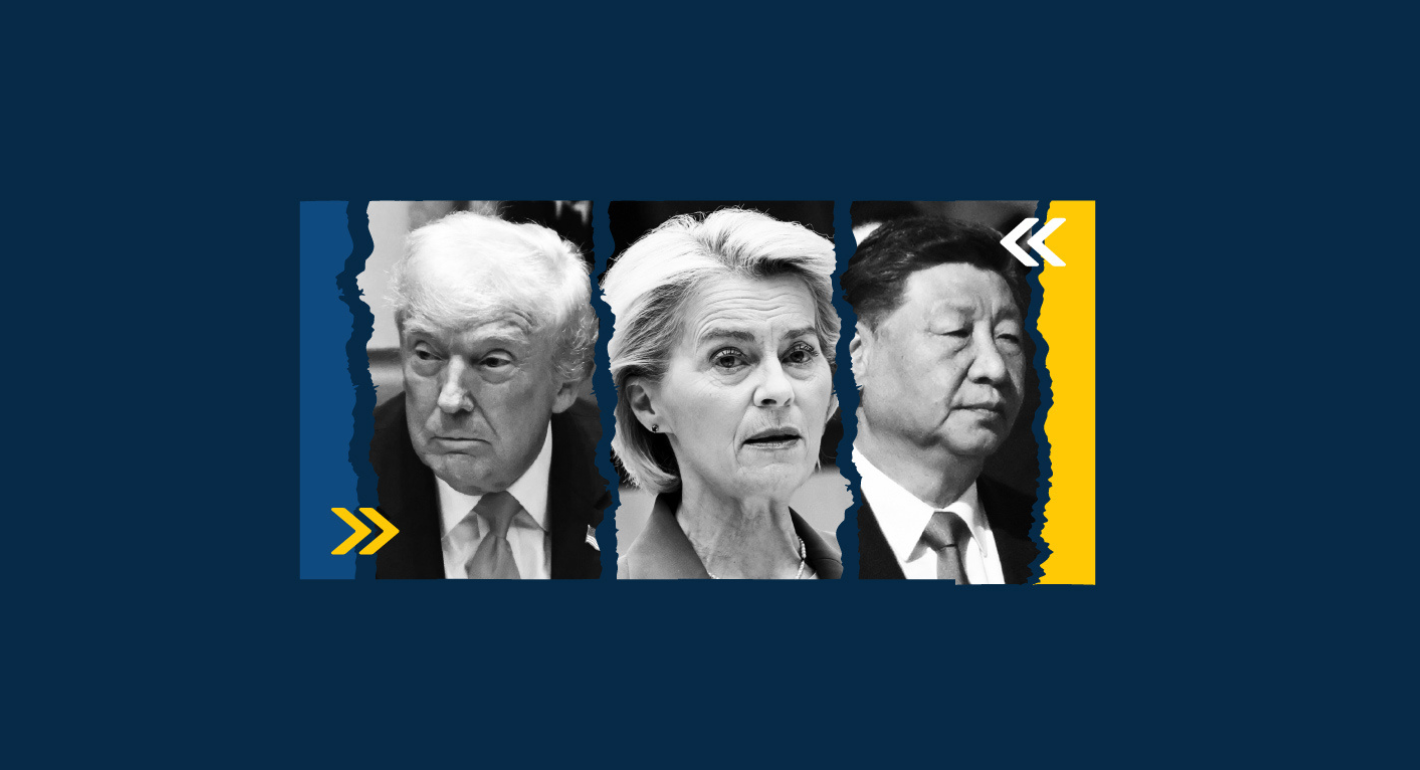
Between the United States’ market-driven approach and China's state-led industrial strategy, Europe is reckoning with how it can remain competitive in the global economy. But is Europe in danger of becoming a U.S. or China colony?
Noah Barkin, Anu Bradford
The U.S.-sponsored TRIPP deal is driving the Armenia-Azerbaijan peace process forward. But foreign and domestic hurdles remain before connectivity and economic interdependence can open up the South Caucasus.


Thomas de Waal, Areg Kochinyan, Zaur Shiriyev