

In The Media
John Judis
{
  "authors": [
    "John Judis"
  ],
  "type": "legacyinthemedia",
  "centerAffiliationAll": "",
  "centers": [
    "Carnegie Endowment for International Peace"
  ],
  "collections": [],
  "englishNewsletterAll": "",
  "nonEnglishNewsletterAll": "",
  "primaryCenter": "Carnegie Endowment for International Peace",
  "programAffiliation": "",
  "programs": [],
  "projects": [],
  "regions": [
    "North America",
    "United States"
  ],
  "topics": [
    "Foreign Policy"
  ]
}
REQUIRED IMAGE
Democrats will not have an easy time winning in Florida. But there is increasingly less support in the state for the kind of politics that allowed George W. Bush to carry the state in 2004. Democrats should take heart--and those Republican presidential candidates who are falling over each other to please anti-government conservatives and the Christian right should pay careful attention.
Source: The New Republic Online
Fort Lauderdale's Coral Ridge Ministries, with its 10,000-member congregation, radio and television programs, and seminary, is one of Florida's most prominent evangelical groups. For over a decade, it has also run two organizations, the Center for Reclaiming America and the Center for Christian Statesmanship, that aimed to win over politicians and the public to a religious right agenda. But last month, the ministries shut down both organizations. Their demise may be attributed partly to the ministries' founder, Reverend James D. Kennedy, being taken ill. But it also reflects a shift in Florida's political demographics.
In the 2000 election, of course, Florida was the ultimate swing state. But in 2004, George W. Bush won the state handily, and Republican Mel Martinez captured retired Democrat Bob Graham's Senate seat, thanks especially to Christian conservative support in rural districts. Florida, it seemed, was becoming as dependable a red state as Georgia or Alabama. But the closing of Coral Ridges' political arm is just the latest sign that the Christian right is no longer at the center of Florida politics. Indeed, Florida is becoming less like a Deep South state and more like Virginia or even--perish the thought! -- California. It isn't necessarily becoming Democratic, but its voters are moving steadily away from the conservatism of President Bush and Reverend Kennedy.
One obvious indication of this trend was last November's congressional elections. Democratic Senator Bill Nelson easily won re-election, and the Democrats stole two Republican House seats (and would have won a third around Sarasota if not for touch-screen shenanigans). Democrats also picked up seven seats in the Florida House and the statewide position of chief financial officer.
Polling data suggest that these election results weren't a fluke. Since 1988, Florida International University has been conducting extensive annual polls on the attitudes of Floridians. The results show a dramatic shift from 2004 to 2006 that can't simply be attributed to dissatisfaction with the Iraq war. Over that time period, the percentage of Floridians identifying themselves as "conservative" dropped from 31 to 27 percent, while the percentage of those identifying themselves as "middle-of-the-road" or "liberal" rose from 35 percent to 42 percent. The percentage of those saying it was appropriate for the state to restrict abortions fell from 38 to 33 percent, and those who said they were "very concerned" about global warming increased from 35 to 44 percent
What the polls show is not a steady movement away from conservative positions, but the resumption of movement that had begun earlier and was interrupted by the Republican-conservative upsurge after September 11. If you go back a little farther, you see that Floridians' initial support for the Bush administration in the war on terrorism and the invasion of Iraq colored their attitudes on other subjects as well. For instance, those who though it appropriate to restrict abortions went from 29 percent in 2001 to 38 percent in 2004 but has begun falling again with the loss of confidence in the Bush administration's performance on the war. In the absence of unexpected events, Floridians should continue to move back to the political center on a whole range of social and economic questions.
But the most interesting indication is what has happened in the governor's office. In last year's Republican primary, Charlie Crist, a moderate, bested religious right favorite Tom Gallagher and went on to defeat Representative Jim Davis in the general election. Crist had promised during the election to be a "Jeb Bush Republican," but since taking office he has combined the folksy populism of former Democratic Governor Lawton Chiles with the centrist Republicanism of California Governor Arnold Schwarzenegger.
Echoing Chiles, Crist cancelled the $2.5 million inaugural ball and established an Office of Open Government. He addresses citizens as "my boss." The state's health secretary and surgeon general, Dr. Ana M. Viamonte-Ros--one of Crist's first appointments--has proposed that Florida follow Schwarzenegger's lead in guaranteeing health insurance to all state residents.
Crist has also followed Schwarzenegger's lead in proposing that the state combat global warming. Said Crist, "Global climate change is one of the most important issues that we will face this century." He told The Palm Beach Postthat seeing Al Gore's An Inconvenient Truth had helped convince him of the urgency of the problem. He also appointed an environmentalist, Shannon Estenoz, formerly of the World Wildlife Fund, to the powerful South Florida Water Management Board. And Crist has also proposed generously funding stem-cell research.
Jeb Bush achieved notoriety and infuriated Democrats by stacking Florida's electoral deck against the Democrats. Crist joined Democratic Representative Robert Wexler in proposing that the state end the touch-screen voting system that had resulted in 18,000 missing votes in the Sarasota congressional race. Said Crist, "You go to the ATM machine, you get some kind of record. You go to the gas station, you get some kind of record. If there's a need for a recount, it's important to have something to count." Crist has also proposed allowing felons to vote. "I believe in simple human justice and that when somebody has paid their debt to society, it is paid in full," he said.
Furthermore, whereas Jeb Bush promoted a voucher program for Florida, Crist has emphasized reducing class sizes in public schools. Bush also championed privatization of government programs; Crist has initiated a wide-ranging review of these efforts. And Crist has become a champion of civil rights. The man once known as "Chain Gang Charlie" for his advocacy of chain gangs for inmates has proposed giving $5 million to the family of Martin Lee Anderson, a black teenager beaten to death by guards at a county-run boot camp. Crist has also endorsed a Democratic plan to replace the state song, "Old Folks at Home," which speaks of "darkies...a-longing for the old plantation."
These measures might have proven controversial in a deeply conservative southern state like Georgia or Alabama. An Georgia Republican who praised An Inconvenient Truth could easily find himself the subject of a recall campaign. But Crist is wildly popular in Florida. Last month, a statewide poll by the University of North Florida showed that 81 percent of Republicans and 73 percent of Democrats approved of Crist's performance as governor. That suggests that Crist's move to the center doesn't simply reflect his own eccentricity, but his understanding of where Florida's voters are really at.
Crist's success certainly doesn't show that Democrats will have an easy time winning in Florida. Crist, after all, is a Republican. But it does show that there is increasingly less support in the state for the kind of politics that allowed George W. Bush to carry the state in 2004. Democrats should take heart--and those Republican presidential candidates who are falling over each other to please anti-government conservatives and the Christian right should pay careful attention.
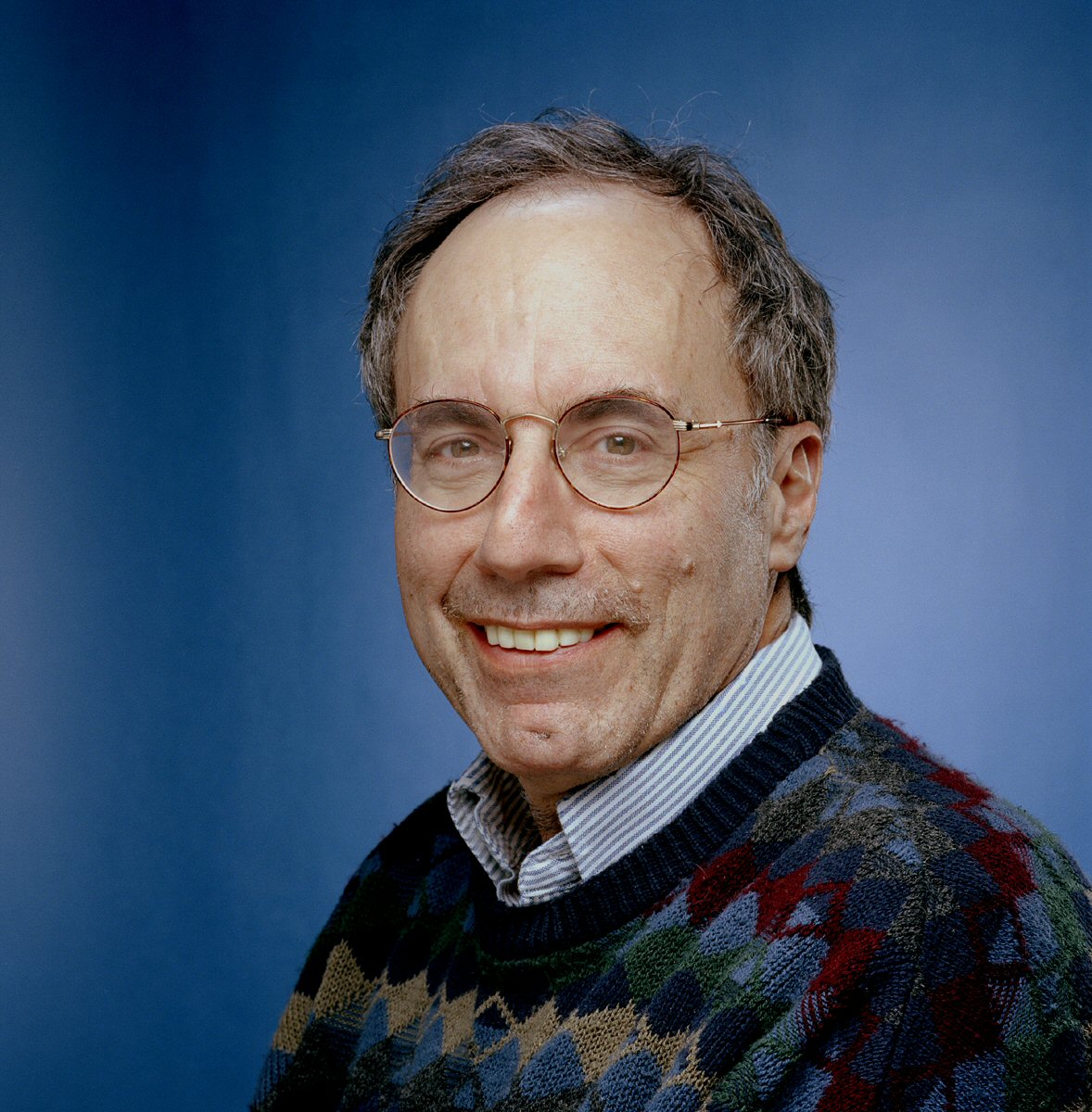
John B. Judis is a senior editor at The New Republic and a visiting scholar at the Carnegie Endowment for International Peace.
Former Visiting Scholar
As a visiting scholar at Carnegie, Judis wrote The Folly of Empire: What George W. Bush Could Learn from Theodore Roosevelt and Woodrow Wilson.
Recent Work
John Judis
John Judis
Carnegie does not take institutional positions on public policy issues; the views represented herein are those of the author(s) and do not necessarily reflect the views of Carnegie, its staff, or its trustees.

The new U.S.–Denmark–Greenland agreement will help Washington exert political, economic, and financial dominance under the guise of security. Yet, it acknowledged Copenhagen’s and Nuuk’s sovereignty on the island.

Marc Pierini

A summer of escalation in the Black Sea has hurt Ukraine economically and is exacerbating world food security. A truce is needed—as is a broader reframing of Europe’s Ukraine strategy.

Thomas de Waal

Are Germany’s economic, industrial, and political struggles becoming a liability for the EU’s ability to rise to the geopolitical moment?

Rym Momtaz, ed.

European Commission President Ursula von der Leyen is about to give her annual address on the state of the EU. Here’s what she won’t—but should—say.
Rym Momtaz

Radical-right parties are expected to do well in upcoming elections in four of the EU's biggest member states. If successful, they could prevent the union from addressing key challenges ahead.

Stefan Lehne