

Research
- +10
Rosa Balfour, Frances Z. Brown, Yasmine Farouk, …
{
  "authors": [
    "Moisés Naím"
  ],
  "type": "legacyinthemedia",
  "centerAffiliationAll": "",
  "centers": [
    "Carnegie Endowment for International Peace"
  ],
  "collections": [],
  "englishNewsletterAll": "",
  "nonEnglishNewsletterAll": "",
  "primaryCenter": "Carnegie Endowment for International Peace",
  "programAffiliation": "",
  "programs": [],
  "projects": [],
  "regions": [
    "North America",
    "United States",
    "South America"
  ],
  "topics": [
    "Economy"
  ]
}
Source: Getty
While President Hugo Chavez has been molding Venezuela into his personal socialist vision, other transformations -- less visible but equally profound -- have taken hold in the country. Venezuela has become a major hub for international crime syndicates. What attracts them is not the local market; what they really love are the excellent conditions Venezuela offers to anyone in charge of managing a global criminal network.
Source: Los Angeles Times

While President Hugo Chavez has been molding Venezuela into his personal socialist vision, other transformations -- less visible but equally profound -- have taken hold in the country.
Venezuela has become a major hub for international crime syndicates. What attracts them is not the local market; what they really love are the excellent conditions Venezuela offers to anyone in charge of managing a global criminal network.
A nation at the crossroads of South America, the Caribbean, North America and Europe, Venezuela's location is ideal. Borders? Long, scantly populated and porous. Financial system? Large and with easy-to-evade governmental controls. Telecommunications, ports and airports? The best that oil money can buy. U.S. influence? Nil. Corrupt politicians, cops, judges and military officers? Absolutely: Transparency International ranked Venezuela a shameful 162 out of 179 counties on its corruption perception index. Chavez's demonstrated interest in confronting criminal networks during his eight years in power? Not much.
While this situation has so far been rather invisible to the rest of the world, it is patently clear to those in charge of fighting transnational crime. Anti-trafficking officials in Europe, the United States, Asia and other Latin American countries are paying unprecedented attention to Venezuela. These officials are not particularly interested in Venezuelan politics or in Chavez's policies. All they care about is that the tentacles of these global criminal networks are spreading from Venezuela into their countries with enormous power and at great speed.
The numbers speak volumes: About 75 tons of cocaine left Venezuela in 2003; it is estimated that 276 tons will leave the country this year. Before, the main destination was the United States; now, Europe is increasingly the target. Italy and Spain are two new important and lucrative end-user markets, and earning in euros is undeniably better than getting paid in dollars these days.
A senior Dutch police officer told me that he and his European colleagues are spending more time in Caracas than in Bogota, Colombia, and that the heads of many of the major criminal cartels now operate with impunity, and effectiveness, from Venezuela. The cartel bosses aren't exclusively Colombians -- there are Asians (especially Chinese) and Europeans too. Caracas' most posh neighborhoods are home to important kingpins from around the world, including some from Belarus, a country that Chavez notably has visited several times.
Venezuela appears near the top of lists compiled by the anti-money-laundering authorities as well. Money moves in and out, and not just through electronic inter-bank transfers. The combination of private jets, suitcases full of cash and diplomatic immunity has opened up new possibilities. Recently, one Venezuelan member of the boliburguesía -- the new mega-rich -- was caught carrying at least one suitcase full of money. He was discovered by a customs officer in Buenos Aires but not arrested. Turns out he was traveling on an executive jet with senior members of the government of Argentina's president, Nestor Kirchner.
In Uruguay, an outraged legislator dropped this bombshell a few weeks ago: A group of Venezuelans had engineered the sale of Iranian arms and munitions to his country, using Venezuelan companies as a cover to bypass the U.N. embargo on Iran's arms trade. Likewise, the guerrillas in Colombia seem to have no trouble acquiring weapons -- many of which come through Venezuela-based arms dealers.
Diamond traders are doing equally well. "Venezuela is allowing massive smuggling of diamonds," stated a recent report by Global Witness and Partnership Africa, two respected nongovernmental organizations. They recommended that Venezuela be expelled from the Kimberley Process, the U.N.-sponsored mechanism designed to combat the smuggling of "blood diamonds" -- the gems sold to fund military conflicts around the world.
And as if diamonds, guns, drugs and tainted money weren't enough, human traffickers have made their way to Venezuela as well. The country has become a haven for human traffickers because its laws offer so little protection to their victims, especially women. It is also a major stopover for illegal immigrants from China, the Middle East and other parts of Latin America who are on their way elsewhere. They can obtain a Venezuelan passport in a matter of hours.
The great paradox of this terrible story is that, despite Chavez's constant denunciations of globalization, he hasn't protected Venezuela from its worst consequences. His nation has been globalized -- by criminal gangs. And they import and export corruption, crime and death. And that may be more critical in shaping Venezuela's future than any of Chavez's political experiments.
Moises Naim is the editor of Foreign Policy magazine and the author of "Illicit: How Smugglers, Traffickers and Copycats Are Hijacking the Global Economy."

Distinguished Fellow
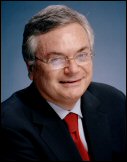
Moisés Naím is a distinguished fellow at the Carnegie Endowment for International Peace, a best-selling author, and an internationally syndicated columnist.
Recent Work



Rosa Balfour, Frances Z. Brown, Yasmine Farouk, …
Moisés Naím
Carnegie does not take institutional positions on public policy issues; the views represented herein are those of the author(s) and do not necessarily reflect the views of Carnegie, its staff, or its trustees.

The hybrid warfare landscape is evolving rapidly, leaving policymakers without clear strategies. To better inform their work in addressing emerging challenges, governments must dig deeper into the underlying dynamics at play.


Raluca Csernatoni, Alicia Wanless

Trump is distracted and Ukraine wants Europe to step up. The continent’s leaders must find their voice and assert it in talks with Russia.

Alissa de Carbonnel
Over the past ten years, NATO has held almost as many summits as it did during the entirety of the Cold War. Are they still useful, or is it time to stop holding annual meetings?

Rym Momtaz, ed.
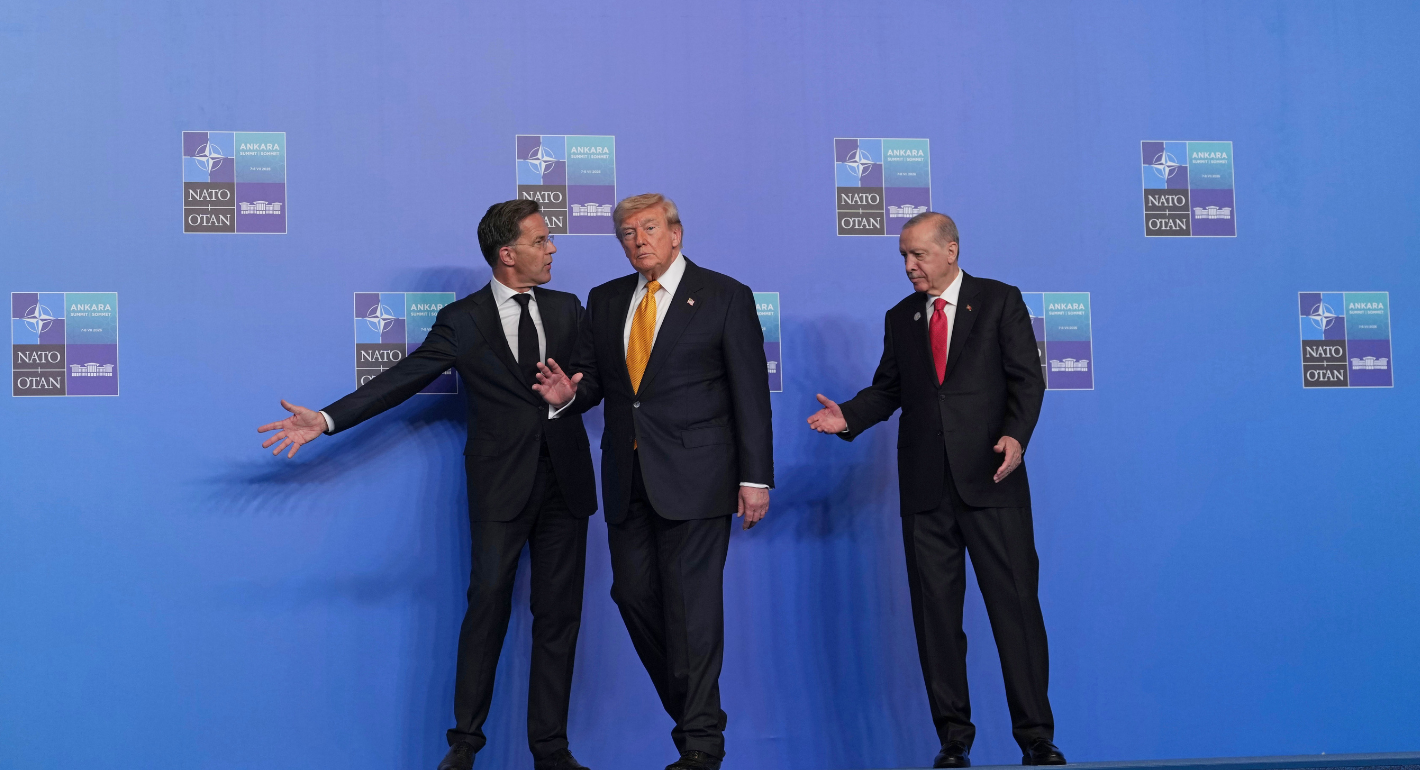
Nearly a year and a half after Europeans leaned into sucking up to Trump, the strategy has produced some benefits when it comes to Ukraine.
Rym Momtaz

Autonomous AI agents are increasingly prevalent in cyberspace. The EU needs a real-time monitoring strategy, to invest in AI defenses, and to reduce its strategic dependence on U.S. frontier models.
Raluca Csernatoni, Patryk Pawlak