

Commentary
Russia is testing the waters of NATO’s mutual defense clause. What do strikes in Romanian territorial waters mean for the alliance’s posture toward Moscow?
Dimitar Bechev
{
  "authors": [
    "Michael McFaul",
    "Abbas Milani"
  ],
  "type": "legacyinthemedia",
  "centerAffiliationAll": "dc",
  "centers": [
    "Carnegie Endowment for International Peace"
  ],
  "collections": [],
  "englishNewsletterAll": "menaTransitions",
  "nonEnglishNewsletterAll": "",
  "primaryCenter": "Carnegie Endowment for International Peace",
  "programAffiliation": "MEP",
  "programs": [
    "Middle East"
  ],
  "projects": [],
  "regions": [
    "Middle East",
    "Iran"
  ],
  "topics": [
    "Foreign Policy"
  ]
}
Source: Getty
The National Intelligence Estimate released this month offers an opportunity to escape this straitjacketed debate by embracing a new strategy that would pursue both the short-term goal of arms control and the long-term goal of democracy in Iran.
Source: The Washington Post

The NIE's "key judgment" that Iran suspended its nuclear weapons program has thrust the arms controllers onto center stage. Because the nuclear threat is no longer immediate, the arms controllers insist that the time is ripe for the United States to engage in direct diplomacy with Tehran as a way to change the regime's behavior, but not the regime itself -- specifically, to persuade the mullahs to suspend their nuclear enrichment program.
Those who profess to back regime change claim that the NIE changes nothing and that the United States should continue to use coercive power, potentially including military strikes, to counter Tehran.
Both sides have part of the strategy right, but on its own neither offers a long-term vision for dealing with Iran.
It is folly to assume that advocates of military strikes are in the same camp as those who advocate regime change. There is no better way to prolong the life of the autocratic regime in Tehran, to strengthen increasingly weakened radicals such as Iranian President Mahmoud Ahmadinejad, than bombing Iran. Thankfully, the NIE has made military strikes less likely.
But the estimate provides no evidence to suggest that Iran's regime has changed its ways to be more compatible with American national interests or the interests of the Iranian people. The regime continues to repress its own people; supports terrorist organizations that threaten Israel and destabilize the governments in Iraq, Lebanon and the Palestinian territories; and still has not suspended its enrichment program, the key aspect of developing a nuclear weapon. Iran's suspension of its military nuclear program in 2003 was a tactical response to revelations about the clandestine operation, not a fundamental shift in strategic thinking.
To presume, therefore, that the NIE gives the United States license to bargain with Iran over its enrichment program and forgo any pressure on the regime is also folly. Focusing solely on enrichment would play into the hands of the mullahs, who see how the NIE has weakened the coalition in support of serious sanctions. They have every incentive to stretch out any negotiations -- while continuing to develop their enrichment program. Days after the NIE was made public, Ahmadinejad announced that Iran plans to have a cascade of 50,000 centrifuges, surely enough to make highly enriched uranium. American diplomatic tools to alter this behavior are extremely weak. Moreover, this strategy gives Iran a free pass on its support for terrorism and human rights abuses.
The United States and its allies must develop an Iran strategy that establishes both short- and long-term goals. Specifically, the United States must recommit to a policy of encouraging democratization inside Iran, because only a democratic regime will stop supporting terrorist groups abroad and repression at home. A democratic Iran is also less likely to restart a nuclear weapons program, especially if the United States and a new Iranian regime establish close military ties, a likely outcome.
Although counterintuitive to some, diplomatic engagement is required to pursue the long-term goal of democratization and, in parallel, the short-term goal of arms control. The first American offer of direct talks should include everything: the prospect of formal diplomatic relations and the lifting of sanctions; the potential supply and disposal of nuclear fuel (from a third-party organization or state); suspension of nuclear enrichment; an end to aid to Hezbollah and Hamas; and a serious discussion about stopping the arrests of students and human rights advocates and the persecution of union leaders and religious minorities. Discussion of new security institutions in the region should also be on the table. America's experience dealing with the Soviet Union during the Cold War demonstrates that we can engage a despotic regime without compromising our commitment to democracy and human rights.
Greater contact between Iranian and American societies will further undermine the regime's legitimacy, strengthen the independence of Iranian economic and political groups, and perhaps even compel some regime leaders to cash out and exchange their diminishing political power for enduring property rights. Over the past four decades, autocratic regimes have rarely crumbled as a result of isolation but more often have collapsed when seeking to engage with the West. Even the collapse of the Soviet Union occurred not when tensions between Moscow and Washington were high but during a period of engagement.
Will Iran follow a similar path? We will never know if we do not try. Of course, the mullahs might reject our overtures, but their refusal would embolden the opposition inside Iran. And a serious attempt to engage the Islamic republic now would strengthen the American case for more coercive diplomatic and economic pressure, should they be necessary in the future.
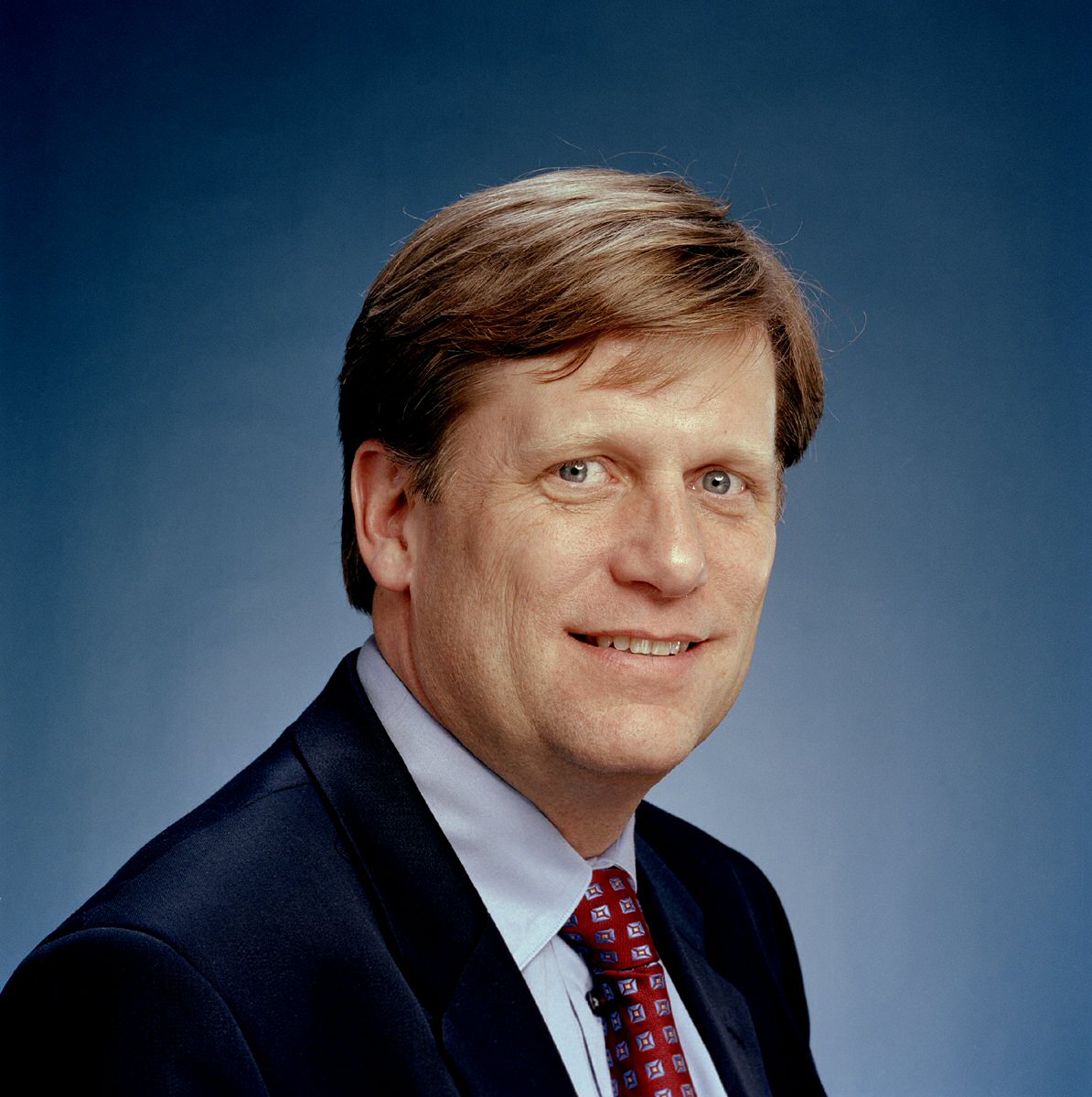
Michael McFaul is a professor of political science at Stanford University. Abbas Milani is director of the Iranian studies program at Stanford. Both are fellows at the Hoover Institution.
Former Senior Associate
In addition to his role at Carnegie, McFaul is Peter and Helen Bing Senior Fellow at the Hoover Institution and associate professor of political science at Stanford University.
Abbas Milani
Carnegie does not take institutional positions on public policy issues; the views represented herein are those of the author(s) and do not necessarily reflect the views of Carnegie, its staff, or its trustees.

Russia is testing the waters of NATO’s mutual defense clause. What do strikes in Romanian territorial waters mean for the alliance’s posture toward Moscow?

Dimitar Bechev

With its public finances in shambles, the far right polling at 35 percent ahead of the 2027 presidential election, and a growing protest movement, is France’s crisis a threat to the EU’s geopolitical awakening?

Rym Momtaz, ed.

Ahead of a tough winter for Ukraine, Donald Trump’s swing back toward Russia bodes ill. But instead of panicking, Kyiv’s European allies are focusing on action.
Rym Momtaz

Funding Ukraine remains a priority for European leaders. As Russia’s war of aggression heads into another winter, two feasible options to mobilize support for Kyiv should be fast-tracked.


Vladyslav Rashkovan, Gregory P. Wilson

While the EU and European governments are embracing the much-lauded middle-power moment, this entails three difficult conundrums.

Richard Youngs