

Commentary
Nikolay Petrov
{
  "authors": [
    "Nikolay Petrov"
  ],
  "type": "legacyinthemedia",
  "centerAffiliationAll": "dc",
  "centers": [
    "Carnegie Endowment for International Peace",
    "Carnegie Russia Eurasia Center"
  ],
  "collections": [],
  "englishNewsletterAll": "ctw",
  "nonEnglishNewsletterAll": "",
  "primaryCenter": "Carnegie Russia Eurasia Center",
  "programAffiliation": "NPP",
  "programs": [
    "Nuclear Policy"
  ],
  "projects": [],
  "regions": [
    "Caucasus",
    "Russia"
  ],
  "topics": [
    "Economy",
    "Foreign Policy"
  ]
}
REQUIRED IMAGE
First Deputy Prime Minister Dmitry Medvedev had a difficult task before him during his visit Friday to the Krasnoyarsk Economic Forum, where he had been expected to reveal his economic program. One week earlier, outgoing President Vladimir Putin described his own economic plan through 2020. Just one day before Medvedev's trip, Putin indicated that Medvedev did not have a separate plan but would only refine the existing one, which is to say Putin's Plan.
Source: The Moscow Times
First Deputy Prime Minister Dmitry Medvedev had a difficult task before him during his visit Friday to the Krasnoyarsk Economic Forum, where he had been expected to reveal his economic program. One week earlier, outgoing President Vladimir Putin described his own economic plan through 2020. Just one day before Medvedev's trip, Putin indicated that Medvedev did not have a separate plan but would only refine the existing one, which is to say Putin's Plan.
We did hear a new voice speaking in Krasnoyarsk and not merely that of an official Putin cheerleader. But Medvedev kept repeating the phrase "as the president correctly stated ..." and his comments about the "rule of law" were almost identical to statements Putin made early in his own presidency. It was also a bit strange that Medvedev used references to the authoritarian rule of Catherine the Great to reinforce his arguments on freedom and the rule of law.
But, apart from this, Medvedev's concept for the country's economic development and the improvement of demographics looks more sensible than Putin's call to quadruple labor productivity over the next 12 years and increase the average lifespan by a few years. Medvedev's speech did not leave his listener's heads spinning from claims of earth-shattering successes.
Medvedev will be left with a difficult legacy. For the last three years, the Kremlin has been preoccupied with the issues of presidential succession and divvying up control of state assets. Thus, the authorities never had time to modernize the economy or improve the country's infrastructure. Their efforts in these areas were limited to pilot national projects, from which Medvedev received the most benefit since they provided him a valuable training ground -- and plenty of publicity -- for his future role as president.
Yet the political system, which has been repeatedly modernized over recent years, has never resolved the serious problems facing the country -- unless you include managing the elections. The Kremlin's new leadership paradigm can be compared to a remodeled car that has been fitted with premium features for the driver, such as new power steering, but at the same time the shock absorbers have been removed because they were deemed unnecessary. And now a second steering wheel will shortly be installed. Nobody can know with certainty how this vehicle will perform, but there can be no doubt that its numerous mechanical defects will have to be fixed along the way.
The issues Medvedev addressed in his policy speeches at the Moscow Civil Forum on Jan. 22 and at the Krasnoyarsk Economic Forum almost exclusively fall within the authority of a first deputy prime minister and not a president. He made no reference to the siloviki, foreign policy or even specific regions within Russia. Through a remarkable sleight of hand, Medvedev was able to single out the individual institutions that form the foundation of his program without even mentioning parliament, representative authority or an independent judiciary.
Medvedev also introduced the concept of "bad laws" in his Krasnoyarsk speech. In his view, certain laws are bad only because they were made in haste. He said nothing of laws that were developed and passed without input from different social groups. This is why a parliament made up of a range of political parties, including opposition ones, is necessary.
To his credit, Medvedev did mention the need for a public discussion of all legislative initiatives. Another thing that increased his credibility is that he didn't dump all of the blame on citizens for breaking the law, such as when they buy pirated DVDs, but actually acknowledged the government's role in this enormous, systemic problem. Medvedev's constructive comments also give me hope that he won't fall into the typical lawyers' trap when they assume that any problem can be solved by simply passing a law.
Overall, Medvedev's speech was not bad and definitely better than Putin's address before the State Council on Feb. 8. Medvedev managed to formulate concrete proposals. He came off less like a "good cop" or an interpreter of Putin's statements. But the problem is that it will be very difficult for Medvedev to carry out his own program without having his own team.
Even more important, however, is that Putin's entire administrative and political model is designed to guarantee that it won't accomplish much of anything -- especially when there will be a new president sitting at the helm.
Nikolai Petrov is a scholar in residence at the Carnegie Moscow Center.
This comment first appeared in The Moscow Times
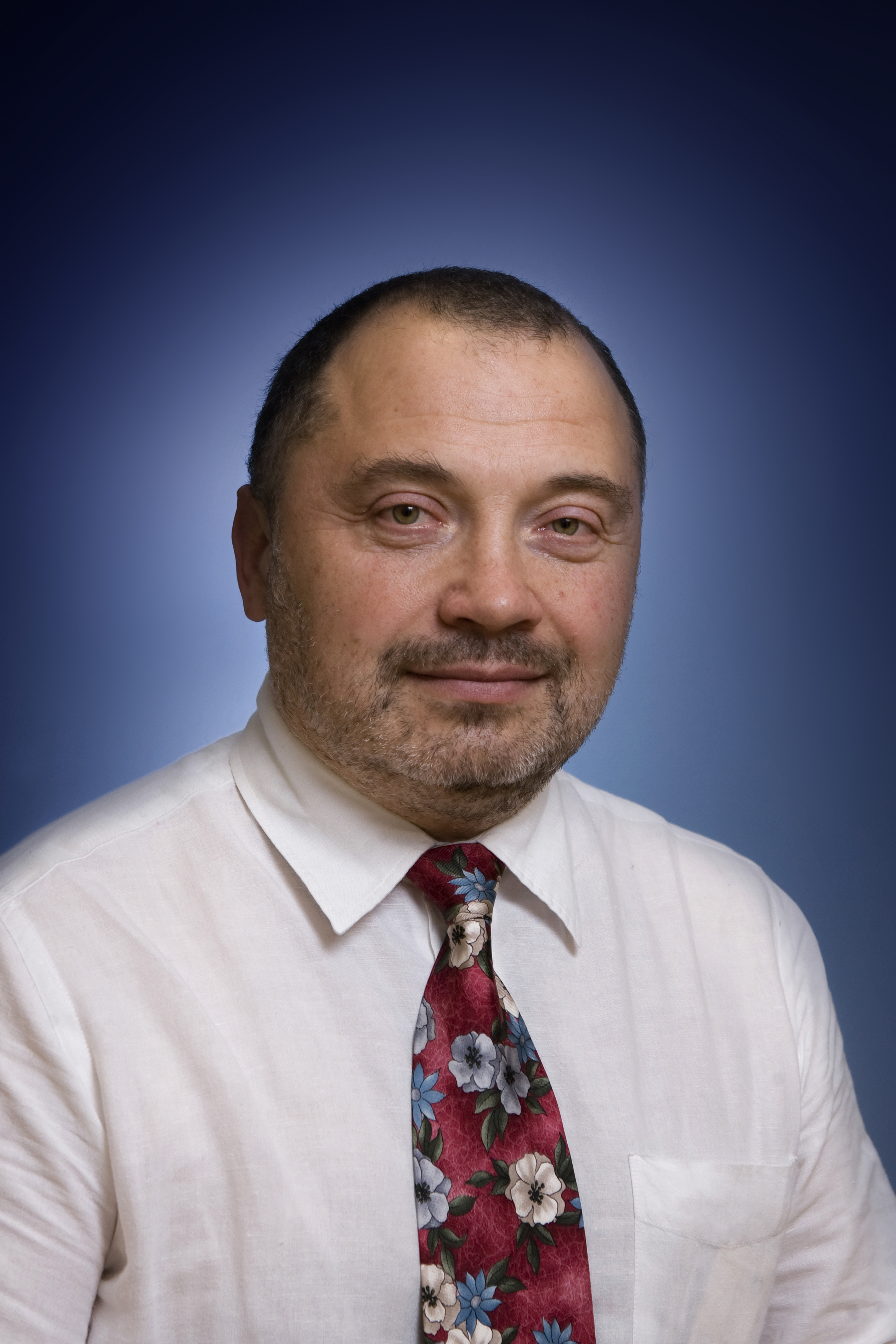
Former Scholar-in-Residence, Society and Regions Program, Moscow Center
Nikolay Petrov was the chair of the Carnegie Moscow Center’s Society and Regions Program. Until 2006, he also worked at the Institute of Geography at the Russian Academy of Sciences, where he started to work in 1982.
Recent Work
Nikolay Petrov
Nikolay Petrov
Carnegie does not take institutional positions on public policy issues; the views represented herein are those of the author(s) and do not necessarily reflect the views of Carnegie, its staff, or its trustees.

A summer of escalation in the Black Sea has hurt Ukraine economically and is exacerbating world food security. A truce is needed—as is a broader reframing of Europe’s Ukraine strategy.

Thomas de Waal

Are Germany’s economic, industrial, and political struggles becoming a liability for the EU’s ability to rise to the geopolitical moment?

Rym Momtaz, ed.

European Commission President Ursula von der Leyen is about to give her annual address on the state of the EU. Here’s what she won’t—but should—say.
Rym Momtaz

The aftermath of the Ceuta crisis shows Europe has drawn the wrong lessons. Rather than doubling down on failed migration policies, the EU needs to address the underlying roots of such episodes.

Richard Youngs

Canadian Prime Minister Mark Carney has twice inspired praise for standing up to U.S. President Donald Trump: at the 2026 World Economic Forum in Davos and on Canada-U.S. trade negotiations. Is Carney showing a third way better than the EU has in dealing with the Trump administration?
Rym Momtaz, ed.