

In The Media
Michele Dunne, Robert Kagan
{
  "authors": [
    "Robert Kagan"
  ],
  "type": "legacyinthemedia",
  "centerAffiliationAll": "dc",
  "centers": [
    "Carnegie Endowment for International Peace"
  ],
  "collections": [],
  "englishNewsletterAll": "asia",
  "nonEnglishNewsletterAll": "",
  "primaryCenter": "Carnegie Endowment for International Peace",
  "programAffiliation": "AP",
  "programs": [
    "Asia"
  ],
  "projects": [],
  "regions": [
    "East Asia",
    "China",
    "Taiwan"
  ],
  "topics": [
    "Political Reform",
    "Military"
  ]
}
Source: Getty
China can go for great stretches these days looking like the model of a postmodern, 21st-century power. But occasionally the mask slips, and the other side of China is revealed. The question for observers of Chinese foreign policy is whether the regime's behavior at home has any relevance to the way it conducts itself in the world.
Source: The Washington Post

But occasionally the mask slips, and the other side of China is revealed. For China is also a 19th-century power, filled with nationalist pride, ambitions and resentments; consumed with questions of territorial sovereignty; hanging on repressively to old conquered lands in its interior; and threatening war against a small island country off its coast.
It is also an authoritarian dictatorship, albeit of a modern variety. The nature of its rule isn't visible on the streets of Shanghai, where people enjoy a degree of personal freedom as long as they keep their noses out of politics. It is only when someone challenges its authority that the brute power on which the regime ultimately rests shows itself. In 1989, it was students in Tiananmen Square. A few years ago it was the Falun Gong. Today it is Tibetan protesters. Tomorrow it may be protesters in Hong Kong. Someday it may be dissidents on a "reunified" island of Taiwan.
This is the aspect of China that does not seem to change, despite our liberal progressive conviction that it must. In the 1990s, China watchers insisted it was only a matter of time before China opened. It was precisely this current generation of technocrats, not schooled in Soviet-style communism, who were supposed to begin reforming the system. Even if they didn't want to reform, the requirement of a liberalizing economy would leave them no choice: The growing Chinese middle class would demand greater political power, or the demands of a globalized economy in the age of the Internet would force China to change in order to compete.
Today this all looks like so much wishful thinking -- self-interested wishful thinking, to be sure, since, according to the theory, China would get democratic while Western business executives got rich. Now it looks as if the richer a country gets, whether China or Russia, the easier it may be for autocrats to hold on to power. More money keeps the bourgeoisie content and lets the government round up the few discontented who reveal their feelings on the Internet. More money pays for armed forces and internal security forces that can be pointed inward at Tibet and outward at Taiwan. And the lure of more money keeps a commerce-minded world from protesting too loudly when things get rough.
The question for observers of Chinese foreign policy is whether the regime's behavior at home has any relevance to the way it conducts itself in the world. Recall that in the 1990s we assumed there was a strong correlation: A more liberal China at home would be a more liberal China abroad, and this would gradually ease tensions and facilitate China's peaceful rise. That was the theory behind the strategy of engagement. Many still argue that the goal of American foreign policy should be, in scholar G. John Ikenberry's words, to "integrate" China into the "liberal international order."
But can a determinedly autocratic government really join a liberal international order? Can a nation with a 19th-century soul enter a 21st-century system? Some China watchers imagine the nations of East Asia gradually becoming a kind of European Union-style international entity, with China, presumably, in the role of Germany. But does the German government treat dissent the way China does, and could the European Union exist if it did?
China, after all, is not the only country dealing with restless, independence-minded peoples. In Europe, all kinds of subnational movements aspire to greater autonomy or even independence from their national governments, and with less justification than Tibet or Taiwan: the Catalans in Spain, for instance, or the Flemish in Belgium, or even the Scots in the United Kingdom. Yet no war threatens in Barcelona, no troops are sent to Antwerp and no one clears the international press out of Edinburgh. But that is the difference between a 21st-century postmodern mentality and a nation still fighting battles for empire and prestige left over from a distant past.
These days, China watchers talk about it becoming a "responsible stakeholder" in the international system. But perhaps we should not expect too much. The interests of the world's autocracies are not the same as those of the democracies. We want to make the world safe for democracy. They want to make the world safe, if not for all autocracies at least for their own. People talk about how pragmatic Chinese rulers are, but like all autocrats what they are most pragmatic about is keeping themselves in power. We may want to keep that in mind as we try to bring them into our liberal international order.
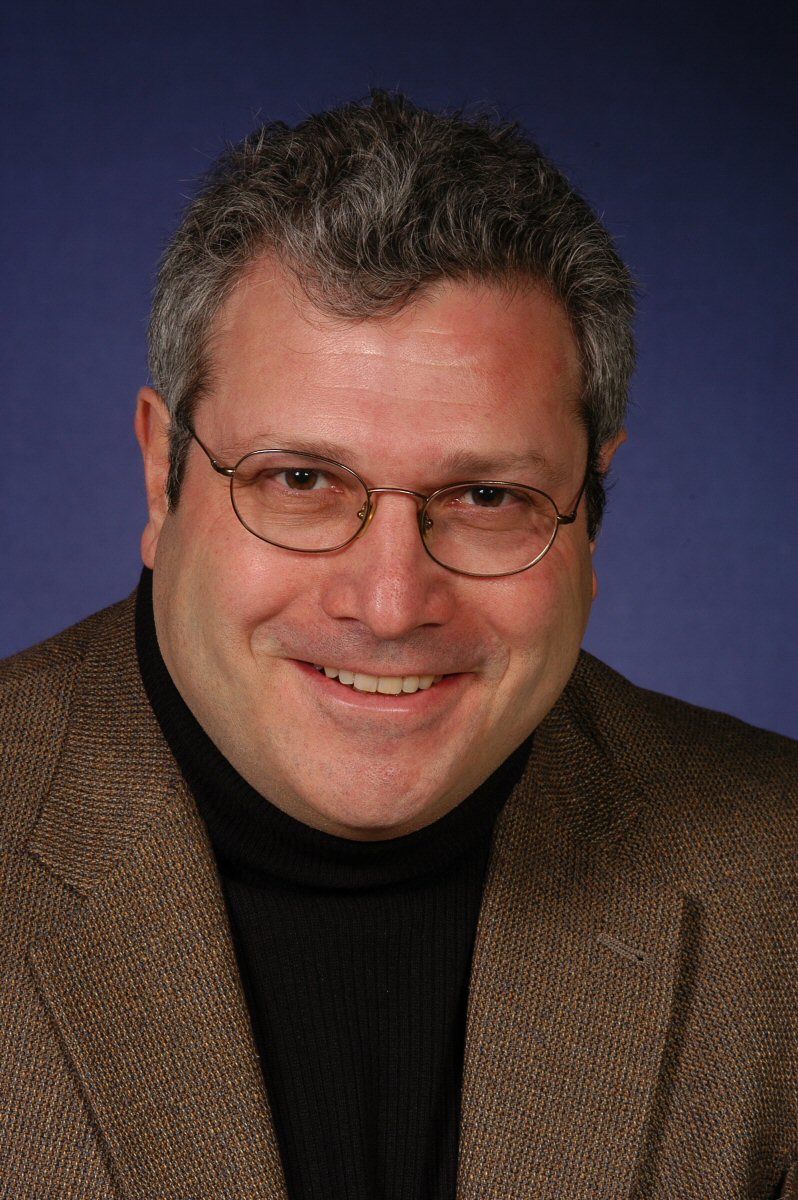
Former Senior Associate
Kagan, author of the recent book, The Return of History and the End of Dreams (Knopf 2008), writes a monthly column on world affairs for the Washington Post and is a contributing editor at both the Weekly Standard and the New Republic.
Recent Work

Michele Dunne, Robert Kagan
Robert Kagan, Michele Dunne
Carnegie does not take institutional positions on public policy issues; the views represented herein are those of the author(s) and do not necessarily reflect the views of Carnegie, its staff, or its trustees.

Ahead of a tough winter for Ukraine, Donald Trump’s swing back toward Russia bodes ill. But instead of panicking, Kyiv’s European allies are focusing on action.

Rym Momtaz

While the EU and European governments are embracing the much-lauded middle-power moment, this entails three difficult conundrums.

Richard Youngs

Europe is facing rising populism internally as well as external pressures from Russia, China, Turkey, and the United States.

Dimitar Bechev

A notable degree of participative democracy has firmly arrived in Europe. But to have more far-reaching impact, democratic deliberation needs to move into a radically new phase.
Richard Youngs

The European Commissioner for Trade is headed to China. But after President Xi’s bridge-building visit to Washington, can a more isolated EU overcome Beijing’s stranglehold on critical raw materials? Who will blink first?
Rym Momtaz, ed.