

Commentary
Maria Lipman
{
  "authors": [
    "Maria Lipman"
  ],
  "type": "legacyinthemedia",
  "centerAffiliationAll": "",
  "centers": [
    "Carnegie Endowment for International Peace",
    "Carnegie Russia Eurasia Center"
  ],
  "collections": [],
  "englishNewsletterAll": "",
  "nonEnglishNewsletterAll": "",
  "primaryCenter": "Carnegie Russia Eurasia Center",
  "programAffiliation": "",
  "programs": [],
  "projects": [],
  "regions": [
    "Caucasus",
    "Russia"
  ],
  "topics": [
    "Political Reform"
  ]
}
Source: Getty
Alexander Solzhenitsyn was a premodern giant who defied the limits of human ability and the forces of nature. His world was that of ethical absolutes, unshakable values, spiritual discipline and self-sacrificial commitment.
Source: Washington Post

His life was a succession of feats, the main among them being his book "The Gulag Archipelago," in which Solzhenitsyn detailed in step by gruesome step the ordeal of an innocent man going through the circles of the hellish repressive machine. This book, an epic account of human suffering under communism, shook and changed the world.
Solzhenitsyn's life and his writing were an uncompromising war against the communist regime. His grim courage and selfless devotion, comparable to that of early Christians, gave him moral superiority over his communist adversaries. He defeated Brezhnev's Politburo, and, instead of being killed or jailed, was expelled from the country.
But for all the admiration his books and personality inspired, his teachings sounded too rigorous to his contemporaries, at home and abroad. For his part, he couldn't accept the relativity and uncertainty of modern life.
Russia's destiny was more than a literary or a scholarly subject to Solzhenitsyn -- it was his mission. The perennial Russian debate of the past 150 years has been between Westernizers and Slavophiles, or those who promote nationalist ideas of Russia's special path. Solzhenitsyn's opponent in this debate was the only other man of an equal moral stature -- Andrei Sakharov, the academic and human rights activist who was awarded the Nobel Peace Prize in 1975. Both men sought to liberate Russia from communism, and both were almost inhumanly brave in their challenges to the regime. But Sakharov, a Westernizer, saw a solution in "convergence" with the West, which he regarded as a world of liberty and justice, while Solzhenitsyn, a nationalist, looked for Russia's salvation in its historical, cultural and religious roots.
As communism and the Soviet Union neared their collapse, Solzhenitsyn wrote "Rebuilding Russia," an essay in which he passionately advocated taking Russia back to its past and relying on a strong and enlightened central power as well as the spirituality of the Russian people.
Solzhenitsyn's ideas of rebuilding a Russia based on the nation's spiritual energies was, of course, utopian. The Russia of his imagination, in which spiritual roots produce a well-governed and just society, has never existed. As the grip of communism eased, the Russian people emerged into freedom demoralized, depleted of all spiritual energy and incapable of collective national efforts. When the market economy began to function, they avidly indulged, not in the least averse to television and the popular culture that Solzhenitsyn so strongly condemned. Today they enjoy personal freedoms and the opportunities of a consumer society; they have allowed the slow tide of modernization to carry them along. The call to muster spiritual energies in order to rebuild Russia as an antithesis of the soulless West would make them shrug.
By the time he returned to Russia -- after 20 years in Soviet government-ordered exile -- many of the liberal admirers who revered his books and his feats as an author were disappointed by Solzhenitsyn's anti-Western stance and his essentially undemocratic vision. They were concerned that his presence in the country would consolidate the conservative nationalist forces that would use him as their spiritual leader.
Indeed, various forces, including the government itself, have occasionally sought to draw on Solzhenitsyn's authority. His ideas may seem to be even more in demand recently, as Slavophile notions of Russia's special path have once again prevailed over Westernizers' visions of a Russia with liberal values and democratic institutions. But Solzhenitsyn never became a popular, or even public, figure in the new Russia. He didn't have a following, and, like some of the world's greatest men, he probably didn't need one. He was a great man driven by a mission that he pursued until the last moment of his life.
Masha Lipman, editor of the Carnegie Moscow Center's Pro et Contra journal, writes a monthly column for The Post.
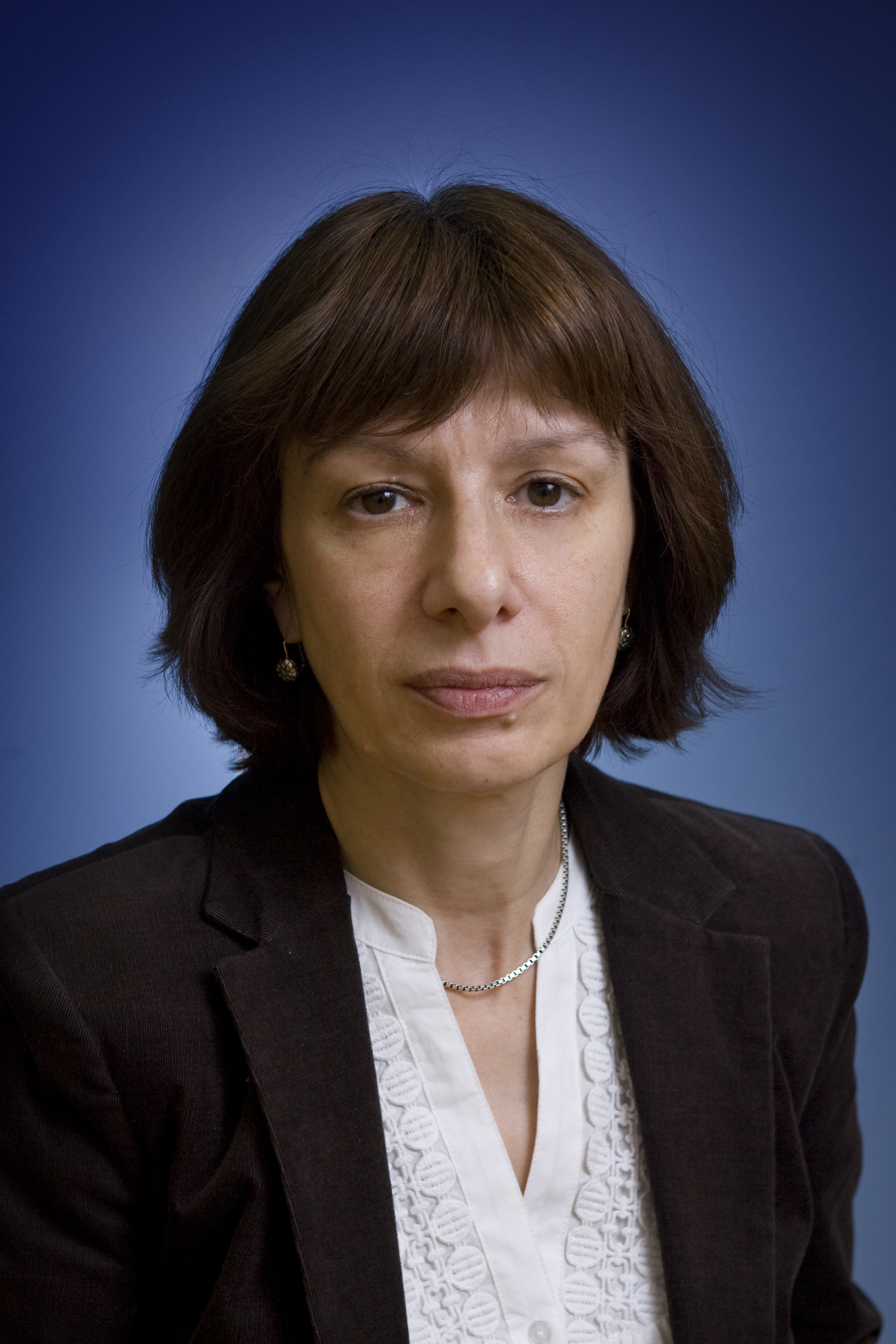
Former Scholar in Residence, Society and Regions Program, Editor in Chief, Pro et Contra, Moscow Center
Lipman was the editor in chief of the Pro et Contra journal, published by the Carnegie Moscow Center. She was also the expert of the Carnegie Moscow Center’s Society and Regions Program.
Recent Work
Maria Lipman
Maria Lipman
Carnegie does not take institutional positions on public policy issues; the views represented herein are those of the author(s) and do not necessarily reflect the views of Carnegie, its staff, or its trustees.

Before the next wave of EU enlargement takes place, the union needs to grapple with thorny questions of how power is distributed among its members.


Emil Sondaj Hansen, Ditte Brasso Sørensen

A summer of escalation in the Black Sea has hurt Ukraine economically and is exacerbating world food security. A truce is needed—as is a broader reframing of Europe’s Ukraine strategy.

Thomas de Waal

European Commission President Ursula von der Leyen is about to give her annual address on the state of the EU. Here’s what she won’t—but should—say.

Rym Momtaz

The EU’s responses to two recent incidents expose the gulf between European perceptions and capabilities. Unless the union can bridge that gap, it will never become a real geostrategic power.
Rym Momtaz

European states control several Overseas Countries and Territories around the world that carry strategic, economic, and environmental weight. As great powers challenge the rules-based order, defending them is a geopolitical imperative for Europe.

Marc Pierini