

Commentary
Nikolay Petrov
{
  "authors": [
    "Nikolay Petrov"
  ],
  "type": "legacyinthemedia",
  "centerAffiliationAll": "",
  "centers": [
    "Carnegie Endowment for International Peace",
    "Carnegie Russia Eurasia Center"
  ],
  "collections": [],
  "englishNewsletterAll": "",
  "nonEnglishNewsletterAll": "",
  "primaryCenter": "Carnegie Russia Eurasia Center",
  "programAffiliation": "",
  "programs": [],
  "projects": [],
  "regions": [
    "Caucasus",
    "Russia"
  ],
  "topics": [
    "Political Reform",
    "Foreign Policy"
  ]
}
Source: Getty
The recent changes made to Russia’s regional leadership shows that neither Medvedev’s presidency nor the financial crisis has changed the Kremlin’s approach in appointing ‘strongman’ regional leaders. But it also shows that the range of opportunities open to the Kremlin to reform the regions has narrowed significantly.
Source: The Moscow Times

The resignation of Amur Governor Nikolai Kolesov was long expected. The entire local political elite was opposed to his appointment 15 months ago, when he came to the job from Kazan without any knowledge of the Amur region and without any administrative experience. Kamil Iskhako, former presidential envoy to the Far East Federal District, had lobbied for Kolesov's appointment, but when he left office a year ago, Iskhakov could no longer cover for his political protege. The relatively small region six time zones east of Moscow holds the honor of changing more governors -- and under more scandalous circumstances -- than any other in Russia. It is interesting to note that this "interloper," Kolesov, was traded for another one, Oleg Kozhemyako, who hails from the Far East and once headed the Koryak autonomous region. The conventional thinking is that with Kozhemyako at the helm, the Amur region -- previously under the informal control of the Khabarovsk region -- will now come under the Primorye region's sway.
Two names are noteworthy on the short list of candidates for the head of Khakasia: incumbent Alexei Lebed, who for the last three years seemed to have no political future at all, and former head of the Evenkia autonomous district Boris Zolotaryov, who currently heads the Krasnoyarsk 2020 project and is the leading figure proposing that Khakasia merge with the Krasnoyarsk region. It is hard to determine which is riskier in this case: leaving an ineffective governor with close ties to Basic Element in office at a time when Russia teeters on the brink of a national economic crisis or provoking a political crisis by taking the unprecedented step of stripping an autonomous region of its status.
Putin's decision to move Dmitry Kozak from the post of regional development minister to deputy prime minister in charge of preparations for the 2014 Sochi Olympic Games is important for several reasons.
First, it shows that Putin does not fully realize how bad the economic situation has become if he is willing to move one of his most effective administrators to a far less important job fraught with greater potential hazards.
Second, it is a clear signal that the Kremlin's promise to strengthen its activity in the regions will not take place. It apparently also means that Moscow plans to shelve a series of important regional investment projects that Kozak had headed, including the Asian-Pacific Economic Cooperation summit in Vladivostok, which would have boosted Russia's image internationally.
The recent reshuffling in the regions indicates that the Kremlin's approach has not changed -- either as a result of Dmitry Medvedev's presidency or of the current financial crisis. At the same time, the range of opportunities open to the Kremlin has narrowed significantly. Following its transition to a confrontational stance with the West, Moscow is in no condition to initiate modernization in the social sphere, much less to modernize the archaic regimes of its "strongman" regional leaders. This suggests, among other things, that when the office terms for a number of these regional leaders expire this year, Moscow will not have the necessary political muscle to push them aside and install new heads.
Therefore, the possibility cannot be ruled out that Tatarstan leader Mintimer Shaimiyev and Mayor Yury Luzhkov, along with a number of other political heavyweights, will either retain their posts or pass them on to successors of their own choosing, and not of the Kremlin's.
This comment first appeared in The Moscow Times
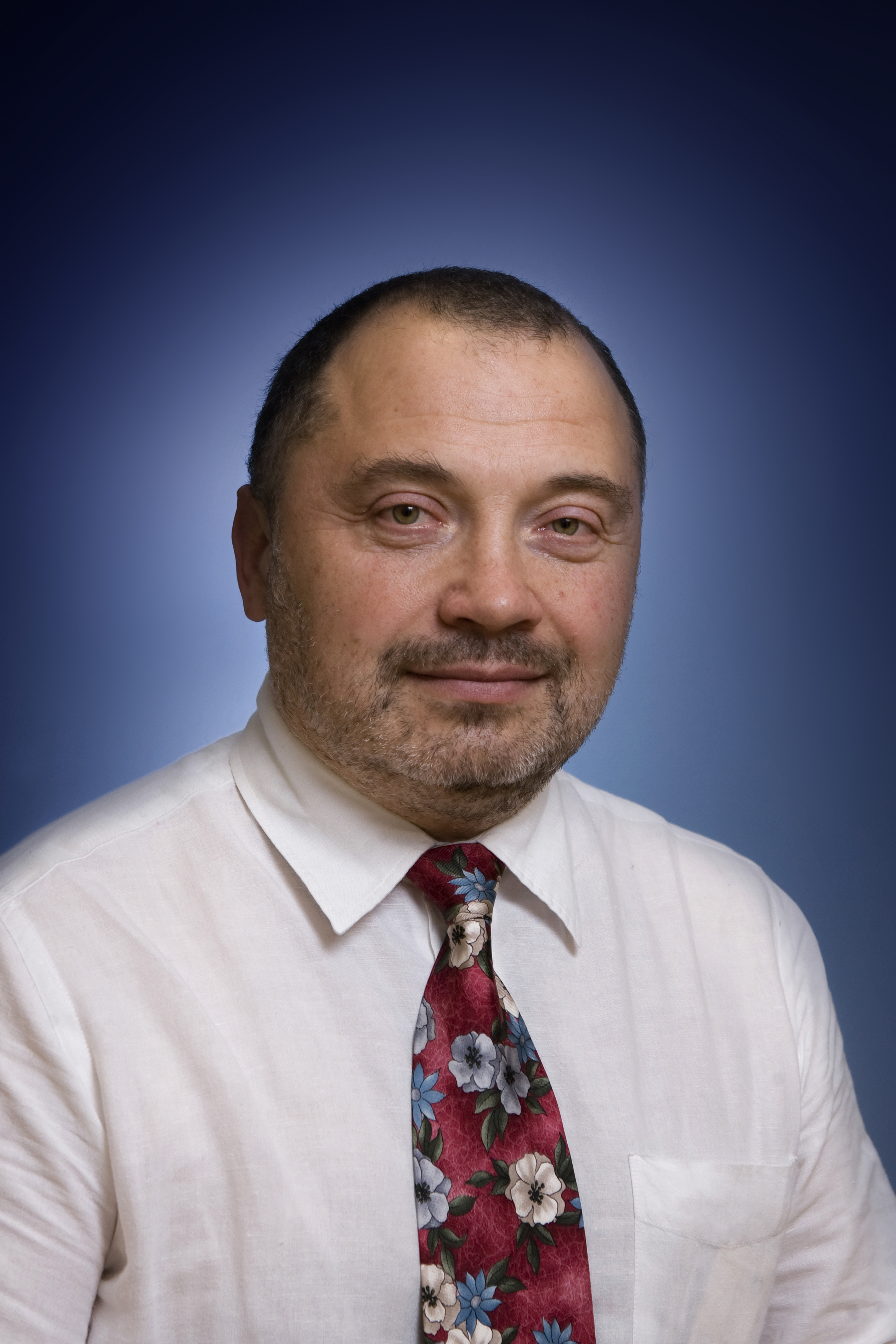
Former Scholar-in-Residence, Society and Regions Program, Moscow Center
Nikolay Petrov was the chair of the Carnegie Moscow Center’s Society and Regions Program. Until 2006, he also worked at the Institute of Geography at the Russian Academy of Sciences, where he started to work in 1982.
Recent Work
Nikolay Petrov
Nikolay Petrov
Carnegie does not take institutional positions on public policy issues; the views represented herein are those of the author(s) and do not necessarily reflect the views of Carnegie, its staff, or its trustees.

Before the next wave of EU enlargement takes place, the union needs to grapple with thorny questions of how power is distributed among its members.


Emil Sondaj Hansen, Ditte Brasso Sørensen

The new U.S.–Denmark–Greenland agreement will help Washington exert political, economic, and financial dominance under the guise of security. Yet, it acknowledged Copenhagen’s and Nuuk’s sovereignty on the island.

Marc Pierini

A summer of escalation in the Black Sea has hurt Ukraine economically and is exacerbating world food security. A truce is needed—as is a broader reframing of Europe’s Ukraine strategy.

Thomas de Waal

Are Germany’s economic, industrial, and political struggles becoming a liability for the EU’s ability to rise to the geopolitical moment?

Rym Momtaz, ed.

European Commission President Ursula von der Leyen is about to give her annual address on the state of the EU. Here’s what she won’t—but should—say.
Rym Momtaz