

Commentary
Nikolay Petrov
{
  "authors": [
    "Nikolay Petrov"
  ],
  "type": "legacyinthemedia",
  "centerAffiliationAll": "",
  "centers": [
    "Carnegie Endowment for International Peace",
    "Carnegie Russia Eurasia Center"
  ],
  "collections": [],
  "englishNewsletterAll": "",
  "nonEnglishNewsletterAll": "",
  "primaryCenter": "Carnegie Russia Eurasia Center",
  "programAffiliation": "",
  "programs": [],
  "projects": [],
  "regions": [
    "Caucasus",
    "Russia"
  ],
  "topics": [
    "Political Reform",
    "Economy"
  ]
}
Source: Getty
A key factor in Sunday’s national Russian elections was that parties lacking State Duma representation were denied registration. This is part of the current Kremlin strategy to purge the political field. But the grim economic situation makes this effort, and the election of deputies doing little more than passing along instructions from the top, morally obsolete.
Source: The Moscow Times

A distinctive feature of this year's voting process was the fact that parties lacking representation in the State Duma were denied the opportunity to register for regional elections, effectively locking in a four-party system. Irkutsk set especially high barriers, requiring interested parties to gather 36,000 signatures — 2 percent of all eligible voters — or put up a 6 million ruble ($229,000) bond.
These parties were not allowed to participate in the elections because more than 10 percent of the signatures they gathered were deemed invalid: in Kemerovo, the Union of Right Forces and the Peace and Unity Party; and in Zabaikalsky region, the Democratic Party of Russia.
The greatest number of parties — seven — were permitted to participate in the elections in Chechnya. There, only the Green Party did not pass muster with its list of signatures, and immediately after being disqualified, it teamed up with United Russia. Thus, Chechnya was not only among the first to switch over to the recommended proportional electoral system, but also demonstrated the greatest political pluralism in the new tandem of Prime Minister Vladimir Putin and President Dmitry Medvedev. But at the end of the day, United Russia received nearly 90 percent of the votes.
These elections, in which not a single democratic party was allowed to participate, became part of the Kremlin's strategy for purging the political field and especially to force right-wing parties such as the Union of Right Forces to unite with other more politically palatable parties.
United Russia was the dominant force in the elections, and it has become tradition for its party lists to be headed up by regional governors.
If things have gone smoothly for the Kremlin concerning political parties, the single-mandate candidates have encountered numerous problems. In the Irkutsk region, where the competition is more intense, a number of United Russia members registered as candidates in defiance of a ban by party leaders, and they were subsequently expelled from the party. An even more complex picture emerged in Nizhny Tagil, the big industrial center in the Urals where several United Russia candidates competed for the mayoral spot.
Of course, it suits the Kremlin when the country's political parties are completely dependent on Moscow. The only problem is that regional parliaments filled with deputies chosen by Moscow will be capable of doing little more than passing along instructions from the top. That might have been adequate during an economic boom period, but it is at odds with the current economic and political realities.
The economic crisis began too late to influence these elections. Even in the Kuzbass region, rich in coal and metals, the authorities did everything possible to postpone the negative effects of the crisis that had already affected those sectors in other regions. But it appears that the Kremlin's plan to pare down the political playing field to a few parties has become morally obsolete.
Thus, this may be the last time that Moscow will be able to pull all the strings in national elections. The results are bound to be quite different after the next round of elections in the spring.
This comment first appeared in The Moscow Times
Former Scholar-in-Residence, Society and Regions Program, Moscow Center
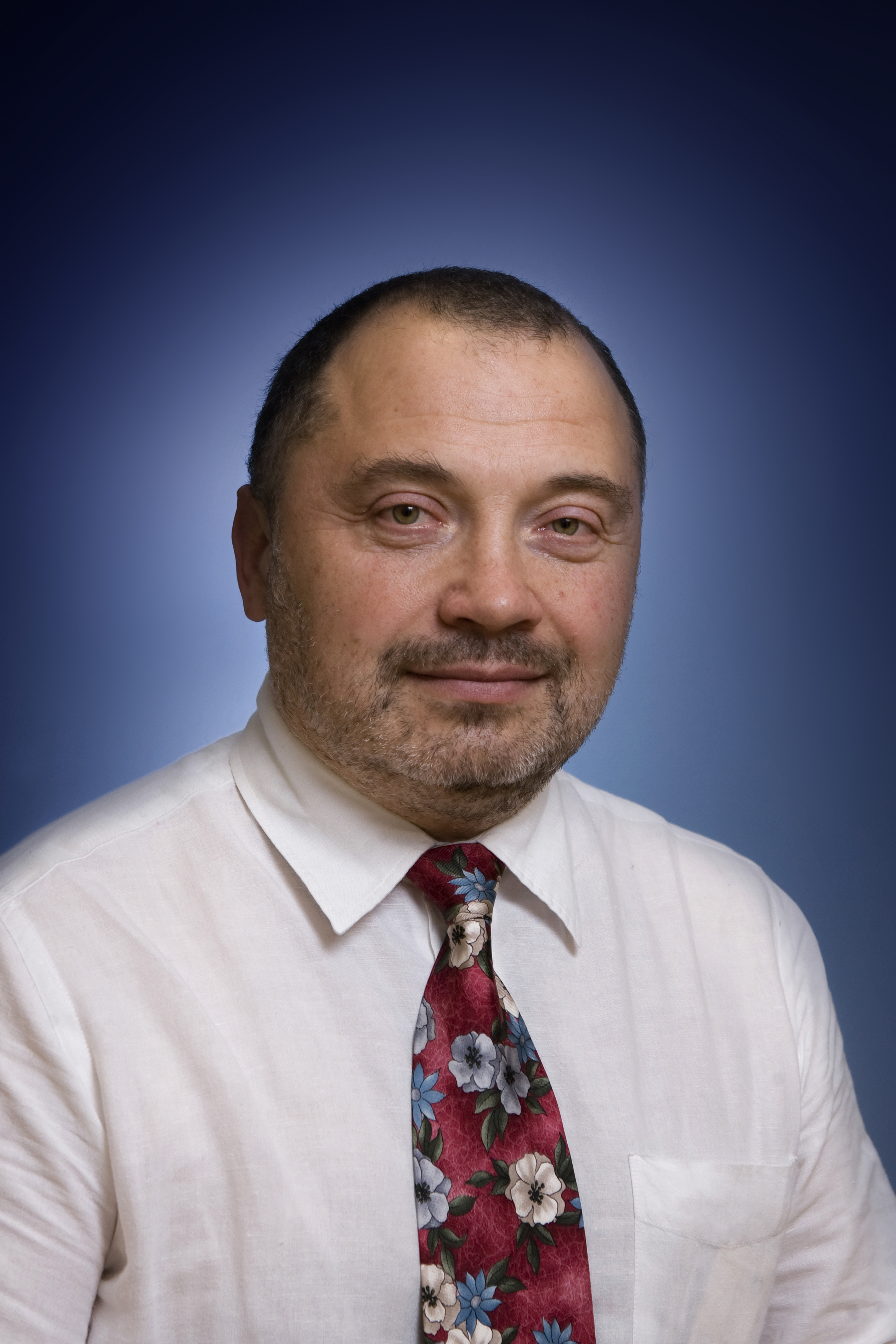
Nikolay Petrov was the chair of the Carnegie Moscow Center’s Society and Regions Program. Until 2006, he also worked at the Institute of Geography at the Russian Academy of Sciences, where he started to work in 1982.
Recent Work
Nikolay Petrov
Nikolay Petrov
Carnegie does not take institutional positions on public policy issues; the views represented herein are those of the author(s) and do not necessarily reflect the views of Carnegie, its staff, or its trustees.
As geopolitical rivalry weaponizes global supply chains, the EU’s true vulnerability lies in emerging-risk imports. For these goods, suppliers are growing more concentrated, substitution more difficult, and political risk is looming.

Sinan Ülgen
The EU is putting together a new security strategy to meet today’s myriad challenges. But for any proposal to be effective, the union needs to grapple with its identity and ambitions.

Pierre Vimont
Between the United States’ market-driven approach and China's state-led industrial strategy, Europe is reckoning with how it can remain competitive in the global economy. But is Europe in danger of becoming a U.S. or China colony?
Noah Barkin, Anu Bradford
Preparing candidate countries for EU membership is no longer enough. As the enlargement process becomes a reality, the union must also prepare its own societies.

Iliriana Gjoni
Countries face several hurdles in joining the EU, including the final stage of ratifying their accession treaties. Procedural reforms and substantive adjustments could help move the process forward.

Stefan Lehne