

Commentary
Maria Lipman
{
  "authors": [
    "Maria Lipman"
  ],
  "type": "legacyinthemedia",
  "centerAffiliationAll": "",
  "centers": [
    "Carnegie Endowment for International Peace",
    "Carnegie Russia Eurasia Center"
  ],
  "collections": [],
  "englishNewsletterAll": "",
  "nonEnglishNewsletterAll": "",
  "primaryCenter": "Carnegie Russia Eurasia Center",
  "programAffiliation": "",
  "programs": [],
  "projects": [],
  "regions": [
    "Caucasus",
    "Russia"
  ],
  "topics": [
    "Political Reform"
  ]
}
Source: Getty
Nearly 86,000 people have signed a letter asking President Medvedev to pardon Svetlana Bakhmina, a former lawyer for Yukos. Bakhmina, who is due to give birth within weeks, is in a prison camp. Yet Medvedev continues to ignore the call for mercy from thousands of Bakhmina's supporters and thus stands personally responsible for her suffering.
Source: Washington Post

Bakhmina's conviction and the entire affair with Yukos and Khodorkovsky, who was once Russia's richest man but has been jailed since 2003, have radically corrupted the Russian justice system. By not pardoning her, Medvedev emerges as a proponent of the Soviet system of justice, which presumed that any ties to an "enemy of the state" were themselves a crime.
The number of signatures attracted by Bakhmina's pardon plea is enormous for Russia's generally apathetic and compliant society. But the inhumanity of Bakhmina's treatment has sparked understandable sympathy. She is the mother of two boys, ages 11 and 7. The charges against her are painfully thin; she was convicted of corporate theft, even though the "injured party" did not claim a loss of funds during her trial.
Bakhmina is no political figure. She is simply suffering collateral damage from the harsh campaign against Khodorkovsky, who through his immense wealth and clout came to be regarded as a serious challenger to the state.
When asserting control over political and public affairs at home, the Kremlin generally opts for subtle manipulation, but in the rare cases in which it resorts to naked repression, it shows no mercy -- and little regard for legal procedure. Bakhmina was initially sentenced to seven years. A higher court then reduced her sentence by six months. Had it been cut six more months, to six years, she would have been eligible for amnesty. The 6 -1/2 -year term conveyed the government's determination to keep her behind bars.
Bakhmina is such a well-behaved prisoner that she was allowed to spend a few days at home with her husband and children this year (which is when she became pregnant). In May, when she had served half of her sentence, she applied for parole. Contrary to routine practice, her request was denied. She applied again but was denied parole a second time. Last month she sought a presidential pardon.
What happened next has yet to be explained: According to prison authorities, Bakhmina withdrew her plea for a pardon. There is no way of knowing why. Bakhmina is not allowed to communicate with the outside world, and prison administrators refused to give explanations. Critical commentators here suggested that Bakhmina was forced to abandon her plea so Medvedev would be spared the need to react.
Russia's first head of state, Boris Yeltsin, used his presidential power to pardon generously because he sought to make up for the inadequate justice system inherited from the Soviet era of state terror and unlawful reprisals. Every year, he dutifully signed thousands of pardons submitted to him by the Pardons Commission, a panel of liberal writers, journalists and academics. Yeltsin offered clemency even to his political enemies: The coup plotters of 1991, as well as those who attempted to overthrow him in 1993, were released not long after they were arrested.
Early in his first term, Vladimir Putin moved to disband the Pardons Commission, and the number of presidential pardons fell sharply. While Yeltsin had viewed part of his mission as showing tolerance and helping his nation overcome the crippling experience of the Soviet regime, his successor apparently did not.
The rule of law is simply not part of the Russian tradition. The attempt made after the collapse of communism to build a system with checks and balances and an independent judiciary has failed. Today, justice is routinely corrupted by executive authority or bribes. In politically sensitive cases -- the Khodorkovsky affair is the most significant example -- court rulings have been bent to the desires of the executive branch in a way that recalls the Soviet courts taking instructions from Communist party bosses. Intolerance and a lack of mercy are other elements of the Soviet legacy in Putin's Russia.
The Russian people in general have limited sympathy for Bakhmina. Tens of thousands might be asking Medvedev to show mercy, but to many Russians, Bakhmina is, first and foremost, someone who worked for Khodorkovsky and is therefore associated with the wealthy, who are broadly regarded in Russia as thieves. Many begrudge Bakhmina the attention she receives from her supporters, and it is not uncommon to hear callous or even contemptuous remarks about this woman who has been kept away from her husband and two sons for four years.
This week, the government suddenly softened its treatment of Bakhmina. Prison system authorities offered little information but said she was transferred to a civilian hospital near Moscow, where she will give birth. She may have even been allowed to see her husband. Rumors have it that she may be released on parole after the child is born.
But even if the government has finally decided to show some humanity toward Bakhmina, state officials' primary concern seems to be that Medvedev must not appear to be bowing to public pressure. As he ignores the humble call for mercy from tens of thousands of Bakhmina's supporters, Medvedev stands personally responsible for her suffering and encourages the intolerance and immorality of those who gloat at her plight.
This article first appeared in the Washington Post.
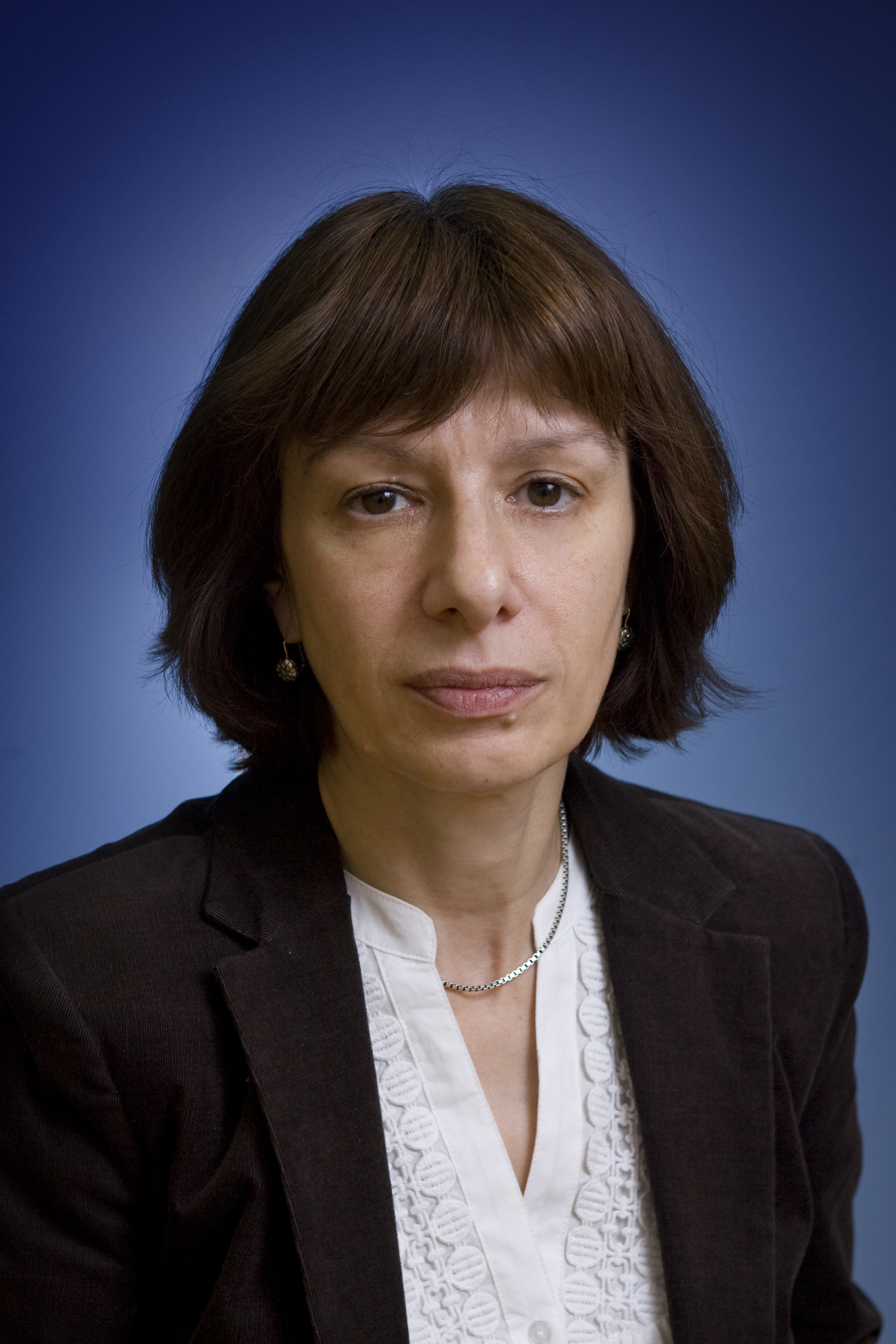
Former Scholar in Residence, Society and Regions Program, Editor in Chief, Pro et Contra, Moscow Center
Lipman was the editor in chief of the Pro et Contra journal, published by the Carnegie Moscow Center. She was also the expert of the Carnegie Moscow Center’s Society and Regions Program.
Recent Work
Maria Lipman
Maria Lipman
Carnegie does not take institutional positions on public policy issues; the views represented herein are those of the author(s) and do not necessarily reflect the views of Carnegie, its staff, or its trustees.

European Commission President Ursula von der Leyen is about to give her annual address on the state of the EU. Here’s what she won’t—but should—say.

Rym Momtaz

The EU’s responses to two recent incidents expose the gulf between European perceptions and capabilities. Unless the union can bridge that gap, it will never become a real geostrategic power.
Rym Momtaz

European states control several Overseas Countries and Territories around the world that carry strategic, economic, and environmental weight. As great powers challenge the rules-based order, defending them is a geopolitical imperative for Europe.

Marc Pierini

In supporting Europe’s far-right, MAGA and Russia both want the same thing: a weaker EU. Europe must defend itself without abandoning the openness these forces exploit.

Armida van Rij
As we close out another season of Strategic Europe, it is worth taking stock of the deep shifts underway.
Rym Momtaz