

Paper
Sven Behrendt
{
  "authors": [
    "Sven Behrendt"
  ],
  "type": "legacyinthemedia",
  "centerAffiliationAll": "dc",
  "centers": [
    "Carnegie Endowment for International Peace",
    "Malcolm H. Kerr Carnegie Middle East Center"
  ],
  "collections": [],
  "englishNewsletterAll": "menaTransitions",
  "nonEnglishNewsletterAll": "",
  "primaryCenter": "Malcolm H. Kerr Carnegie Middle East Center",
  "programAffiliation": "MEP",
  "programs": [
    "Middle East"
  ],
  "projects": [],
  "regions": [
    "Gulf",
    "Middle East"
  ],
  "topics": [
    "Economy"
  ]
}
Source: Getty
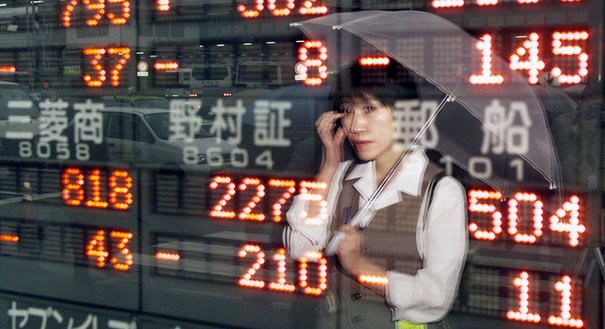
Investors from emerging surplus capital economies no longer restrict themselves to financing the debt burden of big public and private players; they also strategically seek equity stakes in companies based in industrialized economies.
Source: The National

The question will no longer be “if” investors from emerging economies seek international engagement, but “how” they are going to do so. One needs to take a somewhat more granular perspective of foreign acquisitions and the risks associated with the acquisition processes to address this question. What are the risks that foreign investors have to navigate when they want to place an equity investment in sizeable publicly traded companies in Europe or the US?
Two cases provide telling examples. One is the equity investment placed by Sheikh Mansour bin Zayed, the Minister of Presidential Affairs, the Qatar Investment Authority and the Qatari Challenger investment firm in Barclays for a total of £5.8 billion (Dh30.98bn), or about a 30 per cent stake, some months ago. The second example is a more recent one and still pending. The Aluminium Corporation of China, Chinalco, a leading Chinese diversified resources company, seeks to increase its shareholdings in Rio Tinto, a multinational mining and resources group, to 18 per cent for US$7.2bn (Dh26.44bn).
In both cases, the respective companies faced fundamental financing problems. Barclays was exposed to the financial crisis. Rio Tinto acquired Alcan, an aluminium producer, some months ago at the height of the commodities boom, and is now suffering from a tremendous debt burden.
And in both cases, the capital injection process was not as straightforward as the dire situation in financial markets would have suggested. When Barclays announced its fund-raising plans on Oct 31 last year, its shareholders were furious. They argued that the high cost and the dilutive nature of the capital booster, compared with funding offered by the UK government, was not in Barclays’ best interest.
The same happened when Rio Tinto’s management announced its plans on Feb 12. It caused a rather massive backlash among major UK investors dissatisfied with Rio’s management for ignoring their rights of first refusal to equity issues, but also for putting stakes up for sale when values were depressed.
On both occasions, management and their boards came under severe pressure, having exposed themselves to meet their obligations vis-à-vis their future shareholders on the one side, and to the dissent of their existing ones on the other.
Advisers to shareholders of Barclays told clients to abstain from a vote ratifying the capital increase. Shareholders of Rio Tinto have sought out the interest of BHP Billiton, a rival company – which some months earlier considered taking over Rio Tinto – to come in with a competing bid.
Looming on the horizon in both cases were the political risks, with Barclays seeking to prevent government intervention and control, and Rio Tinto facing political opposition in Australia, where the bulk of its mining activities takes place.
In the end, Barclays management was able to clinch a deal that enabled existing investors to participate in the capital increase. How Rio Tinto’s management will be able to deal with the crisis is still an open question.
These two cases have unfolded in an astonishingly similar fashion, suggesting that future investment processes might follow comparable patterns.
They suggest that the world of international finance has become more fragmented and complex. They also suggest that those market participants that are able to assess the complex relations that companies from industrialised economies are exposed to can more efficiently negotiate a satisfactory agreement.
It is essential to understand that the people across the table that investors are trying to reach a deal with are not necessarily as independent in their decision-making as they might appear.
They have to: satisfy the commercial interests of their shareholders; meet the interests of politicians; comply to domestic rules and regulations; and eventually manage the broader public, whose perceptions determine the overall context in which the deal is taking place.
All this is probably not new to investors who have experience in their neighbourhood. They know how to satisfy diverse demands. But what works close to home does not necessarily work abroad. In this emerging 21st century’s economic order, knowing how to assess and navigate an increasingly complex investment environment will be a critical factor for success.
Former Visiting Scholar, Middle East Center
Behrendt is an expert in global issues, international negotiations, conflict resolution, and corporate strategy. He previously served at the World Economic Forum in various management positions.
Recent Work
Sven Behrendt
Sven Behrendt
Carnegie does not take institutional positions on public policy issues; the views represented herein are those of the author(s) and do not necessarily reflect the views of Carnegie, its staff, or its trustees.

The European Commissioner for Trade is headed to China. But after President Xi’s bridge-building visit to Washington, can a more isolated EU overcome Beijing’s stranglehold on critical raw materials? Who will blink first?

Rym Momtaz, ed.

The domestic impacts of how long it is taking to end the war in Ukraine have pushed the French electorate to the political extremes and compromised the country’s diplomatic capacity.
Rym Momtaz

A summer of escalation in the Black Sea has hurt Ukraine economically and is exacerbating world food security. A truce is needed—as is a broader reframing of Europe’s Ukraine strategy.

Thomas de Waal
When the U.S.-Iran memorandum of understanding was announced, the UK, France, Germany, and Italy declared their readiness to help demine the Strait of Hormuz and lift nuclear sanctions on Tehran. But does Europe need new tools to recover a diplomatic role?
Rym Momtaz, ed.

As geopolitical rivalry weaponizes global supply chains, the EU’s true vulnerability lies in emerging-risk imports. For these goods, suppliers are growing more concentrated, substitution more difficult, and political risk is looming.

Sinan Ülgen