

Q&A
Aaron David Miller, Karim Sadjadpour, Robin Wright
{
  "authors": [
    "Karim Sadjadpour"
  ],
  "type": "legacyinthemedia",
  "centerAffiliationAll": "dc",
  "centers": [
    "Carnegie Endowment for International Peace"
  ],
  "collections": [],
  "englishNewsletterAll": "menaTransitions",
  "nonEnglishNewsletterAll": "",
  "primaryCenter": "Carnegie Endowment for International Peace",
  "programAffiliation": "MEP",
  "programs": [
    "Middle East"
  ],
  "projects": [],
  "regions": [
    "Middle East",
    "Iran"
  ],
  "topics": [
    "Political Reform"
  ]
}
Source: Getty
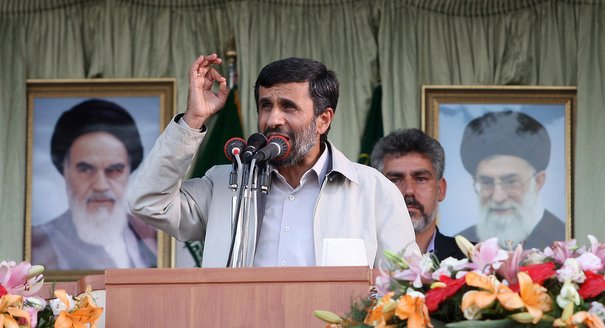
This week's Iranian election has all the trappings of an American-style competition, with none of the results.
Source: Foreign Policy

Despite the Iranian president's high profile both domestically and internationally, his power is more akin to an influential U.S. vice president (a recent one comes to mind) who chooses important cabinet positions and helps sets the tone on economic and foreign policy. Supreme Leader Ayatollah Khamenei -- unelected by the people -- has constitutional authority over the main levers of state (including the military, judiciary, and media) and will continue to have the last word on major issues such as the nuclear portfolio and policy toward the United States.
Nonetheless, presidential elections have taken on a carnival-like atmosphere in Iran. Thousands pour into the streets, and the regime eases political and social restrictions in order to project a democratic face to the world. And while the competition between contenders is real, Iranian elections have the unique combination of being unfree, unfair, and unpredictable.
Only candidates deemed sufficiently loyal to revolutionary ideals are permitted to run by the Guardian Council, Iran's 12 "super delegates" who are all either directly or indirectly appointed by the supreme leader. After this pre-rigging takes place, regime higher ups often employ age-old tactics -- such as media manipulation, ballot stuffing, and vote cancellation -- to attempt to alter the outcome. Some prominent reformists believe it will take an additional 5 million votes to compensate for improprieties.
This year Iranians were offered four candidates to choose from: current President Mahmoud Ahmadinejad, former Prime Minister Mir-Hossein Mousavi, former Speaker of the Parliament Mehdi Karroubi, and former Revolutionary Guard commander Mohsen Rezaee.
An architect by training, the 67-year-old Mousavi appears to be Ahmadinejad's strongest challenger. Despite his lack of charisma and unenthusiastic demeanor, his campaign has built tremendous momentum in the last days. Comparisons to Barack Obama in 2008 notwithstanding, Mousavi's candidacy appears more akin to John Kerry in 2004, in that his supporters are driven primarily by fear of the incumbent's re-election rather than enthusiasm about their own man. One of his most important assets has been his wife, Zahra Rahnavard, a prominent former university chancellor who has helped to energize female voters. Aesthetically the Mousavi's "two for one" package resembles less Barack and Michelle and more Bob and Elizabeth Dole.
Ambivalence about Mousavi has led some reformists to support Karroubi, the only cleric in the race. A maverick and faux populist, the 72-year-old Karroubi is considered one of the few Iranian politicians willing to voice his disagreements with the Supreme Leader. His advanced age, volatile temperament, and unpredictable tactics call to mind an Iranian John McCain.
The least likely contender is 55-year-old Mohsen Rezaee. A highly ambitious former Revolutionary Guard Commander who has long thought of himself as presidential material, Rezaee resembles an Iranian Alexander Haig, the former Army general cum Reagan-era Secretary of State who famously declared himself "in charge" after Reagan was shot in 1981. Despite his hardline views, Iranian reformists are happy that Rezaee is running, hoping he can be Ralph Nader to Ahmadinejad's Al Gore.
Lastly there is 52-year-old Ahmadinejad himself, who despite his profound mismanagement of the economy and foreign policy adventurism seemingly retains the support of the Supreme Leader. An Iranian Joe Six-pack who intertwines religion and populism and infuriates urban elites -- think Ayatollah Khomeini meets Sarah Palin -- Ahmadinejad's supporters are the Iranian equivalent of American evangelicals: a small percentage of the population with outsize political influence given their high voter turnout.
While his divine inspirations, lack of introspection, and polarizing rhetoric have frequently earned comparisons to George W. Bush, what's unclear is whether Ahmadinejad is the Bush of 2004 (who got the benefit of the doubt) or the Bush of 2008, whose legacy was shunned even by his own party. There are increasing signs of the latter.
Absent credible polling, however, Iran's political landscape is difficult to decipher. In elections past, much has been made of the gap between affluent-middle class North Tehran, and working class South Tehran. The real disparity, however, is between Tehran and a few other urban centers (Iran's blue states) and the rest of the country (Iran's red states). Just as Staten Island residents probably have more in common with Manhattanites than Alabamans, South Tehran residents tend to have more in common with north Tehranis than with their rural compatriots who don't have access to the Internet and satellite TV and rely on state television as their primary source of information.
Because the last two presidents in Iran -- Mohammed Khatami and Ahmadinejad -- were both surprises, seasoned observers are loath to make predictions this time around. Based on media coverage coming mostly out of the capital, Ahmadinejad is looking like Jimmy Carter in 1980. But the vote of the provinces, and the potential for fraud, are impossible to foresee.
Given the depth of polarization in Iran, the final results will likely be hotly contested by the losing side. Florida in 2000 could be most instructive. But while in America the memory of unelected elders in robes deciding the country's outlook was an historical anomaly, for Iranians it has been, and will likely continue to be, a way of life.

Senior Fellow, Middle East Program
Karim Sadjadpour is a senior fellow at the Carnegie Endowment for International Peace, where he focuses on Iran and U.S. foreign policy toward the Middle East.
Recent Work


Aaron David Miller, Karim Sadjadpour, Robin Wright
Aaron David Miller, David Petraeus, Karim Sadjadpour
Carnegie does not take institutional positions on public policy issues; the views represented herein are those of the author(s) and do not necessarily reflect the views of Carnegie, its staff, or its trustees.
Donald Trump has repeatedly bashed NATO and European allies, threatening to annex Canada and Greenland and deploring their lack of enthusiasm for his war of choice in Iran. Is this latest round of abuse the final straw?

Rym Momtaz, ed.
Donald Trump has demanded that European allies send ships to the Strait of Hormuz while his war of choice in Iran rages on. He has constantly berated NATO while the alliance’s secretary-general has emphatically supported him.
Rym Momtaz, ed.
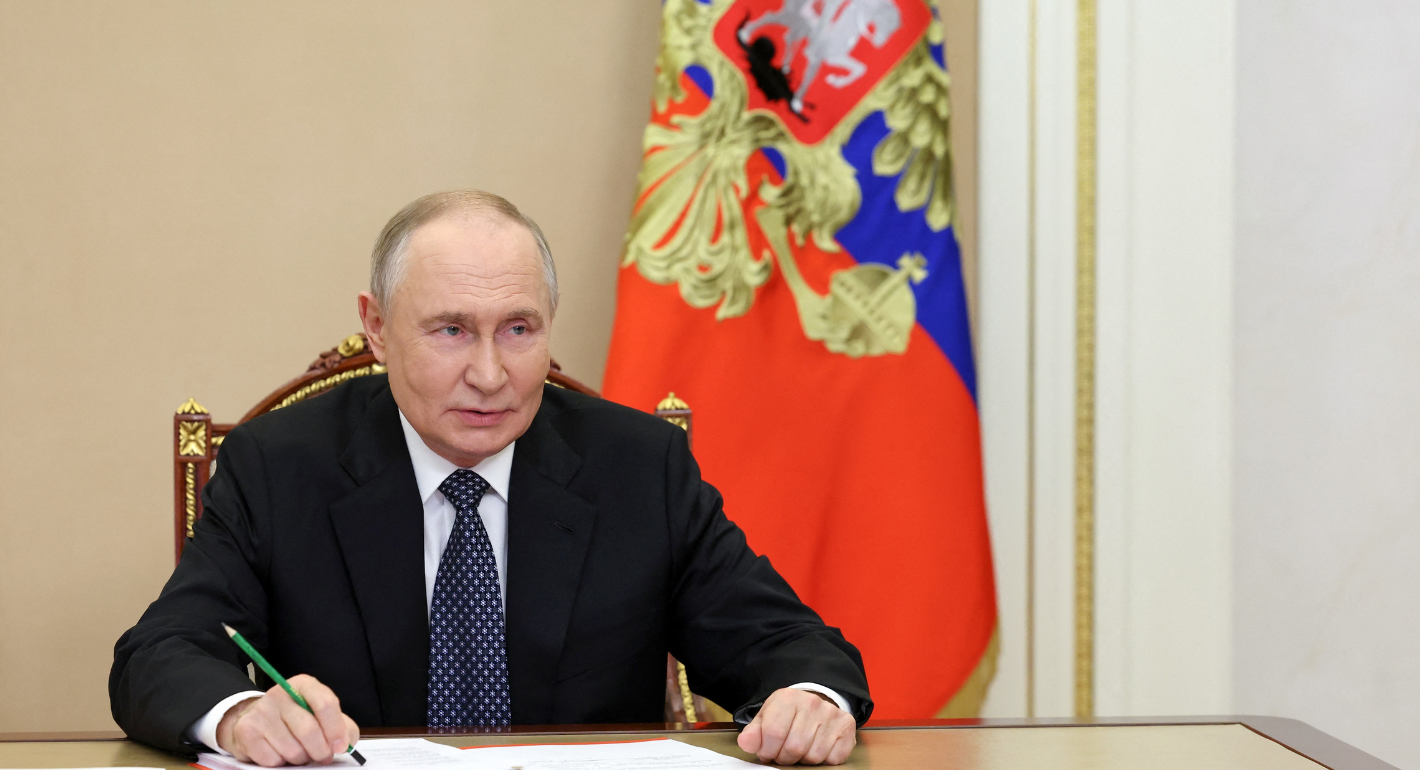
The war in Ukraine is costing Russia its leverage overseas. Across the South Caucasus and Middle East, this presents an opportunity for Europe to pick up the pieces and claim its own sphere of influence.

William Dixon, Maksym Beznosiuk
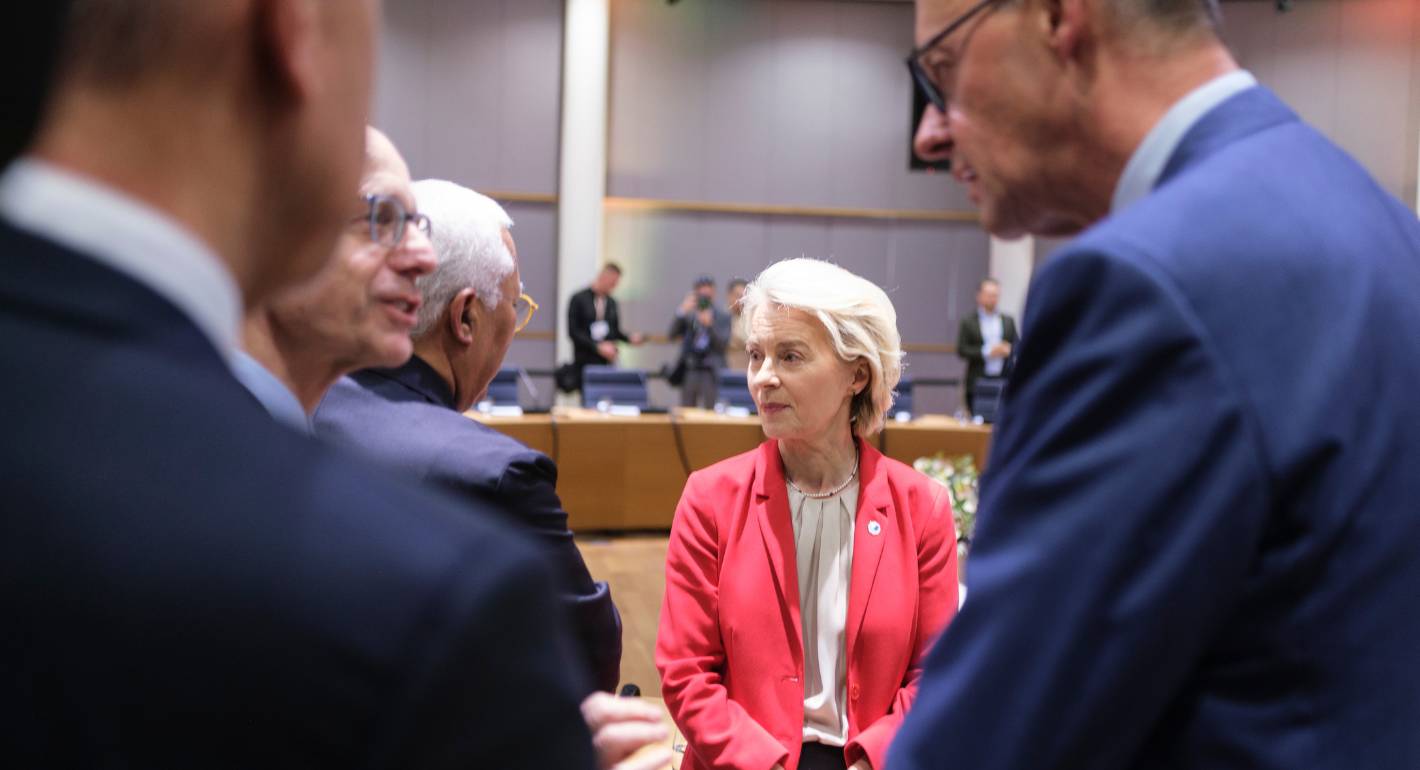
The war in Iran proves the United States is now a destabilizing actor for Europe and the Arab Gulf. From protect their economies and energy supplies to safeguarding their territorial integrity, both regions have much to gain from forming a new kind of partnership together.
Rym Momtaz
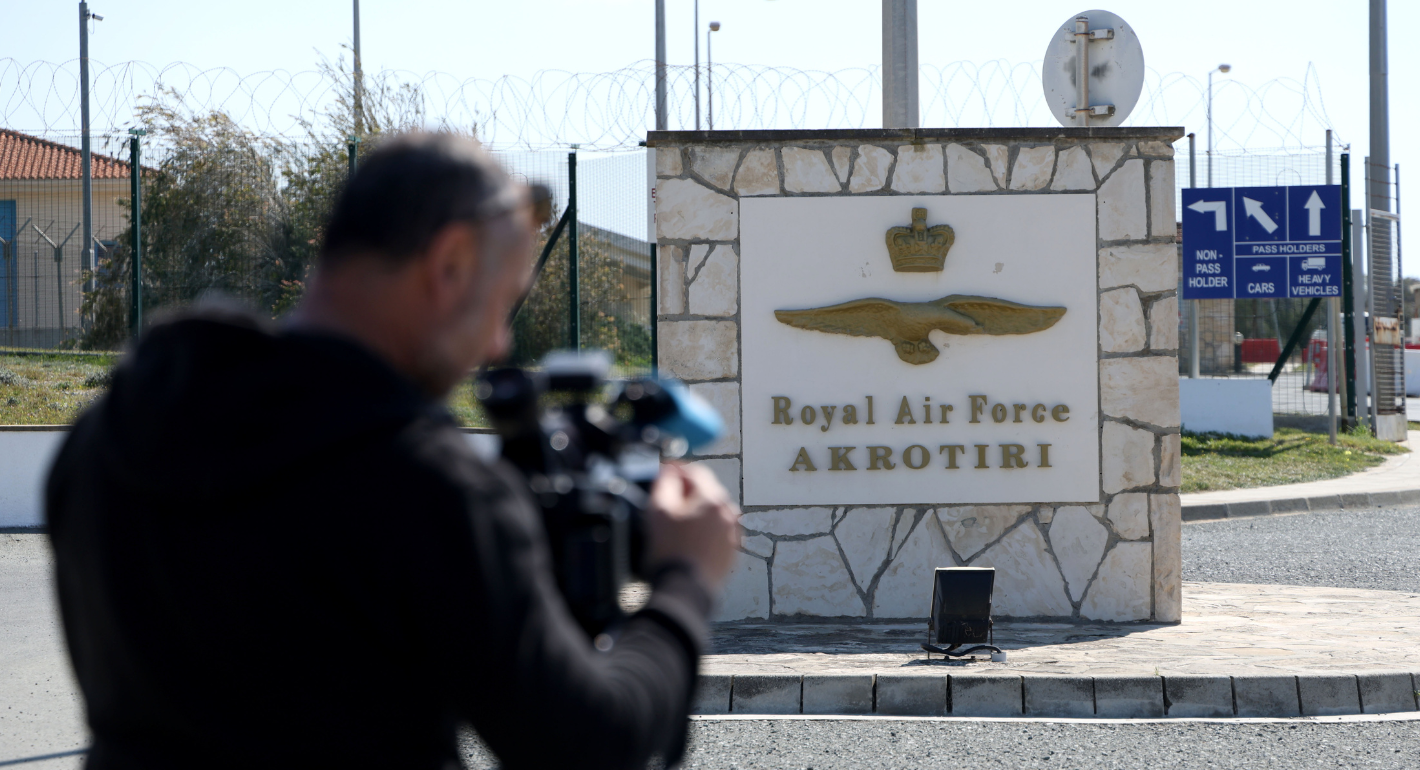
The drone strike on the British air base in Akrotiri brings Europe’s proximity to the conflict in Iran into sharp relief. In the fog of war, old tensions in the Eastern Mediterranean risk being reignited, and regional stakeholders must avoid escalation.

Marc Pierini