

Research
- +6
Yasmine Farouk, Nathan J. Brown, Maysaa Shuja Al-Deen, …
{
  "authors": [
    "Michele Dunne"
  ],
  "type": "legacyinthemedia",
  "centerAffiliationAll": "dc",
  "centers": [
    "Carnegie Endowment for International Peace"
  ],
  "collections": [],
  "englishNewsletterAll": "menaTransitions",
  "nonEnglishNewsletterAll": "",
  "primaryCenter": "Carnegie Endowment for International Peace",
  "programAffiliation": "MEP",
  "programs": [
    "Middle East"
  ],
  "projects": [],
  "regions": [
    "North America",
    "United States",
    "North Africa",
    "Egypt"
  ],
  "topics": [
    "Political Reform",
    "Democracy",
    "Foreign Policy"
  ]
}
Source: Getty
Egyptian President Mubarak's visit to Washington offers the opportunity to discuss Egypt's role in the region in relation to U.S. priorities. Egypt's domestic politics, particularly the succession issue, also will play a role in further U.S.-Egyptian cooperation.
Source: Diane Rehm Show

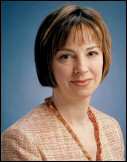
According to Dunne, "this visit is seen as very significant from the Egyptian perspective. Especially in the government run press. There has been two main messages. One of them is that Mubarak is back in in in Washington after being 'on the outs' with Bush administration. I think that the Egyptians want everyone to know that Mubarak is back in the good graces of the White House. Then, there has been a message about the important role that Egypt can play regarding Washington's strategic goals and priorities". In many ways, suggested Dunne, "Egypt and the U.S. have a consonant agenda" particularly in regards to the Israeli-Palestinian conflict, Iran and Lebanon. The key question is how much can Egypt do.
I think that the Egyptians want everyone to know that Mubarak is back in the good graces of the White House.
In regards to the Arab-Israeli conflict, Mubarak has largely delivered the same message to President Obama as King Abdullah of Saudi Arabia, Dunne explained. After efforts to normalize relations in the 1990's went without significant steps toward peace, Arab states are increasingly reluctant to give concessions without full reciprocation.
As a major U.S. ally in the region, Egypt will also play a critical role in limiting Iranian influence in the region. Dunne suggested that, "Its important for U.S. to show that we have allies against Iran in the region. The Egyptian concern about Iran is very real. Egypt has rebuffed past Iranian attempts to establish relations and signaled that it would be willing to work with Israel, on a limited scale, to rebuff Iranian attempts to bolster its position in the region."
One of the most widely discussed issues concerning Egypt is who will succeed the ailing octogenarian Mubarak. It has been speculated that Mubarak's son, Gamal Mubarak, is being groomed to succeed his father. "[Gamal] has been trying to build his political career for ten years. He has tried to show that he will reach out to young people", suggested Dunne. Despite his efforts, "most people in the country are ambivalent. He is not very popular, except for a following in the business community. Egypt is a republic, not a monarchy, and there is a basic objection that many Egyptians have to Gamal being groomed to succeed his father."

Former Nonresident Scholar, Middle East Program
Michele Dunne was a nonresident scholar in Carnegie’s Middle East Program, where her research focuses on political and economic change in Arab countries, particularly Egypt, as well as U.S. policy in the Middle East.
Recent Work



Yasmine Farouk, Nathan J. Brown, Maysaa Shuja Al-Deen, …
Robert Springborg, Emile Hokayem, Becca Wasser, …
Carnegie does not take institutional positions on public policy issues; the views represented herein are those of the author(s) and do not necessarily reflect the views of Carnegie, its staff, or its trustees.

Before the next wave of EU enlargement takes place, the union needs to grapple with thorny questions of how power is distributed among its members.


Emil Sondaj Hansen, Ditte Brasso Sørensen

The new U.S.–Denmark–Greenland agreement will help Washington exert political, economic, and financial dominance under the guise of security. Yet, it acknowledged Copenhagen’s and Nuuk’s sovereignty on the island.

Marc Pierini

A summer of escalation in the Black Sea has hurt Ukraine economically and is exacerbating world food security. A truce is needed—as is a broader reframing of Europe’s Ukraine strategy.

Thomas de Waal

Are Germany’s economic, industrial, and political struggles becoming a liability for the EU’s ability to rise to the geopolitical moment?

Rym Momtaz, ed.

European Commission President Ursula von der Leyen is about to give her annual address on the state of the EU. Here’s what she won’t—but should—say.
Rym Momtaz