

Q&A
Christopher Boucek
{
  "authors": [
    "Christopher Boucek"
  ],
  "type": "legacyinthemedia",
  "centerAffiliationAll": "dc",
  "centers": [
    "Carnegie Endowment for International Peace"
  ],
  "collections": [],
  "englishNewsletterAll": "menaTransitions",
  "nonEnglishNewsletterAll": "",
  "primaryCenter": "Carnegie Endowment for International Peace",
  "programAffiliation": "MEP",
  "programs": [
    "Middle East"
  ],
  "projects": [],
  "regions": [
    "North America",
    "United States",
    "North Africa"
  ],
  "topics": [
    "Security"
  ]
}
Source: Getty
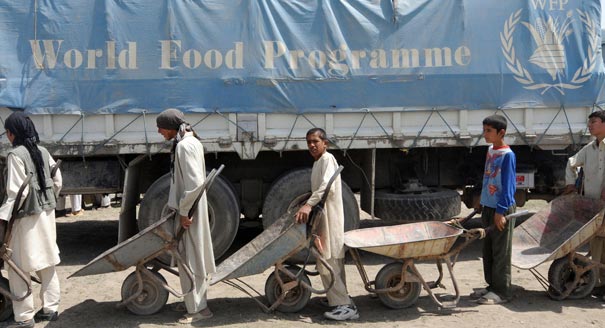
Eight years into what was once called the "Global War on Terror", U.S. policymakers show a growing recognition that combating violent extremists requires more creative tools. Aid, reform and education are key tools to be used to reduce the allure of political violence.
Source: Common Ground News Service

American policies abroad are often identified as grievances, but local conditions—social, economic and political—play a large part as well. Improving these conditions must be a key part of any discussion of counter-terrorism.
The United States is becoming increasingly involved in creative and unconventional programmes to combat extremism, many of which can be found in the Pentagon's newly created Africa Command (AFRICOM). Africans, along with the international community, continuously deal with problems ranging from an increase in piracy to transnational crime to radicalism. And the United States, in helping them deal with these problems, is placing greater focus on development assistance.
Created in 2007 and currently headquartered in Germany, AFRICOM is often misperceived as a tool for expanding American influence. One of the new command's top priorities, however, is to help African countries combat terrorism, extremism and transnational crime on their own, without foreign military intervention. In fact, its focus is on "war prevention rather than war-fighting." AFRICOM is pursuing this mission through training and capacity-building operations with local security forces—providing equipment, vehicles and logistical support—and boosting cooperation between countries.
The United States is coupling assistance to local enforcement agencies with economic and political programmes designed to improve local conditions and undercut the appeal of violent extremism. In the Horn of Africa, for instance, the US military has been actively involved in digging wells and building schools in Djibouti, providing free medical care in rural Ethiopia and connecting Kenyan schools to fresh water supplies.
In the vast under-governed spaces of the Sahel, where military officials believe Al Qaeda in the Muslim-majority Maghreb operates, the US government is pursuing the Trans-Sahara Counterterrorism Partnership, distributing radios to connect the governments and people of Mali and Niger, and running medical and veterinary programmes throughout the region.
But the United States will need to become even more creative if it wants to stop violent extremism where it begins. In addition to development assistance, it should promote transparency and efficiency to help create governments that are more responsive to citizens—and therefore less likely to breed radicalism.
The United States could implement programmes to sponsor judges, lawyers, journalists and editors from Muslim-majority countries, enabling them to spend time in American courtrooms and newsrooms. Washington frequently bemoans the corruption of judiciary functions and the lack of reliable media in the Muslim world. What better means do we have to strengthen the rule of law, good governance and responsible reporting than running work exchanges? When participants return, they bring with them the experiences and techniques they learn from their colleagues in America, and Americans learn a welcome degree of understanding and respect for Muslim cultures.
The struggle against violent extremism will require long-term investment, but it will yield long-term returns. Aid, reform and education are key tools to be used to reduce the allure of political violence. The United States has, rightly, begun creative counter-terrorism and strategic engagement programs, with this philosophy in mind.
This article originally appeared on Common Ground News Service
Former Associate, Middle East Program
Boucek was an associate in the Carnegie Middle East Program where his research focused on security challenges in the Arabian Peninsula and Northern Africa.
Recent Work
Christopher Boucek

Christopher Boucek, Karim Sadjadpour
Carnegie does not take institutional positions on public policy issues; the views represented herein are those of the author(s) and do not necessarily reflect the views of Carnegie, its staff, or its trustees.

Canadian Prime Minister Mark Carney has twice inspired praise for standing up to U.S. President Donald Trump: at the 2026 World Economic Forum in Davos and on Canada-U.S. trade negotiations. Is Carney showing a third way better than the EU has in dealing with the Trump administration?

Rym Momtaz, ed.

European states control several Overseas Countries and Territories around the world that carry strategic, economic, and environmental weight. As great powers challenge the rules-based order, defending them is a geopolitical imperative for Europe.

Marc Pierini

In supporting Europe’s far-right, MAGA and Russia both want the same thing: a weaker EU. Europe must defend itself without abandoning the openness these forces exploit.

Armida van Rij

As we close out another season of Strategic Europe, it is worth taking stock of the deep shifts underway.
Rym Momtaz

The hybrid warfare landscape is evolving rapidly, leaving policymakers without clear strategies. To better inform their work in addressing emerging challenges, governments must dig deeper into the underlying dynamics at play.


Raluca Csernatoni, Alicia Wanless