

Commentary
European Commission President Ursula von der Leyen is about to give her annual address on the state of the EU. Here’s what she won’t—but should—say.
Rym Momtaz
{
  "authors": [],
  "type": "pressRelease",
  "centerAffiliationAll": "dc",
  "centers": [
    "Carnegie Endowment for International Peace"
  ],
  "collections": [
    "U.S. Nuclear Policy"
  ],
  "englishNewsletterAll": "ctw",
  "nonEnglishNewsletterAll": "",
  "primaryCenter": "Carnegie Endowment for International Peace",
  "programAffiliation": "NPP",
  "programs": [
    "Nuclear Policy"
  ],
  "projects": [],
  "regions": [
    "United States"
  ],
  "topics": [
    "Nuclear Policy"
  ]
}
REQUIRED IMAGE
The international community’s inability to respond quickly and effectively to safeguards violations is the principal weakness of the nonproliferation regime today. At the upcoming Non-Proliferation Treaty Review Conference in May 2010, member states should address this problem by recognizing that safeguards non-compliance constitutes a violation of the NPT.
WASHINGTON, Sept 10—The international community’s inability to respond quickly and effectively to safeguards violations is the principal weakness of the nonproliferation regime today. At the upcoming Non-Proliferation Treaty Review Conference in May 2010, member states should address this problem by recognizing that safeguards non-compliance constitutes a violation of the NPT, according to a new policy outlook by James Acton.
There is currently confusion on whether safeguards non-compliance is an NPT violation. Recognizing that it is will force the Security Council to take safeguard violations more seriously, regardless of the country involved.
Treating safeguards non-compliance as an NPT violation will:
Acton concludes:
“Developing a successful strategy for responding to non-compliance will require a long-term, ongoing process. The key is to develop country-neutral rules. Non-compliance with safeguards is a real and pressing problem. It threatens the long-term sustainability of the nonproliferation regime and is, therefore, a crucial topic for the 2010 NPT Review Conference to address.”
###
NOTES
Carnegie does not take institutional positions on public policy issues; the views represented herein are those of the author(s) and do not necessarily reflect the views of Carnegie, its staff, or its trustees.

European Commission President Ursula von der Leyen is about to give her annual address on the state of the EU. Here’s what she won’t—but should—say.

Rym Momtaz

Radical-right parties are expected to do well in upcoming elections in four of the EU's biggest member states. If successful, they could prevent the union from addressing key challenges ahead.

Stefan Lehne

Canadian Prime Minister Mark Carney has twice inspired praise for standing up to U.S. President Donald Trump: at the 2026 World Economic Forum in Davos and on Canada-U.S. trade negotiations. Is Carney showing a third way better than the EU has in dealing with the Trump administration?
Rym Momtaz, ed.

European states control several Overseas Countries and Territories around the world that carry strategic, economic, and environmental weight. As great powers challenge the rules-based order, defending them is a geopolitical imperative for Europe.

Marc Pierini
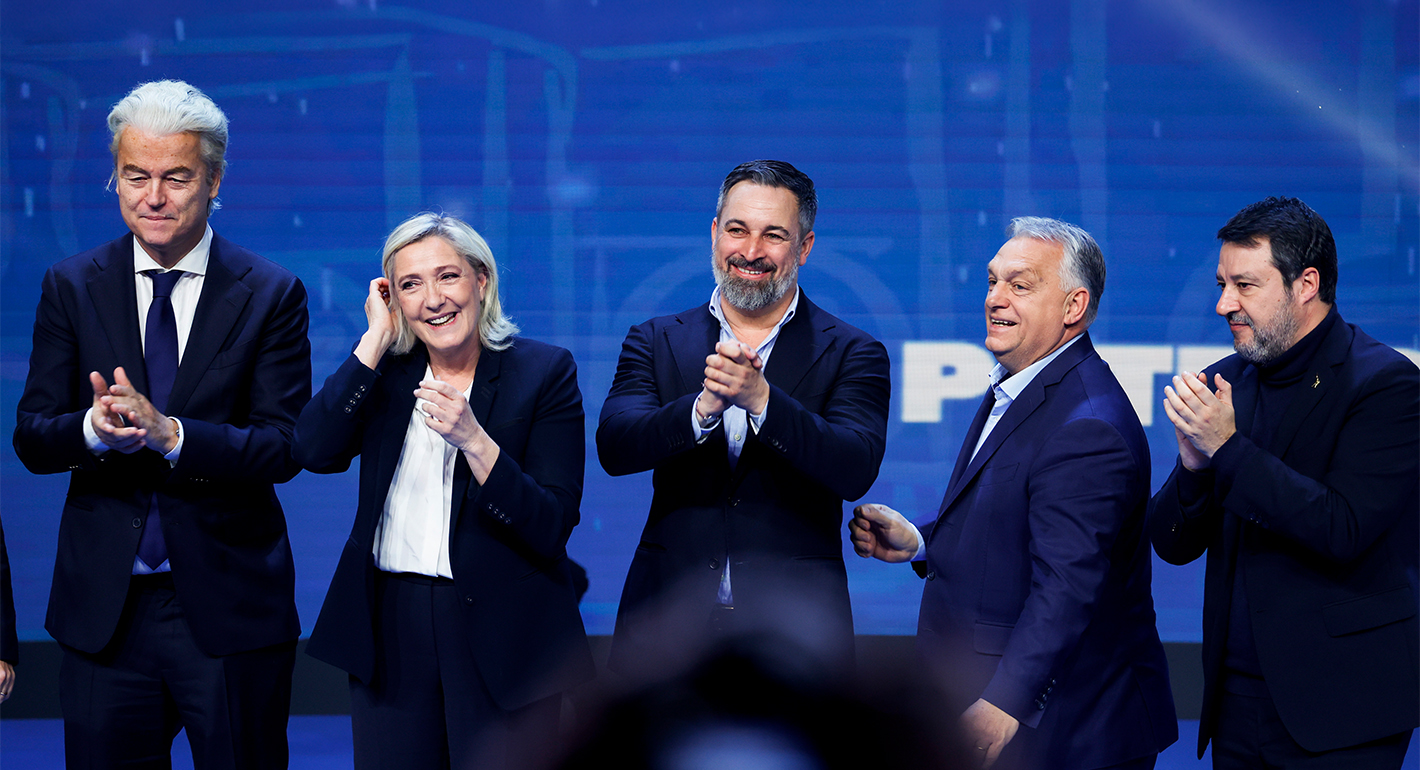
In supporting Europe’s far-right, MAGA and Russia both want the same thing: a weaker EU. Europe must defend itself without abandoning the openness these forces exploit.

Armida van Rij