• Research
  • Strategic Europe
  • About
  • Experts
Carnegie Europe logoCarnegie lettermark logo
EUNATO
  • Donate
{
  "authors": [
    "Henri J. Barkey"
  ],
  "type": "legacyinthemedia",
  "centerAffiliationAll": "dc",
  "centers": [
    "Carnegie Endowment for International Peace"
  ],
  "collections": [],
  "englishNewsletterAll": "menaTransitions",
  "nonEnglishNewsletterAll": "",
  "primaryCenter": "Carnegie Endowment for International Peace",
  "programAffiliation": "MEP",
  "programs": [
    "Middle East"
  ],
  "projects": [],
  "regions": [
    "United States"
  ],
  "topics": [
    "Foreign Policy",
    "Nuclear Policy"
  ]
}
Source: Getty

In The Media

Winning the Nobel Peace Prize

President's Obama recent Nobel Peace Prize has resulted in skepticism in some circles. His forthcoming acceptance speech offers him the opportunity to capitalize on the award and take steps toward achieving many of his administration's goals.

Link Copied
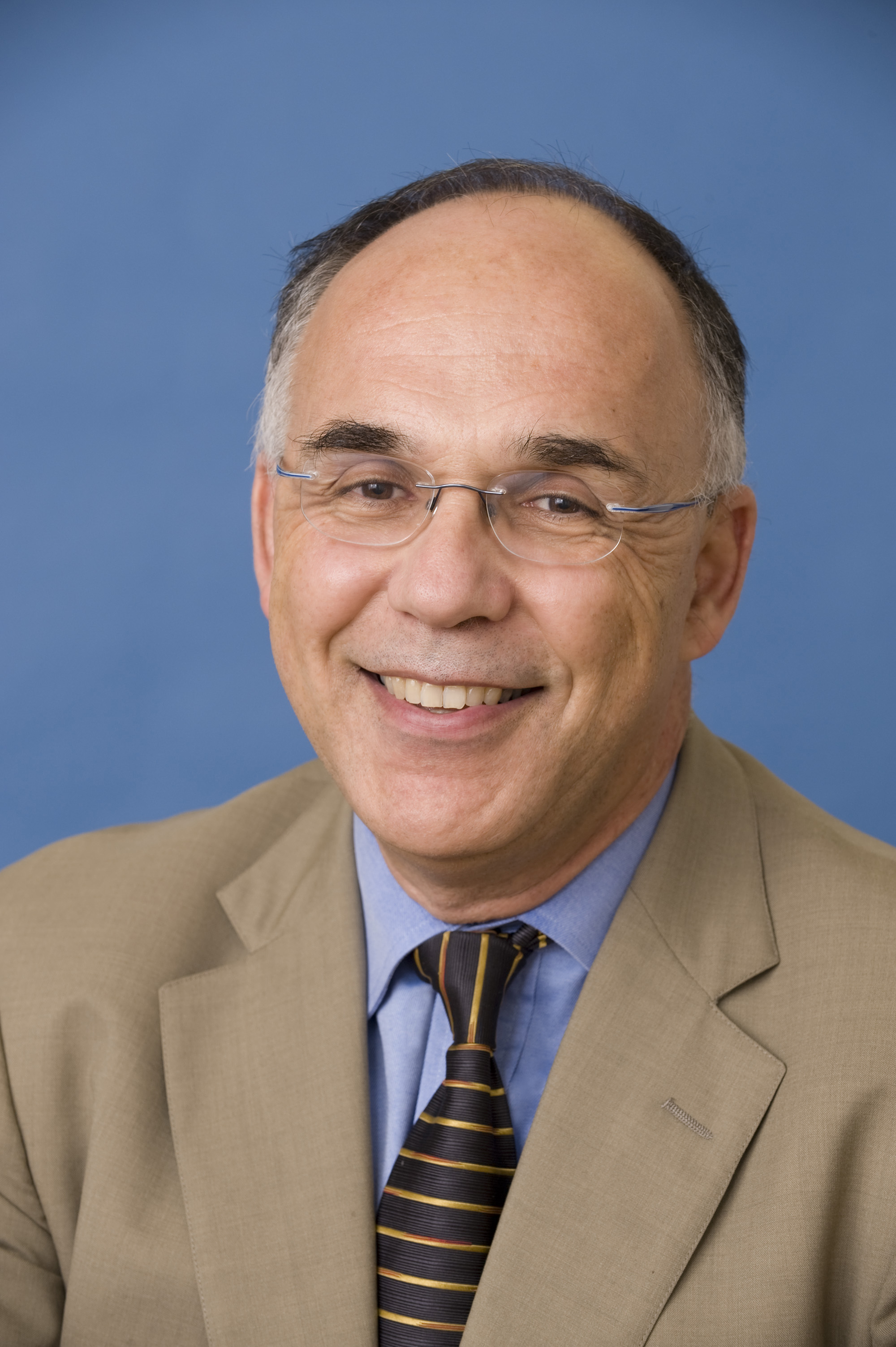
By Henri J. Barkey
Published on Oct 9, 2009

Source: The Brian Lehrer Show

Last week’s surprise announcement that President Obama had been awarded the Nobel Peace Prize has put enormous pressure on him. The prize, according to Henri Barkey, is a “poisoned chalice” given to Obama through a “calculated choice” by the Nobel committee. With all of the problems that Obama is facing domestically and abroad, Barkey suggests that the committee is trying to push Obama to come through on his campaign promises. 

Obama’s forthcoming acceptance speech will be very important. Barkey suggests that Obama announce that he will undertake two specific projects, one concrete and the other symbolic. The first would be to announce the decommissioning of a specific number of nuclear weapons with an agreed upon deal between the US and the Russians. Second, he should announce that immediately following the speech he will fly to Jerusalem to work to bring the Israelis and Palestinians together. Barkey concludes that Obama “shouldn’t try to solve all the world’s problem," but that “he needs to capitalize” on the award in his speech. 
 

About the Author

Henri J. Barkey

Former Visiting Scholar, Middle East Program

Barkey served as a member of the U.S. State Department Policy Planning Staff, working primarily on issues related to the Middle East, the Eastern Mediterranean, and intelligence from 1998 to 2000.

    Recent Work

  • Article
    Winners and Losers in Turkey’s Election

      Henri J. Barkey

  • Article
    The Road to Turkey’s June Elections: Crises, Strategies, and Outcomes

      Henri J. Barkey

Henri J. Barkey
Former Visiting Scholar, Middle East Program
Henri J. Barkey
Foreign PolicyNuclear PolicyUnited States

Carnegie does not take institutional positions on public policy issues; the views represented herein are those of the author(s) and do not necessarily reflect the views of Carnegie, its staff, or its trustees.

More Work from Carnegie Europe

  • Commentary
    Strategic Europe
    How the EU Can Become Energy Independent

    The closure of the Strait of Hormuz has triggered a global energy crisis, but Europe is stuck in reaction mode. Without more strategic foresight, the EU will remain dependent on fossil fuels and will never be truly secure.

      Milo McBride, Pauline Gerard

  • Commentary
    Deciphering Europe’s Relationship with Turkey

    Debate is heating up on how Turkey could be integrated into a common European defense framework. Commercial and industrial deals offer a better chance at alignment than sweeping political efforts.

      Marc Pierini

  • Commentary
    Strategic Europe
    Taking the Pulse: Is it Worth it for Europeans to Placate Trump?

    After spending much of 2025 trying to placate Donald Trump, some European leaders are starting to change posture. But is even a hostile Washington still so important to Europe that the U.S. president’s outbursts are worth putting up with?

      • Rym Momtaz

      Rym Momtaz, ed.

  • Commentary
    Strategic Europe
    Europeans Are Quiet Quitting the United States

    European leaders have now not only lost faith in Donald Trump’s U.S. presidency, but also in America’s hegemony as a whole. But short-term challenges make an immediate divorce unwise.

      • Rym Momtaz

      Rym Momtaz

  • Article
    EU Integration Without Ratification?

    Countries face several hurdles in joining the EU, including the final stage of ratifying their accession treaties. Procedural reforms and substantive adjustments could help move the process forward.

      Stefan Lehne

Get more news and analysis from
Carnegie Europe
Carnegie Europe logo, white
Rue du Congrès, 151000 Brussels, Belgium
  • Research
  • Strategic Europe
  • About
  • Experts
  • Projects
  • Events
  • Contact
  • Careers
  • Privacy
  • For Media
  • Gender Equality Plan
Get more news and analysis from
Carnegie Europe
© 2026 Carnegie Endowment for International Peace. All rights reserved.