

Commentary
Are Germany’s economic, industrial, and political struggles becoming a liability for the EU’s ability to rise to the geopolitical moment?
Rym Momtaz, ed.
{
  "authors": [],
  "type": "pressRelease",
  "centerAffiliationAll": "dc",
  "centers": [
    "Carnegie Endowment for International Peace"
  ],
  "collections": [],
  "englishNewsletterAll": "menaTransitions",
  "nonEnglishNewsletterAll": "",
  "primaryCenter": "Carnegie Endowment for International Peace",
  "programAffiliation": "MEP",
  "programs": [
    "Middle East"
  ],
  "projects": [],
  "regions": [
    "North Africa",
    "Algeria"
  ],
  "topics": [
    "Security"
  ]
}
REQUIRED IMAGE
Al-Qaeda in the Islamic Maghreb (AQIM)—an Algerian jihadi group that pledged allegiance to Osama bin Laden in 2006—garnered worldwide media exposure after simultaneous attacks in December 2007 on the UN building and the Constitutional Court in Algiers. AQIM, however, has not been able to sustain this level of violence and failed to transform itself into a North Africa-wide organization.
WASHINGTON, Dec 1—Al-Qaeda in the Islamic Maghreb (AQIM)—an Algerian jihadi group that pledged allegiance to Osama bin Laden in 2006—garnered worldwide media exposure after simultaneous attacks in December 2007 on the United Nations building and the Constitutional Court in Algiers. AQIM, however, has not been able to sustain this level of violence and failed to transform itself into a North Africa-wide organization, contends a new paper by Jean-Pierre Filiu.
AQIM’s global aims have been thwarted by the Algerian government’s more effective military strategy and the collapse of al-Qaeda in Iraq—the conflict in Iraq helped attract followers. Violent incidents fell from 200 in 2007 to below 150 in 2008. Still, the danger of terrorism in the region is real and considerable attention should be devoted to North Africa and the Sahel.
Methods to contain and ultimately eradicate al-Qaeda in the Islamic Maghreb:
“AQIM is deeply rooted in Algeria’s recent history of violence and strife, but the organization’s heavy legacy limits its global potential,” says Filiu. “The security paradox posed by AQIM is that its inability to project its ‘global’ terror beyond Africa intensifies the pressures from al-Qaeda central to achieve such a breakthrough and to force the Algerian jihadi leadership to live up to this commitment.”
###
NOTES
Carnegie does not take institutional positions on public policy issues; the views represented herein are those of the author(s) and do not necessarily reflect the views of Carnegie, its staff, or its trustees.

Are Germany’s economic, industrial, and political struggles becoming a liability for the EU’s ability to rise to the geopolitical moment?

Rym Momtaz, ed.

European states control several Overseas Countries and Territories around the world that carry strategic, economic, and environmental weight. As great powers challenge the rules-based order, defending them is a geopolitical imperative for Europe.

Marc Pierini

Mounting economic strain and battlefield losses will not necessarily make the Kremlin less dangerous. They could instead push Moscow toward a more aggressive hybrid campaign designed to test NATO’s Eastern flank, exploit allied hesitation, and fracture European resolve.

Maksym Beznosiuk

Over the past ten years, NATO has held almost as many summits as it did during the entirety of the Cold War. Are they still useful, or is it time to stop holding annual meetings?
Rym Momtaz, ed.
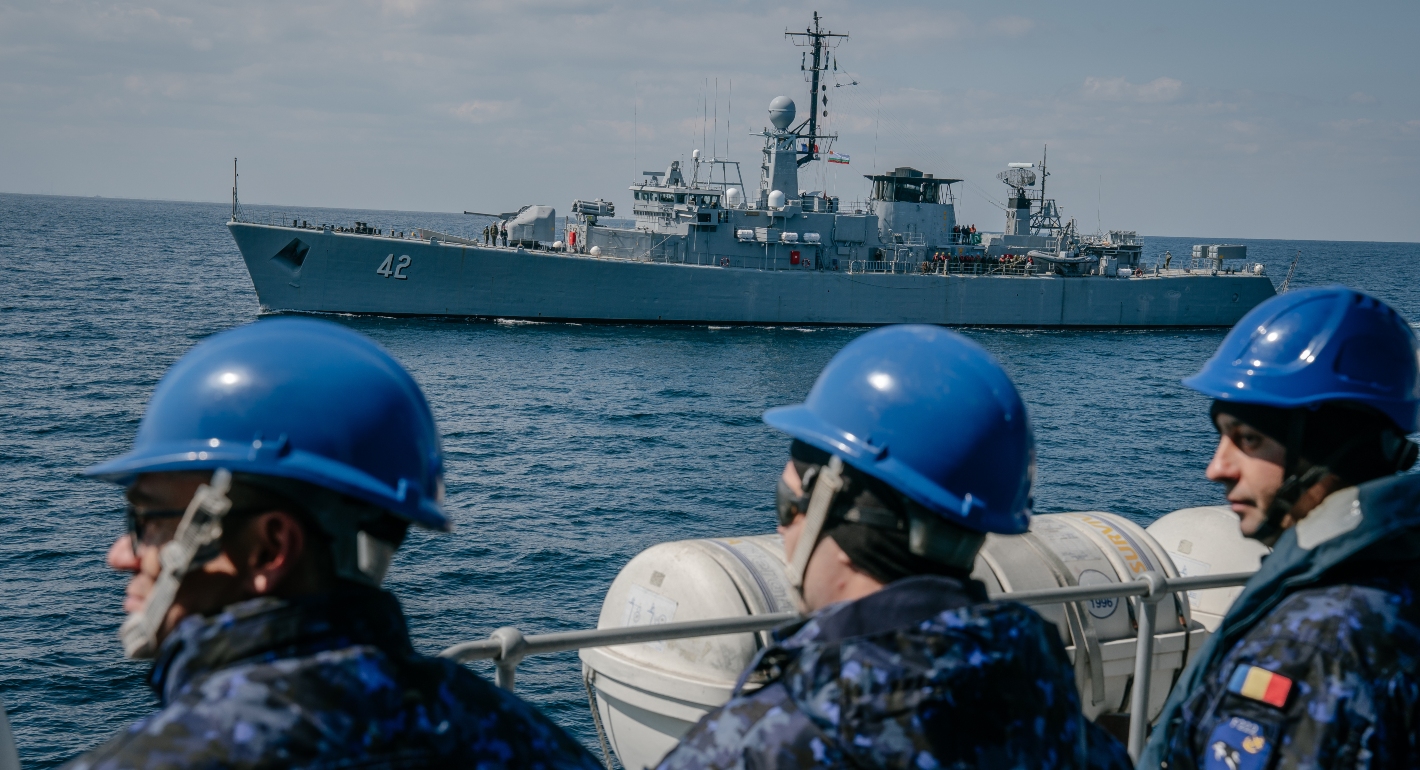
As Russia's war on Ukraine drags on, NATO is expanding its footprint in the Black Sea. Turkey, Romania, and Bulgaria are upgrading their fleets and deepening trilateral cooperation.

Dimitar Bechev