

Paper
Paul Salem
{
  "authors": [
    "Paul Salem"
  ],
  "type": "legacyinthemedia",
  "centerAffiliationAll": "",
  "centers": [
    "Carnegie Endowment for International Peace",
    "Malcolm H. Kerr Carnegie Middle East Center"
  ],
  "collections": [],
  "englishNewsletterAll": "",
  "nonEnglishNewsletterAll": "",
  "primaryCenter": "Malcolm H. Kerr Carnegie Middle East Center",
  "programAffiliation": "",
  "programs": [],
  "projects": [],
  "regions": [
    "Gulf"
  ],
  "topics": [
    "Security"
  ]
}
Source: Getty
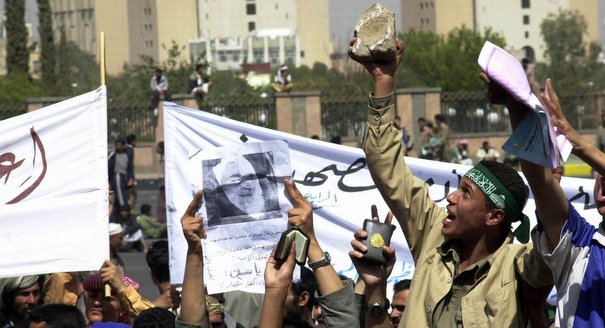
The trouble in northern Yemen should serve as a wakeup call to the global community to help Yemen deal with the political, security, and economic crises it faces, before the confrontation escalates and further destabilizes the region.
Source: Al-Hayat

The fighting escalated after the Houthi forces crossed the border and attacked a Saudi border patrol on Nov. 3. Indeed, perhaps the aim of the Houthi forces was to trigger a Saudi response, thereby internationalizing the conflict. In so doing they could claim that there conflict was a regional, even a religious one, not an internal one and could call for more help from Iran, Hizbullah and other sources. Iran is already publicly responding to these calls. It is in the interests of Yemen and the GCC to de-escalate the conflict and bring it back to its domestic components.
The nature and extent of Iranian support for the Houthis has been the subject of much controversy and hard to corroborate. The rebels have received political support from Iranian media and officials, and reportedly receive funds from private Shiite sources from some Arab countries and Iran. It is reported also that they have received training and military equipment from the Iranian revolutionary guards. Yemeni and Saudi sources affirm this, and the Yemeni authorities allege that they intercepted an Iranian ship carrying weapons to the rebels. It is not illogical that Iran would exploit any advantage it could gain against its regional competitor, Saudi Arabia.
However, the situation of Saadah is not Iraq or Lebanon; it is more like Gaza. While Iran has fairly direct access to Iraq and (through Syria) to Lebanon, it does not have such open access to Gaza or northern Yemen. While Iran might want to expand its influence in Saadah, it does not have sufficient strategic access to do so in a major way. therefore, while Saudi Arabia’s response to the border incursion is understandable, it should not play into the hands of those who want to internationalize the conflict.
The best way to limit Iran’s role there is to achieve a ceasefire, de-escalate tensions, and encourage a political process that will end the causes of the rebellion and restore unity to Yemen. Like in Gaza, the emphasis should be on bringing security to the people of Saadah, achieving a political end to the rebellion, and embarking on reconstruction and development. Such progress will weaken the rebels, while fighting will drive desperate people into their arms. Moreover, if the war escalates further, and is seen increasingly as a confrontation between Sunnis and Shiis, Iran will definitely find opportunity to get involved more directly in the conflict; also sectarian tensions might flare up in other parts of the peninsula and the Arab world.
The breakdown of order in Saadah, and the secessionist movement in south Yemen, as well as troubles in Hadramaut are symptoms of a gradually failing state in Yemen. The trouble in Saadah, rather than serve as the entryway to a new war that will surely weaken Yemen further and destabilize the region, should serve as a wakeup call to address Yemen’s serious political, security, and economic crises with more political attention from the GCC and world powers, more encouragement for internal reform, and urgently needed economic aid. Yemen needs urgent help in order not to go the way of Somalia; war is not a cure but might precipitate Yemen’s breakup.
The latest flare up should refocus attention on the underlying and urgent need to address Yemen’s underlying crises. This country of over 20 million is among the poorest in the Arab world with very high rates of illiteracy and unemployment. Its problems are likely to get much worse as oil revenues drop off dramatically and water resources dwindle to critical levels.
Saudi Arabia has been the most active in helping Yemen in recent years and has been the largest contributor of assistance. A number of GCC countries have also become increasingly concerned and engaged in responding to Yemen’s problems. But given the magnitude of Yemen’s challenges and the danger to the region if Yemen collapses or breaks up, much more still needs to be done.
The West and the international community also need to do much more. The United Kingdom leads western donors in Yemen with a program of about $80 million, while the US program has been about one third of that. Given that the US is allocating almost $2 billion in assistance to Pakistan, there is no doubt that, at least given Yemen’s strategic importance, the levels of attention and aid should be increased dramatically.
In sum, regional powers should not fall into the trap of escalating the confrontation in Yemen, but should rather limit external interference by de-escalating the military confrontation and moving toward ending the causes of the rebellion, restoring Yemeni unity, and—with international participation--helping Yemen deal with its urgent needs.
Senior Fellow at the Middle East Institute
Paul Salem is a senior fellow at the Middle East Institute.
Recent Work
Paul Salem
Paul Salem

Europe is facing rising populism internally as well as external pressures from Russia, China, Turkey, and the United States.

Dimitar Bechev

The new U.S.–Denmark–Greenland agreement will help Washington exert political, economic, and financial dominance under the guise of security. Yet, it acknowledged Copenhagen’s and Nuuk’s sovereignty on the island.

Marc Pierini

A summer of escalation in the Black Sea has hurt Ukraine economically and is exacerbating world food security. A truce is needed—as is a broader reframing of Europe’s Ukraine strategy.

Thomas de Waal

Are Germany’s economic, industrial, and political struggles becoming a liability for the EU’s ability to rise to the geopolitical moment?

Rym Momtaz, ed.

European states control several Overseas Countries and Territories around the world that carry strategic, economic, and environmental weight. As great powers challenge the rules-based order, defending them is a geopolitical imperative for Europe.
Marc Pierini