

Commentary
European Commission President Ursula von der Leyen is about to give her annual address on the state of the EU. Here’s what she won’t—but should—say.
Rym Momtaz
{
  "authors": [
    "Eduardo Zepeda",
    "Timothy A. Wise",
    "Kevin P. Gallagher"
  ],
  "type": "other",
  "centerAffiliationAll": "",
  "centers": [
    "Carnegie Endowment for International Peace"
  ],
  "collections": [],
  "englishNewsletterAll": "",
  "nonEnglishNewsletterAll": "",
  "primaryCenter": "Carnegie Endowment for International Peace",
  "programAffiliation": "",
  "programs": [],
  "projects": [],
  "regions": [
    "North America",
    "United States",
    "South America"
  ],
  "topics": [
    "Economy",
    "Trade"
  ]
}
Source: Getty
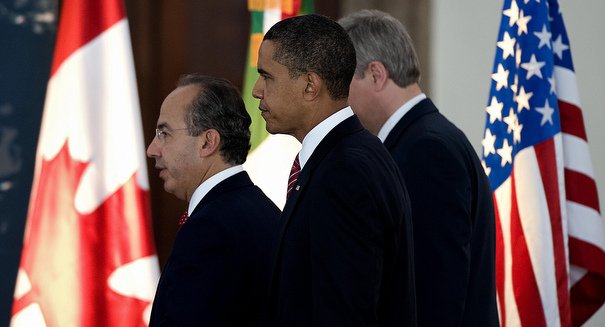
Mexico’s disappointing experience with NAFTA underscores the need to reform trade agreements between the United States and developing countries.
Despite an increase in trade, foreign investment, and productivity since NAFTA took effect in 1994, Mexico has been disappointed by slow economic growth and weak job creation. In addition, recession in the United States is hitting Mexico particularly hard, given its dependence on its northern neighbor.
Mexico’s experience with NAFTA underscores the need to reform trade agreements between the United States and developing countries. There are five things to remember in future trade agreements with the United States, contends a new paper by Eduardo Zepeda of the Carnegie Endowment and Timothy A. Wise and Kevin P. Gallagher of Tufts’ Global Development and Environment Institute:
“There is increasing international recognition that trade policy in the Western Hemisphere should be overhauled,” conclude the authors, based on this comprehensive review of Mexico’s economic performance under NAFTA. “Now is the time for the U.S., Canadian, Mexican, and other developing country governments to take a fresh look at NAFTA’s experience and shape trade and development policies to better meet the needs of their people in a manner that respects the right to development, job creation, and the environment.”
Former Senior Associate, Trade, Equity and Development Program
Zepeda is inter-regional policy coordinator of the Development Policy and Analysis Division, Department of Economic and Social Affairs at the United Nations General Secretariat. He was previously a senior associate in the Trade, Equity, and Development Program at the Carnegie Endowment for International Peace.
Timothy A. Wise
Global Development and Environment Institute
Kevin P. Gallagher
Carnegie does not take institutional positions on public policy issues; the views represented herein are those of the author(s) and do not necessarily reflect the views of Carnegie, its staff, or its trustees.

European Commission President Ursula von der Leyen is about to give her annual address on the state of the EU. Here’s what she won’t—but should—say.

Rym Momtaz

Radical-right parties are expected to do well in upcoming elections in four of the EU's biggest member states. If successful, they could prevent the union from addressing key challenges ahead.

Stefan Lehne

Canadian Prime Minister Mark Carney has twice inspired praise for standing up to U.S. President Donald Trump: at the 2026 World Economic Forum in Davos and on Canada-U.S. trade negotiations. Is Carney showing a third way better than the EU has in dealing with the Trump administration?
Rym Momtaz, ed.

European states control several Overseas Countries and Territories around the world that carry strategic, economic, and environmental weight. As great powers challenge the rules-based order, defending them is a geopolitical imperative for Europe.

Marc Pierini

In supporting Europe’s far-right, MAGA and Russia both want the same thing: a weaker EU. Europe must defend itself without abandoning the openness these forces exploit.

Armida van Rij