• Research
  • Strategic Europe
  • About
  • Experts
Carnegie Europe logoCarnegie lettermark logo
EUUkraine
  • Donate
{
  "authors": [
    "Stephen Tankel"
  ],
  "type": "legacyinthemedia",
  "centerAffiliationAll": "dc",
  "centers": [
    "Carnegie Endowment for International Peace"
  ],
  "collections": [],
  "englishNewsletterAll": "",
  "nonEnglishNewsletterAll": "",
  "primaryCenter": "Carnegie Endowment for International Peace",
  "programAffiliation": "SAP",
  "programs": [
    "South Asia"
  ],
  "projects": [],
  "regions": [
    "Afghanistan",
    "Pakistan"
  ],
  "topics": [
    "Security"
  ]
}
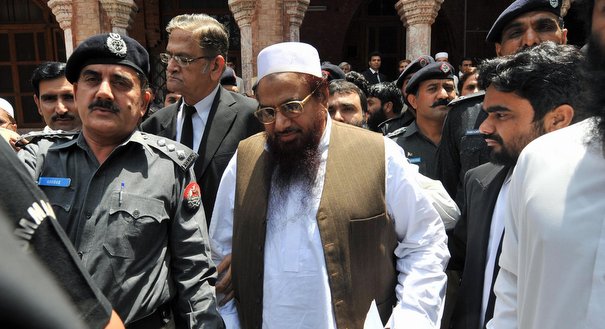
Source: Getty

In The Media

Lashkar-e-Taiba in Perspective

The Pakistani militant group Lashkar-e-Taiba (LeT) has had operational interests in Afghanistan since 2006, and the potential for collaboration between LeT, al-Qaeda, and various pro-Taliban elements is increasing.

Link Copied
By Stephen Tankel
Published on Apr 26, 2010

Source: Foreign Policy

Lashkar-e-Taiba in PerspectiveIn 2006, the Pakistani militant group Lashkar-e-Taiba entered the Afghan theater, necessitating its increased presence in Pakistan’s North-West Frontier Province and Federally Administered Tribal Areas. The group is often mentioned during discussions of the Punjabi Taliban, militants from Punjabi jihadi groups, who arrived in large numbers at approximately the same time. But these militants follow the Deobandi school of Islam and are close to the Afghan and Pakistani Taliban. Lashkar is also a Punjabi group, but its Ahl-e Hadith faith and close relationship with the Pakistani military establishment have contributed to a historically rocky relationship with Deobandi militant groups and other pro-Taliban elements.

Sharing physical space in the NWFP/FATA and operational interests in Afghanistan has created the opportunity for increased conflict and collaboration with al-Qaeda and the various pro-Taliban elements there. As collaboration increases, so too does Lashkar’s threat to Pakistan and the West.
 
This paper is divided into four sections. The first assesses Lashkar’s historical relations with the different actors operating in the NWFP/FATA. The second discusses the nature of Lashkar’s expansion in the area from roughly 2006 onward. The third explores its collaboration and conflicts with other groups operating there, and the nature of its involvement in anti-Western and anti-Pakistan activities emanating from the region. The paper concludes with a brief assessment of Lashkar’s threat to the West, particularly the impact of its presence in the NWFP/FATA.

About the Author

Stephen Tankel

Former Nonresident Scholar, South Asia Program

Tankel was a nonresident scholar at the Carnegie Endowment, where his research focuses on insurgency, terrorism, and the evolution of nonstate armed groups.

    Recent Work

  • Q&A
    Restoring Trust: U.S.-Pakistan Relations

      Stephen Tankel

  • Q&A
    LeT’s Global Rise

      Stephen Tankel

Stephen Tankel
Former Nonresident Scholar, South Asia Program
Stephen Tankel
SecurityAfghanistanPakistan

Carnegie does not take institutional positions on public policy issues; the views represented herein are those of the author(s) and do not necessarily reflect the views of Carnegie, its staff, or its trustees.
More Work from Carnegie Europe

  • Commentary
    Strategic Europe
    Europe on Iran: Gone with the Wind

    Europe’s reaction to the war in Iran has been disunited and meek, a far cry from its previously leading role in diplomacy with Tehran. To avoid being condemned to the sidelines while escalation continues, Brussels needs to stand up for international law.

      Pierre Vimont

  • Commentary
    Strategic Europe
    Macron Makes France a Great Middle Power

    France has stopped clinging to notions of being a great power and is embracing the middle power moment. But Emmanuel Macron has his work cut out if he is to secure his country’s global standing before his term in office ends.

      • Rym Momtaz

      Rym Momtaz

  • Commentary
    How Can Europe Renew a Stalled Enlargement Process?

    Despite offering security benefits to candidates and the EU alike, the enlargement agenda appears stalled. Why is progress not being made, and is it time for Europe to rethink its approach?

      Sylvie Goulard, Gerald Knaus

  • Commentary
    Strategic Europe
    To Survive, the EU Must Split

    Leaning into a multispeed Europe that includes the UK is the way Europeans don’t get relegated to suffering what they must, while the mighty United States and China do what they want.

      • Rym Momtaz

      Rym Momtaz

  • Trump speaking to a room of reporters
    Commentary
    Emissary
    Unpacking Trump’s National Security Strategy

    Carnegie scholars examine the crucial elements of a document that’s radically different than its predecessors.

      • Cecily Brewer
      • +18

      James M. Acton, Saskia Brechenmacher, Cecily Brewer, …

Get more news and analysis from
Carnegie Europe
Carnegie Europe logo, white
Rue du Congrès, 151000 Brussels, Belgium
  • Research
  • Strategic Europe
  • About
  • Experts
  • Projects
  • Events
  • Contact
  • Careers
  • Privacy
  • For Media
  • Gender Equality Plan
Get more news and analysis from
Carnegie Europe
© 2026 Carnegie Endowment for International Peace. All rights reserved.