

Commentary
Nikolay Petrov
{
  "authors": [
    "Nikolay Petrov"
  ],
  "type": "legacyinthemedia",
  "centerAffiliationAll": "",
  "centers": [
    "Carnegie Endowment for International Peace",
    "Carnegie Europe",
    "Carnegie Russia Eurasia Center"
  ],
  "collections": [],
  "englishNewsletterAll": "",
  "nonEnglishNewsletterAll": "",
  "primaryCenter": "Carnegie Russia Eurasia Center",
  "programAffiliation": "",
  "programs": [],
  "projects": [],
  "regions": [
    "Caucasus",
    "Russia"
  ],
  "topics": [
    "Political Reform"
  ]
}
Source: Getty
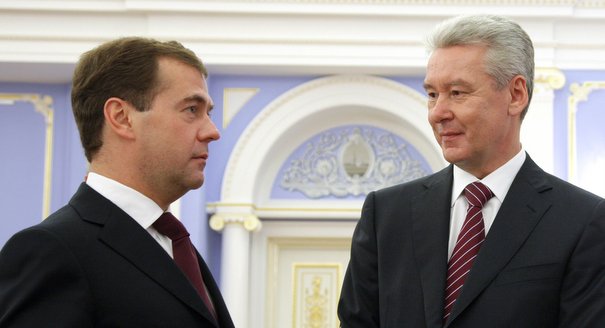
The Russian government has been stepping up efforts to cancel the direct election of mayors following the cancellation of direct gubernatorial elections in 2004.
Source: The Moscow Times

This process has spread to a number of major cities. The direct election of mayors has been canceled in Nizhny Novgorod, Chelyabinsk, Ulyanovsk and Penza. The vote has also been canceled in cities that never even held direct elections, such as Ufa and Saratov as well as in Kazan, where direct elections had been expected to start. Under discussion now is the cancellation of the elections in Yekaterinburg, Perm and Volgograd, among others. According to various estimates, the direct election of mayors has been canceled in a third to half of all municipalities already.
Governors, who are appointed, and United Russia functionaries share a common interest in this change. Incumbent mayors have even given their support in return for assurances that they can remain in office.
The political juggernaut, first set in motion in 2004 with the cancellation of direct gubernatorial elections, continues its onward progress. The problem, however, is that this approach is no longer effective with the advent of the economic crisis. The state system should be more flexible and resilient during a crisis. Its individual elements should have plenty of autonomy, the joints need to be flexible, and the center of gravity — both political and financial — should be closer to the ground.
The problem is that the Russian political system is plagued by weak institutions and lacks a separation of powers, making it vulnerable to errors in judgment and bad policy. The result is that nobody is left to halt the administrative rampage and to prevent the implementation of decisions and policies that will prove harmful not only to society but to the government itself. That is why many processes in Russia tend to swing, like a pendulum, from one extreme to the other. After losing recent mayoral elections in Irkutsk and Bratsk, United Russia decided that it would be better to eliminate elections altogether. At the same time, leaders never consider the fact that elections serve a number of very important functions for the authorities as well. Elections are a mechanism for direct dialogue between the government and society, a means for determining the proper agenda for government actions and programs. They are a school of participation for ordinary citizens and of competition for the political elite. In addition, elections provide a means for sharing responsibility and letting off steam. By rejecting all of that in favor of maintaining a monopoly on power, the authorities act to the detriment of their own strategic interests, effectively sawing off the branch on which they are sitting.
There was a time when mayors were the Kremlin’s main allies in the struggle against overly independent “regional barons.” Mayors were the most powerful and independent figures of regional political establishments, and it was the mayors who reduced the monopoly of centralized power. Now, when governors have essentially become federal officials and United Russia is everywhere installing its political council secretaries as the speakers of regional legislatures, mayors are the only indigenous center of political influence relying on their own — rather than borrowed — resources. That arrangement gave the system a large margin of stability.
The mayoral model of a “hired city manager selected from among the leading deputies of the city” — one of three municipal reforms that has been offered — should not be confused with similar-sounding models in the West. In this regard, many people will recall the “town mayor/city council chairman” of the Soviet era. The similarity is even more striking when considering that an increasing number of today’s city councils are dominated by a single party — only now it is United Russia in place of the Communist Party.
A case in point is Perm, where the authorities are doggedly trying to force the repeal of direct mayoral elections. Perm residents, known throughout the country for their civic activity, are resisting the change. They have founded a coalition called For Direct Elections in Perm with the participation of many members of civic society, held public hearings and academic conferences on the subject and even created a web site, Vyborpermi.ru. According to a recent survey by the Levada Center, 79 percent of Perm residents want to retain direct mayoral elections.
The events currently unfolding in Perm hold significance far beyond that city and region. If the authorities succeed in canceling direct elections for the mayor in Perm — thereby acting against not only the wishes of the people, but their own long-term interests as well — nothing will stop them from canceling direct mayoral elections everywhere.
Former Scholar-in-Residence, Society and Regions Program, Moscow Center
Nikolay Petrov was the chair of the Carnegie Moscow Center’s Society and Regions Program. Until 2006, he also worked at the Institute of Geography at the Russian Academy of Sciences, where he started to work in 1982.
Recent Work
Nikolay Petrov
Nikolay Petrov
Carnegie does not take institutional positions on public policy issues; the views represented herein are those of the author(s) and do not necessarily reflect the views of Carnegie, its staff, or its trustees.

European Commission President Ursula von der Leyen is about to give her annual address on the state of the EU. Here’s what she won’t—but should—say.

Rym Momtaz

The EU’s responses to two recent incidents expose the gulf between European perceptions and capabilities. Unless the union can bridge that gap, it will never become a real geostrategic power.
Rym Momtaz

European states control several Overseas Countries and Territories around the world that carry strategic, economic, and environmental weight. As great powers challenge the rules-based order, defending them is a geopolitical imperative for Europe.

Marc Pierini

In supporting Europe’s far-right, MAGA and Russia both want the same thing: a weaker EU. Europe must defend itself without abandoning the openness these forces exploit.

Armida van Rij

As we close out another season of Strategic Europe, it is worth taking stock of the deep shifts underway.
Rym Momtaz