

Paper
Douglas H. Paal
{
  "authors": [
    "Douglas H. Paal"
  ],
  "type": "legacyinthemedia",
  "centerAffiliationAll": "dc",
  "centers": [
    "Carnegie Endowment for International Peace"
  ],
  "collections": [],
  "englishNewsletterAll": "asia",
  "nonEnglishNewsletterAll": "",
  "primaryCenter": "Carnegie Endowment for International Peace",
  "programAffiliation": "AP",
  "programs": [
    "Asia"
  ],
  "projects": [],
  "regions": [
    "East Asia",
    "South Korea"
  ],
  "topics": [
    "Security"
  ]
}
Source: Getty
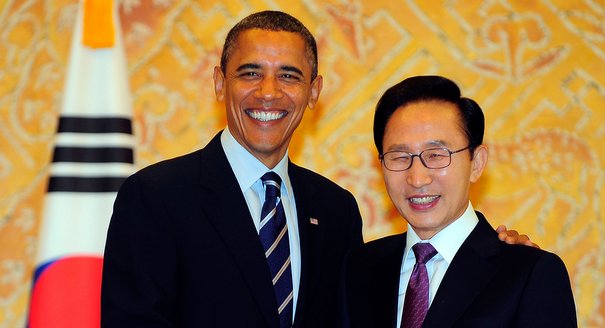
The 2007 South Korean presidential election brought to power Lee Myung-bak, who has shown a far less conciliatory approach to North Korea. His changes in South Korean foreign policy have undermined Kim Jong-il’s ability to dictate the situation on the Korean peninsula.
Source: The National Interest

One thing we do know is that Kim Jong-il appeared to be in the peninsula’s driver’s seat for ten years under the “Sunshine policy” of former South Korean Presidents Kim Dae-jung and Roh Moo Hyun. Through bluster and threats, he won his hard regime the food, cash and fertilizer it needed to survive. But in December 2007, a new president, Lee Myung-bak, was elected in a landslide after campaigning for a reversal of the conciliatory approach of his predecessors.
One specific concession of former-President Roh that new President Lee reversed was an offer to open the waters west of the Korean peninsula as a “zone of peace and cooperation.” The concession had been made during a North-South summit hastily arranged on the eve of the 2007 election—obviously to influence voters in the south to continue to support the “Sunshine policy.” Lee cancelled this and other agreements on taking office, interpreting this as well within the mandate of his victory.
On November 10, 2009, North and South Korean patrol boats engaged in a firefight in the western zone for which they naturally offered different explanations. Common to their accounts, however, was that the South was victorious and the North suffered the loss of one of its ships off Daecheong Island.
One thing we have observed about Kim Jong-il and the North Koreans: they do not let defeats go unanswered. After the loss of the North Korean ship, the commander of its component, known as Unit 586, General Kim Myung-guk, was demoted to three-star rank. But on April 25 this year, a month after the torpedo sank the South’s Cheonan, Kim received his fourth star again, personally from the Dear Leader. This strongly suggests both a desire for vengeance and a need for the North’s leader to maintain his close connection to the armed forces.
We have to assume that the North’s commanders believed they could pull this operation off without being clearly implicated, even though they would be widely suspected to be responsible. After all, would not the torpedo destroy itself and the evidence would sink to the bottom of the sea? This was intended to reduce the chances that the North would be forced to pay a price directly. And it would give voice to dissidents in the South to criticize and oppose the new Lee Myung-bak government, a consistent goal of the North.
Now, North Korea and its friends have been surprised by the clear evidence that it was guilty of launching the attack. The quality and integrity of the evidence assembled by the South and its international advisors have thrown Pyongyang (and Beijing) on the defensive. Both North and South have begun the process of sanctioning and threatening each other, though with discernible limits which signal intent to avoid outright conflict.
As events unfold, the South will seek censure of the North at the UN Security Council and conduct military exercises to bolster its defenses and the alliance with the United States. Again, the North will not let these go unanswered and can choose among many means to rattle the voters in the South, ranging from another nuclear test, to missile launches, to other forms of saber rattling.
As we go forward, it will be important for President Lee Myung-bak to continue to demonstrate the cool statesmanship he has shown thus far. The United States can best support him by taking measures and choosing military exercises that demonstrate strength but do not constitute dangerous provocations.
North Korea and its leaders are desperately in need of money to survive. Washington and the civilized world should cooperate in gradually tightening their grip around the banks used internationally by Pyongyang. By adjusting the grip to the scale of the North’s provocations, they can send a useful message to Kim Jung-il that he is no longer in the peninsula’s driver’s seat.
Distinguished Fellow, Asia Program
Paal previously served as vice chairman of JPMorgan Chase International and as unofficial U.S. representative to Taiwan as director of the American Institute in Taiwan.
Recent Work
Douglas H. Paal


Douglas H. Paal, Tong Zhao, Chen Qi, …
Carnegie does not take institutional positions on public policy issues; the views represented herein are those of the author(s) and do not necessarily reflect the views of Carnegie, its staff, or its trustees.
Donald Trump has repeatedly bashed NATO and European allies, threatening to annex Canada and Greenland and deploring their lack of enthusiasm for his war of choice in Iran. Is this latest round of abuse the final straw?

Rym Momtaz, ed.

Economic growth is at the heart of a dilemma between planetary and international security.

Olivia Lazard
The war in Iran proves the United States is now a destabilizing actor for Europe and the Arab Gulf. From protect their economies and energy supplies to safeguarding their territorial integrity, both regions have much to gain from forming a new kind of partnership together.
Rym Momtaz

French President Emmanuel Macron has unveiled his country’s new nuclear doctrine. Are the changes he has made enough to reassure France’s European partners in the current geopolitical context?
Rym Momtaz, ed.
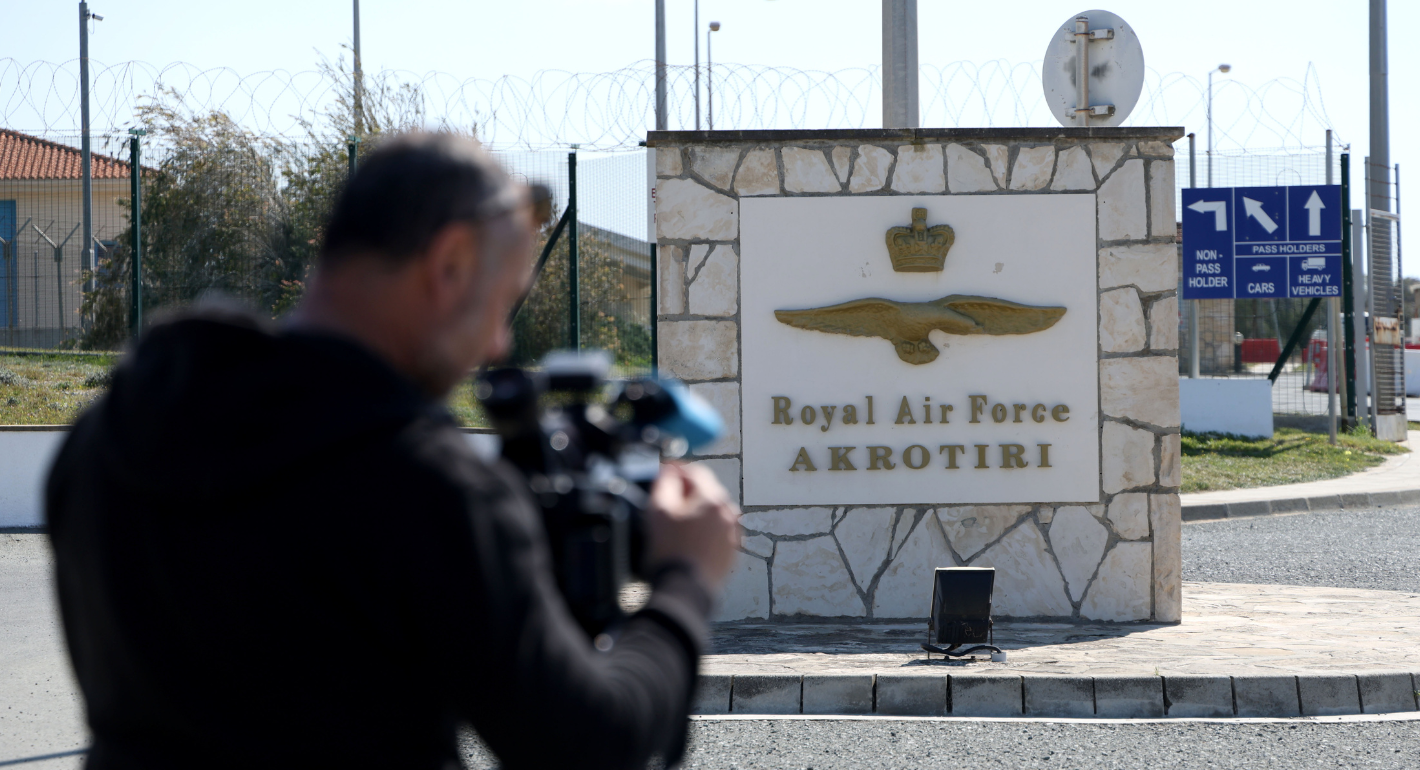
The drone strike on the British air base in Akrotiri brings Europe’s proximity to the conflict in Iran into sharp relief. In the fog of war, old tensions in the Eastern Mediterranean risk being reignited, and regional stakeholders must avoid escalation.

Marc Pierini