

Paper
- +4
Dmitri Trenin, Alexey Arbatov, Maria Lipman, …
{
  "authors": [
    "Andrei Ryabov"
  ],
  "type": "legacyinthemedia",
  "centerAffiliationAll": "",
  "centers": [
    "Carnegie Endowment for International Peace",
    "Carnegie Russia Eurasia Center"
  ],
  "collections": [],
  "englishNewsletterAll": "",
  "nonEnglishNewsletterAll": "",
  "primaryCenter": "Carnegie Russia Eurasia Center",
  "programAffiliation": "",
  "programs": [],
  "projects": [],
  "regions": [
    "Caucasus",
    "Russia"
  ],
  "topics": [
    "Political Reform",
    "Domestic Politics"
  ]
}
Source: Getty
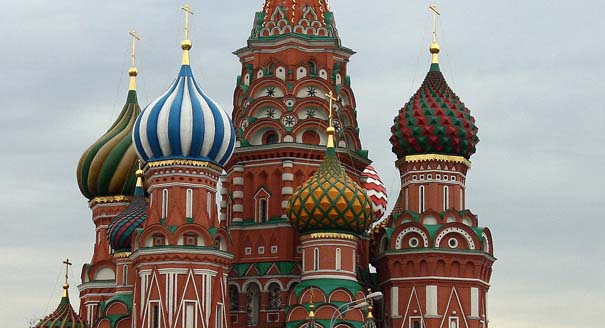
Moscow suffers from a number of fundamental problems that are beyond the ability of any single individual to fix and reform in Moscow would require profound changes to the entire country.
Source: Vedomosti

Luzhkov fought tooth and nail with President Dmitry Medvedev, refusing to accept the president’s offer to leave office on good terms. The former mayor also had sharp words for United Russia, which abandoned him as soon as Medvedev signed the dismissal decree. This helped Luzhkov earn some unexpected sympathy for having “behaved like a real man.”
The people are becoming irritated by the country’s pseudo-politics, the unprincipled opportunism and toadyism practiced by United Russia, which showed its true colors during the Luzhkov affair. It is becoming increasingly difficult for United Russia’s leaders to mask their misdeeds with flowery speeches and other platitudes.
Luzhkov plans to create an opposition movement after he reached the conclusion that Russian politicians need to stop behaving like “androids” who mindlessly obey commands from above while holding no opinions or positions of their own. Does this mark the early stages of the formation of a competitive political system in Russia?
But Luzhkov faces serious obstacles. The recent histories of many former Soviet republics are rife with examples of political leaders who were sidelined and then returned as opposition leaders and even leaders of “color revolutions.” These include Georgian President Mikheil Saakashvili, former Ukrainian President Viktor Yushchenko, former Armenian President Levon Ter-Petrossian, former Kyrgyz President Kurmanbek Bakiyev and former Ukrainian Prime Minister Yulia Tymoshenko.
Russia has its own example: former Vice President Alexander Rutskoi, who served a brief jail term for taking the side of the Supreme Soviet during the constitutional crisis in early October 1993, which culminated in tanks shooting the White House. After he was released, he was elected governor of the Kursk region. But that was a completely different era when intense political battles resembled noncontact karate, with losers going down for a moment, but then jumping up as if nothing had happened to continue fighting. Now the rules have changed. Battles are fought for blood, with losers dragged politically lifeless out of the arena. So far, there is no sign that those new rules have been abolished. Or perhaps Luzhkov thinks he is strong enough to overturn that system and reinstate the previous rules.
It would be a big mistake to hope that the situation can be improved in Moscow. It would be nearly impossible to halt the institutional corruption in City Hall, and it would also be difficult to end the destruction of Moscow’s historical and cultural landmarks or the construction of ugly buildings simply by naming “the right guy” to the job — regardless of whether he or she is a liberal reformer or a new tough boss who knows the city well.
In short, it would be impossible to remove the fundamental problems that cripple Moscow without making profound changes to the entire country. As sad as it might sound, it would be better to leave Moscow’s current system in place, even if this means maintaining the city’s high level of corruption and inefficiency. The new mayor won’t be able to significantly improve the situation anyway, and in the worst case he could cause the whole system to collapse in a matter of weeks. That is why it would be better not to meddle with anything until the federal leadership decides that it is time to make changes nationwide.
Former Scholar-in-Residence, The East East: Partnership Beyond Borders Program, Moscow Center
Ryabov was chair of the Carnegie Moscow Center’s East East: Partnership Beyond Borders Program. He is also the chief editor of the journal World Economy and International Relations and a leading researcher at the Russian Academy of Sciences’ Institute of World Economy and International Relations.
Recent Work
Dmitri Trenin, Alexey Arbatov, Maria Lipman, …
Andrei Ryabov
Carnegie does not take institutional positions on public policy issues; the views represented herein are those of the author(s) and do not necessarily reflect the views of Carnegie, its staff, or its trustees.

A summer of escalation in the Black Sea has hurt Ukraine economically and is exacerbating world food security. A truce is needed—as is a broader reframing of Europe’s Ukraine strategy.

Thomas de Waal

European Commission President Ursula von der Leyen is about to give her annual address on the state of the EU. Here’s what she won’t—but should—say.

Rym Momtaz

The EU’s responses to two recent incidents expose the gulf between European perceptions and capabilities. Unless the union can bridge that gap, it will never become a real geostrategic power.
Rym Momtaz

European states control several Overseas Countries and Territories around the world that carry strategic, economic, and environmental weight. As great powers challenge the rules-based order, defending them is a geopolitical imperative for Europe.

Marc Pierini

In supporting Europe’s far-right, MAGA and Russia both want the same thing: a weaker EU. Europe must defend itself without abandoning the openness these forces exploit.

Armida van Rij