

Commentary
With its public finances in shambles, the far right polling at 35 percent ahead of the 2027 presidential election, and a growing protest movement, is France’s crisis a threat to the EU’s geopolitical awakening?
Rym Momtaz, ed.
{
  "authors": [
    "Mark Medish",
    "Joel McCleary"
  ],
  "type": "legacyinthemedia",
  "centerAffiliationAll": "dc",
  "centers": [
    "Carnegie Endowment for International Peace"
  ],
  "collections": [],
  "englishNewsletterAll": "ctw",
  "nonEnglishNewsletterAll": "",
  "primaryCenter": "Carnegie Endowment for International Peace",
  "programAffiliation": "russia",
  "programs": [
    "Russia and Eurasia"
  ],
  "projects": [],
  "regions": [
    "North America",
    "United States"
  ],
  "topics": [
    "Security",
    "Military"
  ]
}
Source: Getty
Global leaders must carefully craft a new way to approach international security challenges that will allow them to trim costly defense programs while still maintaining a modern security apparatus.
Source: openDemocracy

Nowhere has the conflict between defense hawks and budget hawks been louder than in the UK where a rumble between Defense Minister Liam Fox and Chancellor George Osborne spilled into public view.
Fox accused his Treasury colleague of proposing reckless cuts in the name of austerity. Opposition leader Ed Miliband sensibly countered, "The government's defense review was a profound missed opportunity.” Despite the decision for eight percent cuts over five years, he said the Cameron government’s plan failed to offer a "strategic blueprint for our future defense needs." Washington should take note.
A similar budget storm is brewing in the US where midterm elections have produced a sharply divided Congress. In the Republican camp, a three-way debate is under way among traditional defense boosters, ardent budget balancers, and Tea Party isolationists. For its part, the Obama administration has hewed to critical thinking, with Defense Secretary Robert Gates pushing for some controversial cuts from the roughly $1 trillion annual security budget.
Together, the US, Europe, Japan, Australia and other major allies account for over two thirds of world defense spending. The US alone spends about 45% of the global military purse, with defense consuming more than half of the US discretionary budget. Despite the appetite of defense hawks, these levels are not sustainable.
The challenge is to base defense expenditures on an accurate assessment of threats and to develop effective defenses against those threats. Rather than perpetuating the status quo or cutting programs willy-nilly, we should be investing in security from 21st century threats. It is the policy hawks – those seeking a defense budget based on a coherent, forward-looking security strategy -- who should prevail in this debate.
As Democratic Senator Ron Wyden of Oregon has said, "Just because something is called defense spending doesn't mean it's doing an effective job of promoting national security."
It is time to move beyond the outdated Cold War paradigm. A prime example of such thinking was the Pentagon’s 2006 Quadrennial Defense Review, which postulated "the Long War" against Muslim terrorism. Its author, then Defense Secretary Donald Rumsfeld, otherwise a revisionist favoring leaner force structures, virtually cribbed the Cold War script of a civilizational struggle, substituting Sino-Soviet communists with Islamic extremists.
Secretary Gates’s 2010 QDR avoids this Manichaean trap, focusing instead on the two Middle East wars at hand, but it is almost bereft of a strategic plan for our future needs. Given how fundamentally security dynamics have changed in the last twenty years, we must make systematic adjustments.
First, large-scale territorial wars and long-term occupations have proven counter-productive and unsustainable. The invasions of Iraq and Afghanistan have made manifest the lesson that should have been learned from the Soviet experience in Afghanistan and our tragedy in Vietnam. These wars demonstrate the power paradox: credible military power is needed to deter, however if force is used unwisely, it can diminish power.
The full economic costs – direct and indirect – of such wars are enormous. Nobel economist Joseph Stiglitz estimates the cost of the Iraq and Afghan wars over $4 trillion. The price in casualties and ruined lives is stunning. The long-term health care costs for soldiers' traumatic brain injuries alone are estimated to be above $1 trillion.
In a classic case of imperial over-stretch, the US maintains more than 800 military sites around the world. A central issue in Iraq today is whether the US will be allowed to keep five large permanent bases. As former US national security adviser Zbigniew Brzezinski observed of the Iraq war: “It is essentially a war of colonialism, attempted in a post-colonial age.”
We should remember that the long decline of the Roman Empire started during the plague-ridden reign of Marcus Aurelius. Rome became a military empire perennially enmeshed in frontier wars, desperate to recruit more soldiers and to raise taxes. The US is not Rome, but it would still be prudent to reduce our global military footprint and to practice strategic economy.
Second, recognizing emerging threats and better understanding old ones, we must upgrade systems of readiness on massive scales. This means preparing for asymmetric threats and developing systemic resilience to protect nations -- doing what 'homeland security' should be all about.
President Ronald Reagan got one thing right about ‘Star Wars’: it would be far better to defend populations than to threaten their annihilation. Even if Reagan initially pursued missile defense in destabilizing ways, he was right, morally and practically, about focusing on civilian defense rather than mutual assured destruction. This point is even more relevant today when powerful new asymmetrical technologies make attribution and thus deterrence increasingly less assured.
Cyber threats, for example, are now getting much attention. This concern is entirely warranted, although as Seymour Hersh and Misha Glenny point out, it is important to distinguish between the real annoyance of cyber-espionage and the more murky threat of cyberwar.
A computer hacker can harm your interests; a germ hacker will almost certainly kill you. No threat is more poorly understood than biological weapons. Before Nixon ended the US offensive bio-weapons program in 1969, the Pentagon and CIA had worked together to create tools of germ warfare with nuclear lethal equivalence. The Soviets did the same.
These super-weapons were tested, but the public and even most national security leaders do not understand their destructiveness because the results remain highly classified and buried. Advances in biotechnology over the last 40 years have made the threat more potent, and the know-how has moved from state players to sophisticated non-state players.
We must realize that a biological attack on Singapore, Hong Kong, Istanbul, London, or New York would have crippling international consequences for all.
Third, there is a need for new technological solutions and multilateral approaches to defense. The national model alone cannot work.
The recent security and nuclear cooperation treaties between the UK and France should serve as a model. Pooling resources will be key to affording the defense we need. But we are still fighting the last war, if not the one before that.
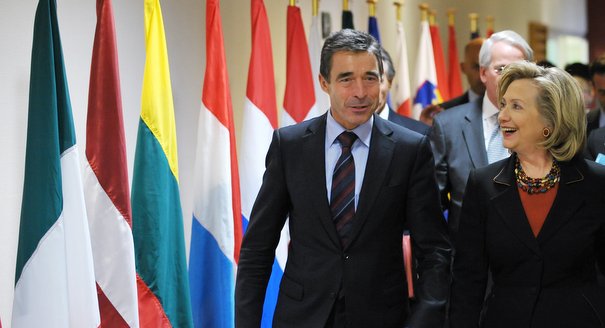
The recent NATO summit at Lisbon raised awareness of emergent threats. As Secretary of State Hillary Clinton warned, "NATO must have capacity to anticipate and protect against shifting security challenges from terrorism to ballistic missiles, from cyber attacks to the proliferation of nuclear, chemical and biological weapons. Relying on strategies of the past will not suffice."
For example, a meaningful civilian defense against biological weapons is possible, but it will require vast reserves of medical countermeasures for all threatened nations. To overcome the orphan drug problem, a global vaccines and therapeutics program must pioneer ways for participants to share development costs, stockpiles and intellectual property rights.
Today’s budget pressures will mean axing some defense sacred cows, as the UK has begun to do, however it is up to the policy hawks to ensure that cuts serve the interests of a strategic rethink. We can achieve more security with less Cold War-style defense spending.
If our leaders do not define a new security paradigm, the accountants will unilaterally disarm or the generals will keep fighting old wars while new threats deepen. We must adapt to new realities, lest we go the way of old empires.

Former Visiting Scholar
Medish served in the Clinton administration as special assistant to the President and senior director for Russian, Ukrainian, and Eurasian Affairs on the National Security Council from 2000 to 2001.
Joel McCleary
Carnegie does not take institutional positions on public policy issues; the views represented herein are those of the author(s) and do not necessarily reflect the views of Carnegie, its staff, or its trustees.

With its public finances in shambles, the far right polling at 35 percent ahead of the 2027 presidential election, and a growing protest movement, is France’s crisis a threat to the EU’s geopolitical awakening?

Rym Momtaz, ed.

Ahead of a tough winter for Ukraine, Donald Trump’s swing back toward Russia bodes ill. But instead of panicking, Kyiv’s European allies are focusing on action.
Rym Momtaz

While the EU and European governments are embracing the much-lauded middle-power moment, this entails three difficult conundrums.

Richard Youngs

Europe is facing rising populism internally as well as external pressures from Russia, China, Turkey, and the United States.

Dimitar Bechev

European NATO countries are wrestling with the possibility of U.S. disengagement from the alliance. With the continent’s security increasingly uncertain, governments must restore the credibility of their collective defense.



Hans-Dieter Lucas, Adam Thomson, Pierre Vimont