

Article
Thomas Carothers
{
  "authors": [
    "Thomas Carothers"
  ],
  "type": "legacyinthemedia",
  "centerAffiliationAll": "dc",
  "centers": [
    "Carnegie Endowment for International Peace",
    "Malcolm H. Kerr Carnegie Middle East Center"
  ],
  "collections": [
    "Arab Awakening"
  ],
  "englishNewsletterAll": "democracy",
  "nonEnglishNewsletterAll": "",
  "primaryCenter": "Carnegie Endowment for International Peace",
  "programAffiliation": "DCG",
  "programs": [
    "Democracy, Conflict, and Governance"
  ],
  "projects": [],
  "regions": [
    "North Africa",
    "Egypt"
  ],
  "topics": [
    "Political Reform"
  ]
}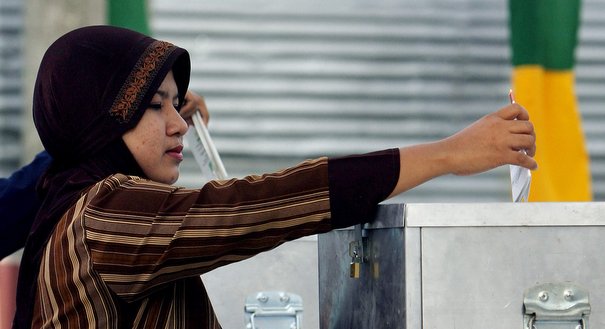
Source: Getty
The recent upheaval in Egypt, led by a newly assertive mix of idealistic young protesters, civic groups, and political opposition parties, bears a resemblance to Indonesia’s democratic transition ten years ago.
Source: New Republic

At times of unexpected but momentous political change in distant countries, we grasp onto political analogies to help get our bearings. Even if we know they are imperfect, we can’t resist their tempting suggestiveness. But, if we cannot resist them, we can at least choose them thoughtfully. Invoking Iran after the Shah is scary indeed, but dangerously misleading. A different analogy that provides more useful grist for our unsettled analytic mill concerning Egypt is Indonesia and Suharto in the late 1990s.
The Muslim Brotherhood in Egypt today is significantly different from the Islamist movement driven by Ayatollah Khomeini that ended up grabbing power in Tehran. It has renounced violence in both word and deed for decades and undergone a significant process of moderation. It lacks a charismatic leader such as Khomeini and has already confronted limits to its popular backing through its unofficial participation in parliamentary elections. The current protests in Egypt have focused on non-religious concerns and not featured Islamist slogans or objectives. The Muslim Brotherhood will certainly play an important role in post-Mubarak Egyptian politics, but Egypt is not ripe for a radical Islamist revolution.
In Indonesia, a dictator who had ruled for more than two decades—holding himself out as the only guarantor of his nation’s stability and serving as Washington’s steadfast ally—tumbled from power after a brief but intense surge of protests led by students and a smattering of NGOs that had managed to survive in the narrow margins of Indonesian political life. The Clinton administration stayed with the aging tyrant almost to the bitter end, issuing tepid calls for reform, refusing to believe he could fall so quickly and worrying deeply about what might follow—chaos, an Islamist takeover, or an actual breakup of the country.
Yet, despite its abrupt, unprepared transition, absence of any deep experience with democracy, entrenched security forces with blood on their hands, and location in a largely undemocratic neighborhood, Indonesia navigated a shaky but remarkably successful passage to democracy. Today, it is the largest democracy in the Muslim world, enjoying rapid economic growth at home and actively supporting democracy in its region. Four Islamic political parties are represented in Indonesia’s parliament and the president’s cabinet, but their vote share has diminished over the past ten years, dropping below 30 percent in the last parliamentary elections. Moderate Islamic values have gained ground in the society generally; Islamic radicalism, after lashing out violently, is marginalized.
Of course, Egypt’s historical path, societal makeup, economic conditions, and national character differ in many ways from Indonesia’s. Nevertheless, enough of its socio-political experiences and structures bear resemblance to Indonesia’s ten years ago—from its newly assertive mix of idealistic young protestors, civic groups, and political opposition parties to its longstanding effort to balance secular and Islamist values—that Indonesia’s democratization offers some hope for Egypt. Accordingly, it is worth noting some of the keys to Indonesia’s successful transition.
First, the post-Suharto political renovation was inclusive despite the powerful mass rejection of the prior dictatorial order. The interim president moved quickly to allow freedom of expression and open the political space. Apparatchiks around the dictator managed to find a new political role for themselves through a transformed former ruling party that emphasized its technocratic capabilities. The army, which had played a key role in facilitating Suharto’s stepping down by refusing to violently repress the protesters, saw its political role greatly reduced but only bit by bit, through constant negotiations and compromises. Political parties of all sorts were allowed to flourish, despite the messiness of the initial elections and governments.
Second, once Suharto’s abrupt ouster was achieved, the transition became intensely legalistic and iterative. Indonesia put itself through seemingly endless phases of constitutional, electoral, and other legal reforms, carried out in a spirit of compromise. The vague but emotive reformasi ideal was gradually translated into concrete institutions, rules, and procedures. The serious pursuit of this detailed reform agenda helped Indonesians tolerate a transition period marked early on by a dubious post-dictator leader, disturbing outbursts of violence, economic woes, and the breaking off of East Timor.
Third, the United States and Europe overcame their suspicions of a political transition they had long dreaded and offered valuable assistance in support of elections, political party development, civil society strengthening, and legal reform. Perhaps in part because of Indonesia’s large size and relative geographic isolation, the outside actors never tried to guide the process, but instead accepted a modest, quiet, yet also persistent role as helpful partners. Indonesians’ positive experience with this external assistance helped contribute to their own noteworthy determination to become active supporters of democracy in their own region.
No analogy will see Egypt fully through the difficult times it faces ahead. Its path will be a complex amalgam of political transitions from many parts. But, as we search for ways to make sense of what has been unthinkable for so long in U.S. policy circles, we should avoid the simplistic scare scenarios that come from poorly chosen analogies. They are, after all, the same scenarios that led U.S. policy to avoid realities it should have started facing seriously in Egypt, and the Arab world more generally, years ago. We would be wiser to look to Indonesia as an example of how a democratic transition in a Muslim country can be successful.

Harvey V. Fineberg Chair for Democracy Studies; Senior Fellow, Democracy, Conflict, and Governance Program
Thomas Carothers, a senior fellow in the Carnegie Endowment for International Peace’s Democracy, Conflict, and Governance Program, is a leading expert on comparative democratization and international support for democracy.
Recent Work
Thomas Carothers
Thomas Carothers
Carnegie does not take institutional positions on public policy issues; the views represented herein are those of the author(s) and do not necessarily reflect the views of Carnegie, its staff, or its trustees.

As the EU confronts profound challenges, several leaders have called for fundamental reform to the union’s model—but only modest, superficial changes have resulted. What if Europe really could be reimagined from zero today: What should such a redesigned European order look like?

Richard Youngs, ed.

The EU’s new migration policy is not suited to today’s realities. With climate change increasingly becoming a driver of displacement, Europe needs to rethink its deterrence-focused approach.

Shana Tabak
Preparing candidate countries for EU membership is no longer enough. As the enlargement process becomes a reality, the union must also prepare its own societies.

Iliriana Gjoni
Countries face several hurdles in joining the EU, including the final stage of ratifying their accession treaties. Procedural reforms and substantive adjustments could help move the process forward.

Stefan Lehne
Europe has an interest in supporting Armenian leader Nikol Pashinyan as he tries to make peace with neighbors and loosen ties with Russia. But it is depersonalized support in the long term, not quickfire flash, that will win the day.

Thomas de Waal