

Commentary
The new U.S.–Denmark–Greenland agreement will help Washington exert political, economic, and financial dominance under the guise of security. Yet, it acknowledged Copenhagen’s and Nuuk’s sovereignty on the island.
Marc Pierini
{
  "authors": [
    "Matthew Rojansky",
    "Lyndon Allin"
  ],
  "type": "legacyinthemedia",
  "centerAffiliationAll": "dc",
  "centers": [
    "Carnegie Endowment for International Peace",
    "Carnegie Europe",
    "Carnegie Russia Eurasia Center"
  ],
  "collections": [],
  "englishNewsletterAll": "ctw",
  "nonEnglishNewsletterAll": "",
  "primaryCenter": "Carnegie Endowment for International Peace",
  "programAffiliation": "russia",
  "programs": [
    "Russia and Eurasia"
  ],
  "projects": [],
  "regions": [
    "Eastern Europe",
    "Moldova",
    "Europe"
  ],
  "topics": [
    "Foreign Policy"
  ]
}
Source: Getty
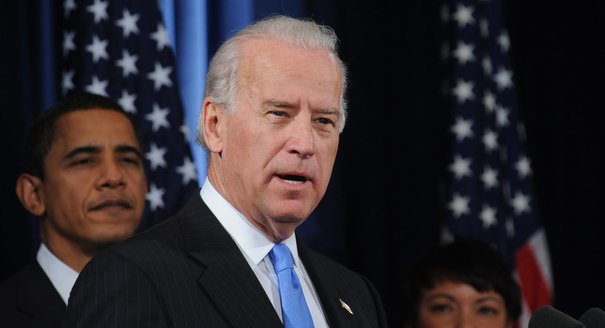
Although U.S. Vice President Joseph Biden’s visit to Moldova can do much to highlight the country’s potential and to support progress already under way, the solutions to the country's lingering problems will depend on political will and creative thinking from Chisinau.
Source: The Moscow Times

The visit comes now because Moldova has taken on far greater symbolic significance as one of a handful of Eastern European states concerned about their place among Washington’s competing priorities after Washington’s reset with Moscow. It is also a potential example of successful post-Soviet political, social and economic reform — a yardstick for the European Union’s willingness to extend the benefits of integration to the full European community. What’s more, Moldova is a test case for the creation of a fully inclusive Euro-Atlantic security order.
Moldova’s long-frustrated European aspirations took center stage in 2009 with the ascendance of the Alliance for European Integration, an unlikely coalition of Romanian-speaking Moldovan nationalists, business-oriented pragmatists and the reform wing of the Russian-speaking old guard. Despite the inability to overcome parliamentary gridlock and select a president, the alliance has brought Moldovans together by articulating a vision of the country’s future that does not require a stark choice between Moscow and Brussels.
The alliance has advanced the country’s EU prospects by implementing many of the reforms required for compliance with EU norms and making some painful sacrifices to secure International Monetary Fund support during the economic crisis. It has also taken pragmatic confidence-building steps to reduce tensions with the separatist region of Transdnestr, recognizing that this protracted conflict is a further obstacle to Moldova’s European aspirations.
Biden’s visit to Moldova can be a clear signal that Washington supports the alliance’s reform agenda and European aspirations.
While the visit itself is a vote of confidence for the alliance, Biden should address all Moldovans with a message that the country’s challenges — its complex and multiethnic identity, its location at a historic crossroads and its far flung population of labor migrants — can become the pillars of a strong democracy and a prosperous market economy.
Biden should remind Moldovans that for the country to achieve its full potential, they must commit to fighting endemic corruption, improving the quality and availability of basic government services and combating the country’s acute problem of human trafficking. These challenges are interrelated because it is precisely the lack of economic opportunity and reliable services that induces many Moldovans to seek employment abroad, often falling prey to transnational criminal networks.
The visit also comes at a unique moment of opportunity for advancing regional security by bringing together all of the stakeholder parties to the Transdnestr conflict. In the past year, Russia, Germany and France have devoted a great deal of high-level attention to the conflict, while both Ukraine and Romania have for the first time identified conflict resolution in Transdnestr as a top national security priority. The United States should encourage the Moldovan government to fulfill its responsibility to all of its citizens by advancing a clear vision and delivering real evidence of how people on both sides of the Dnestr River can benefit from a solution to this territorial dispute.
Biden also needs to demonstrate Washington’s readiness to help Moldovans make progress by offering a basket of specific incentives.
First, as a bipartisan group of senior U.S. legislators has agreed, it is long overdue to "graduate," or permanently exempt, Moldova from the Jackson-Vanik amendment and allow for permanent normal trade relations between Moldova and the United States. (Under the current arrangement, Moldova receives only termporary exemption on a year-to-year basis.) This move can be strengthened by signing a bilateral free trade agreement that will open U.S. markets to Moldova’s goods and services.
Second, Washington should offer enhanced funding for existing exchange programs and enable new educational and cultural contacts by making Moldova a candidate for the visa waiver program.
Third, Washington and Chisinau should sign an agreement to combat human trafficking.
Fourth, Washington can push Brussels to maintain the momentum of Moldova’s European integration process, thus acknowledging that Moldova’s primary Western partner must be Europe.
Although this visit can do much to highlight Moldova’s potential and to support progress already under way, the solutions to the lingering problems that could hold the country back will depend on political will and creative thinking from Chisinau. The United States, working with its European partners, can provide targeted incentives, but only Moldovans themselves can supply the motivation to make the country’s third decade of independence a transformative one.

Former Deputy Director, Russia and Eurasia Program
Rojansky, formerly executive director of the Partnership for a Secure America, is an expert on U.S. and Russian national security and nuclear-weapon policies.
Lyndon Allin
Former EASI-Hurford Next Generation Fellow
Lyndon Allin is a political officer with the Organization for Security and Cooperation in Europe Mission to Moldova.
Carnegie does not take institutional positions on public policy issues; the views represented herein are those of the author(s) and do not necessarily reflect the views of Carnegie, its staff, or its trustees.

The new U.S.–Denmark–Greenland agreement will help Washington exert political, economic, and financial dominance under the guise of security. Yet, it acknowledged Copenhagen’s and Nuuk’s sovereignty on the island.

Marc Pierini

A summer of escalation in the Black Sea has hurt Ukraine economically and is exacerbating world food security. A truce is needed—as is a broader reframing of Europe’s Ukraine strategy.

Thomas de Waal

Are Germany’s economic, industrial, and political struggles becoming a liability for the EU’s ability to rise to the geopolitical moment?

Rym Momtaz, ed.

European Commission President Ursula von der Leyen is about to give her annual address on the state of the EU. Here’s what she won’t—but should—say.
Rym Momtaz

Radical-right parties are expected to do well in upcoming elections in four of the EU's biggest member states. If successful, they could prevent the union from addressing key challenges ahead.

Stefan Lehne