• Research
  • Strategic Europe
  • About
  • Experts
Carnegie Europe logoCarnegie lettermark logo
EUUkraine
  • Donate
{
  "authors": [
    "Paul Salem"
  ],
  "type": "legacyinthemedia",
  "centerAffiliationAll": "",
  "centers": [
    "Carnegie Endowment for International Peace",
    "Malcolm H. Kerr Carnegie Middle East Center"
  ],
  "collections": [],
  "englishNewsletterAll": "",
  "nonEnglishNewsletterAll": "",
  "primaryCenter": "Malcolm H. Kerr Carnegie Middle East Center",
  "programAffiliation": "",
  "programs": [],
  "projects": [],
  "regions": [
    "Levant",
    "Maghreb"
  ],
  "topics": [
    "Security"
  ]
}
Source: Getty

In The Media
Malcolm H. Kerr Carnegie Middle East Center

Turkey Should Participate in Libyan No-fly Zone

Taking the lead in implementing a no-fly zone over Libya would allow Turkey to reassert its leadership role in the Middle East and demonstrate Ankara's ability to put principle and long-term strategic interests above its short-term economic interests.

Link Copied
By Paul Salem
Published on Mar 13, 2011

Source: Hurriyet

Turkey Should Participate in Libyan No-fly Zone
As Libyan leader Moammar Gadhafi threatens the increased use of his air force against his own civilian population, it is becoming clear that regional and international opinion is moving in favor of supporting the imposition of a no-fly zone over Libya. Despite its business interests in Libya, Turkey should recognize the broader values at stake, reverse its opposition, and play a leading role in implementing a no fly zone.
 
Col. Gadhafi has clearly lost whatever shreds of legitimacy he had with the majority of his own people; however, through sheer military brutality he might be able to put down these popular uprisings, like Saddam did in southern Iraq after 1991, or the Soviets did in Hungary and Czechoslovakia during the Cold War. His air force is his only military advantage over his people. If he uses it more widely against civilian populations, it will become an unavoidable moral imperative to help save the Libyan people from such massacre.
 
The League of Arab States, the Gulf Cooperation Council and the Organization of Islamic Conference have indicated that they would be in favor a no-fly zone. And United Nations Security Council members are discussing the outlines of a potential resolution. Turkey has, so far, said that it was not in favor of such a no-fly zone.
 
I have written many times in recent months and years how Turkey has inspired many in the region as a model of democratic change; how it has also provided an example of responsible foreign policy in an otherwise polarized region. And how it has emphasized that we in the region should play a larger role in managing our own affairs, rather than leaving them to Western or other external intervention.
 
Now is the time for Turkey to build on its leadership role in the region, and recognize that helping to save large sections of the civilian population in Libya from the vengeful attacks of a spent and deranged leader, and to help the Libyans bring stability and democracy to Libya is not only a moral imperative but serves the interests of stability and democratization that Turkey has been exemplifying for years. And it is correct for Ankara to recognize that being a regional power entails responsibilities as well as advantages.
 
One can understand that in the first days of the Libyan uprising, Turkey was concerned about evacuating the 20,000-25,000 Turks that worked in Libya. We also know that Turkish companies have over $10 billion of contracts in Libya. And we know that the Turkish leadership is in the run-up to parliamentary elections in June. 
 
But this is a time to put principle and long-term strategic interests of stability and regional democratization above business and other narrow interests. People in the region have always accused the West of putting economic interests above principle; Turkey has come too far in helping build a new paradigm of democratization and regional order in the Middle East to fall under the same misperception.
 
And if a no-fly zone becomes a necessity to protect the Libyan people, we in the region should not wash our hands of it and ask the West to come do the work for us. At the very least, a no-fly zone should be implemented in full partnership: this should include full Turkish participation, as well as at least some participation from Egypt and Tunisia – the two countries that have unleashed the tide of democratization in the Arab world.
 
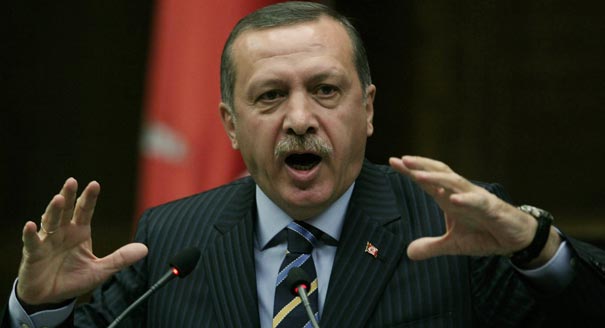
Building a democratic and stable Middle East will take regional leadership. Prime Minister Recep Tayyip Erdoğan, President Abdullah Gül, and Foreign Minister Ahmet Davutoğlu have talked about Turkey’s leadership role in a changing region. Now is the time to put words into action.

About the Author

Paul Salem

Senior Fellow at the Middle East Institute

Paul Salem is a senior fellow at the Middle East Institute.

    Recent Work

  • Paper
    Iraq’s Tangled Foreign Interests and Relations

      Paul Salem

  • Article
    Bracing for Impact in Syria

      Paul Salem

Paul Salem
Senior Fellow at the Middle East Institute
Paul Salem
SecurityLevantMaghreb

Carnegie does not take institutional positions on public policy issues; the views represented herein are those of the author(s) and do not necessarily reflect the views of Carnegie, its staff, or its trustees.

More Work from Carnegie Europe

  • Commentary
    Strategic Europe
    Taking the Pulse: Is France’s New Nuclear Doctrine Ambitious Enough?

    French President Emmanuel Macron has unveiled his country’s new nuclear doctrine. Are the changes he has made enough to reassure France’s European partners in the current geopolitical context?

      • Rym Momtaz

      Rym Momtaz, ed.

  • Commentary
    The Iran War’s Dangerous Fallout for Europe

    The drone strike on the British air base in Akrotiri brings Europe’s proximity to the conflict in Iran into sharp relief. In the fog of war, old tensions in the Eastern Mediterranean risk being reignited, and regional stakeholders must avoid escalation.

      Marc Pierini

  • Commentary
    Strategic Europe
    Europe on Iran: Gone with the Wind

    Europe’s reaction to the war in Iran has been disunited and meek, a far cry from its previously leading role in diplomacy with Tehran. To avoid being condemned to the sidelines while escalation continues, Brussels needs to stand up for international law.

      Pierre Vimont

  • Commentary
    Strategic Europe
    Macron Makes France a Great Middle Power

    France has stopped clinging to notions of being a great power and is embracing the middle power moment. But Emmanuel Macron has his work cut out if he is to secure his country’s global standing before his term in office ends.

      • Rym Momtaz

      Rym Momtaz

  • Commentary
    How Can Europe Renew a Stalled Enlargement Process?

    Despite offering security benefits to candidates and the EU alike, the enlargement agenda appears stalled. Why is progress not being made, and is it time for Europe to rethink its approach?

      Sylvie Goulard, Gerald Knaus

Get more news and analysis from
Carnegie Europe
Carnegie Europe logo, white
Rue du Congrès, 151000 Brussels, Belgium
  • Research
  • Strategic Europe
  • About
  • Experts
  • Projects
  • Events
  • Contact
  • Careers
  • Privacy
  • For Media
  • Gender Equality Plan
Get more news and analysis from
Carnegie Europe
© 2026 Carnegie Endowment for International Peace. All rights reserved.