

Q&A
Stephen Tankel
{
  "authors": [
    "Stephen Tankel"
  ],
  "type": "legacyinthemedia",
  "centerAffiliationAll": "dc",
  "centers": [
    "Carnegie Endowment for International Peace"
  ],
  "collections": [],
  "englishNewsletterAll": "ctw",
  "nonEnglishNewsletterAll": "",
  "primaryCenter": "Carnegie Endowment for International Peace",
  "programAffiliation": "SAP",
  "programs": [
    "South Asia"
  ],
  "projects": [],
  "regions": [
    "South Asia",
    "Pakistan"
  ],
  "topics": [
    "Political Reform",
    "Security"
  ]
}
Source: Getty
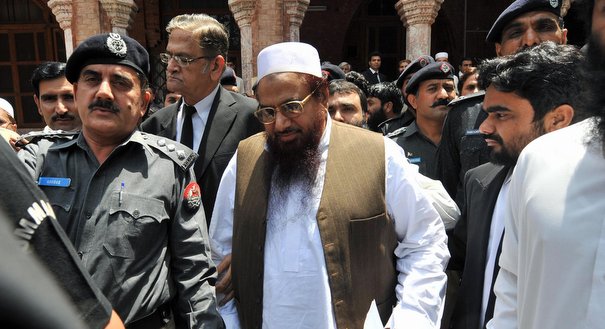
Lashkar-e-Taiba is one of Pakistan’s oldest and most powerful jihadi groups, whose global reach has only expanded since it launched a multi-target attack on the Indian city of Mumbai in November 2008.
Source: New America Foundation

The boldness of the Mumbai attacks and target selection suggested LeT continued to prioritize jihad against India, but was moving deeper into al-Qaeda’s orbit. Approximately one year after Mumbai, U.S. President Barack Obama wrote a letter to his Pakistani counterpart, President Asif Ali Zardari, in which he specifically mentioned LeT as one of the militant groups against which the government should act. A chorus of U.S. diplomats, security officials and military officers reiterated this call for action, pressuring Pakistan publicly as well as privately to move against LeT. Yet LeT’s position remains relatively secure. There are two main reasons. First, the country is facing a serious insurgency and the group remains one of the few militant outfits that officially refrain from launching attacks in Pakistan. The security establishment has determined that to avoid additional instability it must not take any action that could lead LeT to change this position. Second, the Pakistani army and its powerful Inter-Services Intelligence Directorate (ISI) have long considered LeT to be the country’s most reliable proxy against India and the group still provides utility in this regard as well as the potential for leverage at the negotiating table. Thus, the consensus is that, at least in the short-term, taking steps to dismantle the group would chiefly benefit India, while Pakistan would be left to deal with the costs.
Former Nonresident Scholar, South Asia Program
Tankel was a nonresident scholar at the Carnegie Endowment, where his research focuses on insurgency, terrorism, and the evolution of nonstate armed groups.
Recent Work
Stephen Tankel
Stephen Tankel
Carnegie does not take institutional positions on public policy issues; the views represented herein are those of the author(s) and do not necessarily reflect the views of Carnegie, its staff, or its trustees.

Russia is testing the waters of NATO’s mutual defense clause. What do strikes in Romanian territorial waters mean for the alliance’s posture toward Moscow?

Dimitar Bechev

With its public finances in shambles, the far right polling at 35 percent ahead of the 2027 presidential election, and a growing protest movement, is France’s crisis a threat to the EU’s geopolitical awakening?

Rym Momtaz, ed.

Europe is facing rising populism internally as well as external pressures from Russia, China, Turkey, and the United States.
Dimitar Bechev

A notable degree of participative democracy has firmly arrived in Europe. But to have more far-reaching impact, democratic deliberation needs to move into a radically new phase.

Richard Youngs

Before the next wave of EU enlargement takes place, the union needs to grapple with thorny questions of how power is distributed among its members.


Emil Sondaj Hansen, Ditte Brasso Sørensen