• Research
  • Strategic Europe
  • About
  • Experts
Carnegie Europe logoCarnegie lettermark logo
EUUkraine
  • Donate
{
  "authors": [
    "Michele Dunne"
  ],
  "type": "legacyinthemedia",
  "centerAffiliationAll": "dc",
  "centers": [
    "Carnegie Endowment for International Peace",
    "Malcolm H. Kerr Carnegie Middle East Center"
  ],
  "collections": [],
  "englishNewsletterAll": "menaTransitions",
  "nonEnglishNewsletterAll": "",
  "primaryCenter": "Carnegie Endowment for International Peace",
  "programAffiliation": "MEP",
  "programs": [
    "Middle East"
  ],
  "projects": [],
  "regions": [
    "Middle East",
    "Israel",
    "Palestine",
    "Levant"
  ],
  "topics": [
    "Foreign Policy"
  ]
}
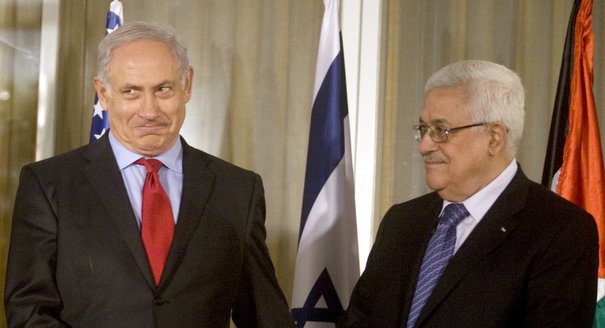
Source: Getty

In The Media

Obama Needs a Strategy for Israeli-Palestinian Diplomacy

President Obama needs to reengage in Israeli-Palestinian diplomacy by more clearly articulating U.S. positions on the key issues, thinking seriously about what incentives and disincentives the United States can offer both parties, and visiting the region as soon as possible.

Link Copied
By Michele Dunne
Published on May 18, 2011

Source: New York Times

Obama Needs a Strategy for Israeli-Palestinian DipPresident Obama needs to reengage in Israeli-Palestinian diplomacy, not because there is an easy solution to the conflict at hand but because the Palestinians and Israelis tend to create new obstacles to a solution when left to themselves for too long.

Consider the Fatah-Hamas agreement of May 4, in which the two feuding Palestinian factions were driven into each other’s arms by President Mahmoud Abbas’s lack of faith in his U.S. ally (as well as the falling out that the Hamas leader Khaled Meshal had with his Syrian sponsor). Similarly, the Palestinian effort to seek international recognition for a state at the United Nations in September is a unilateral move that promises to create uncomfortable choices for the United States, which is on the record favoring a Palestinian state.
 
On the Israeli side any number of unilateral actions are possible. One member of Israeli Prime Minister Netanyahu’s Likud Party, for instance, is advocating extension of Israeli sovereignty over settlement blocs in the West Bank.
 
But reengaging does not mean that President Obama himself should take resigned Special Envoy George Mitchell’s place. The conflict is too far from resolution to justify his involvement, and in any case it is hard to imagine Obama engaging in diplomatic arm twisting just as he heads into a presidential reelection campaign.
 
It would be better for Obama to do three things now. First, articulate more clearly U.S. positions on how the key issues dividing Israelis and Palestinians (borders, security, Jerusalem, refugees, settlements) might be resolved to show seriousness of purpose.
 
Second, think seriously about which incentives and disincentives he could bring to bear in a more energetic post-election negotiating effort; the lack of such a strategy has doomed to failure Obama’s efforts in the Israeli-Palestinian arena so far.
 
And finally, Obama should visit Israel and the Palestinian territories as soon as possible. He should reach out to Israeli and Palestinian leaders and their people in an effort to earn their trust and respect, find sources of leverage, and use his powers of persuasion to shape their debates.

About the Author

Michele Dunne

Former Nonresident Scholar, Middle East Program

Michele Dunne was a nonresident scholar in Carnegie’s Middle East Program, where her research focuses on political and economic change in Arab countries, particularly Egypt, as well as U.S. policy in the Middle East.

    Recent Work

  • Research
    Islamic Institutions in Arab States: Mapping the Dynamics of Control, Co-option, and Contention
      • +6

      Yasmine Farouk, Nathan J. Brown, Maysaa Shuja Al-Deen, …
  • Research
    From Hardware to Holism: Rebalancing America’s Security Engagement With Arab States
      • +8

      Robert Springborg, Emile Hokayem, Becca Wasser, …

Michele Dunne
Former Nonresident Scholar, Middle East Program
Michele Dunne
Foreign PolicyMiddle EastIsraelPalestineLevant

Carnegie does not take institutional positions on public policy issues; the views represented herein are those of the author(s) and do not necessarily reflect the views of Carnegie, its staff, or its trustees.

More Work from Carnegie Europe

  • Commentary
    Strategic Europe
    Taking the Pulse: Can NATO Survive the Iran War?

    Donald Trump has repeatedly bashed NATO and European allies, threatening to annex Canada and Greenland and deploring their lack of enthusiasm for his war of choice in Iran. Is this latest round of abuse the final straw?

      • Rym Momtaz

      Rym Momtaz, ed.

  • Commentary
    Strategic Europe
    On NATO, Trump Should Embrace France Instead of Bashing It

    Donald Trump’s repudiation of NATO goes against the Make America Great Again vision of a U.S.-centered foreign policy. If the goal is to preserve the alliance by boosting Europe’s commitments, leaning into France’s vision is the most America First way forward.

      • Rym Momtaz

      Rym Momtaz

  • Commentary
    Europe Doesn’t Like War—for Good Reasons

    The wars in Ukraine and the Middle East are existential threats to Europe as a peace project. Leaders and citizens alike must reaffirm their solidarity to face up to today’s multifaceted challenges.

      Marc Pierini

  • Article
    Rewiring the South Caucasus: TRIPP and the New Geopolitics of Connectivity

    The U.S.-sponsored TRIPP deal is driving the Armenia-Azerbaijan peace process forward. But foreign and domestic hurdles remain before connectivity and economic interdependence can open up the South Caucasus.

      • Areg Kochinyan

      Thomas de Waal, Areg Kochinyan, Zaur Shiriyev

  • Commentary
    Strategic Europe
    Taking the Pulse: Is it NATO’s Job to Support Trump’s War of Choice?

    Donald Trump has demanded that European allies send ships to the Strait of Hormuz while his war of choice in Iran rages on. He has constantly berated NATO while the alliance’s secretary-general has emphatically supported him.

      • Rym Momtaz

      Rym Momtaz, ed.

Get more news and analysis from
Carnegie Europe
Carnegie Europe logo, white
Rue du Congrès, 151000 Brussels, Belgium
  • Research
  • Strategic Europe
  • About
  • Experts
  • Projects
  • Events
  • Contact
  • Careers
  • Privacy
  • For Media
  • Gender Equality Plan
Get more news and analysis from
Carnegie Europe
© 2026 Carnegie Endowment for International Peace. All rights reserved.