

In The Media
Lilia Shevtsova
{
  "authors": [
    "Lilia Shevtsova"
  ],
  "type": "legacyinthemedia",
  "centerAffiliationAll": "",
  "centers": [
    "Carnegie Endowment for International Peace",
    "Carnegie Russia Eurasia Center"
  ],
  "collections": [],
  "englishNewsletterAll": "",
  "nonEnglishNewsletterAll": "",
  "primaryCenter": "Carnegie Russia Eurasia Center",
  "programAffiliation": "",
  "programs": [],
  "projects": [],
  "regions": [
    "Caucasus",
    "Russia"
  ],
  "topics": [
    "Political Reform",
    "Domestic Politics"
  ]
}
Source: Getty
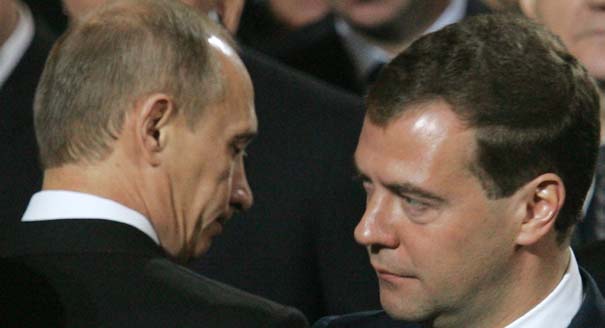
In advance of the 2012 presidential election, Vladimir Putin seeks to convince the world that the rift between him and incumbent Russian President Dmitry Medvedev is growing. But there is no evidence that any real power is starting to move Medvedev’s way, and he is not ready to challenge Putin.
Source: Washington Post

If the contest for control of Russia’s future were a reality show, it might be called “Survival.” As the director, Putin seeks to keep us guessing and offer everyone hope of seeing their wishes fulfilled. Russia’s conservatives hope that Putin will return to the Kremlin. Liberals and the West hope that Medvedev will secure a second term and become more president than puppet.
As for the plot, the transformation of Medvedev into a symbol of reformist hopes has been Putin’s best trick so far. Perhaps Medvedev’s convictions are indeed more liberal than those of Putin, the senior colleague who brought him to power. And it is natural for their respective teams to each tug the rope its own way. The smoke screen of rivalry at the top lends authenticity to the campaign to keep Putin’s tandem in power.
But there is no evidence that any real power is starting to move Medvedev’s way.
Medvedev has an image of a liberal, pro-Western reformer, but consider his record: As president, Medvedev has called for freedom and the rule of law. But he has also expanded the powers of law enforcement agencies; pushed through an extension of the president’s term, to six years; passively watched the indictment and trial on trumped-up charges of Yukos oil billionaire Mikhail Khodorkovsky; permitted the violent dispersal of rallies in defense of the constitution and beatings of the opposition; and overseen the introduction of legislation expanding the state’s ability to repress.
Medvedev tirelessly speaks out against corruption, but during his presidency, corruption has become a way of life here and graft has reached an estimated $300 billion annually. He talks about improving the investment climate, but independent observers say that it was people close to Medvedev who launched the raid against Domodedovo, Russia’s most profitable airport — an effort that has been likened to the state’s takeover of Yukos. Yes, Medvedev has forced government officials and people close to Putin from the boards of state companies, but will state control of those businesses be weakened if their replacements are selected by the same Putin team?
Those who hope that Medvedev will pursue a softer line in foreign policy should recall that it was Medvedev who presented himself as a “war president” and took responsibility for the Russia-Georgia conflict. It was Medvedev who threatened Ukraine and its former president Viktor Yushchenko. It was Medvedev who opened the spat with Japan about the Kuril Islands. And it was Medvedev who speculated when the Arab uprisings began that “certain forces were preparing the same thing for Russia.”
Why, then, do so many people insist that Medvedev is a reformer? Hope that Medvedev would set in motion liberal transformation allows his Russian supporters to remain loyal to the country’s authorities without losing their dignity. This would be harder if they admitted that there is no real difference between Medvedev and Putin as far as the system of government they run. As for those in Western political circles, hopes of a reformist Medvedev form the foundation of the “reset” policy; without these hopes, this policy would crumble. And in both cases, the myth of the “good tsar” Medvedev has roots in the fact that neither side believes that Russia can achieve reform through democratic means but that it must be imposed from above.
The problem, of course, is that all attempts to impose reform on Russia have only prolonged the personalized power system that has historically driven the country into a dead end.
Paradoxical though it may sound, prolonging Medvedev’s time in office could deal an even greater blow to hopes for liberalization than would Putin’s return to the Kremlin. The impression that the Russian leader will impose reform from above will only demoralize society and weaken political protests.
Putin has no plans to leave, and he has nowhere to go anyway. The moment he relinquishes the reins he will meet the same fate as Egypt’s Hosni Mubarak. Giving greater powers to Medvedev, the Twitter president, at a time when the public is increasingly fed up with the Putin team would increase the risk of him losing control. Putin has no option but to return to the Kremlin as president and abandon the idea of a tandem.
Putin’s recent decision to form the All-Russia People’s Front under his leadership is the clearest sign yet of Medvedev’s political end. Moreover, Medvedev’s refusal to go beyond familiar statements during his May 18 news conference underscores that he has no political ambitions and is not ready to challenge Putin.
Those who are betting on the outcome of Russia’s presidential election should not forget that Putin is the croupier.
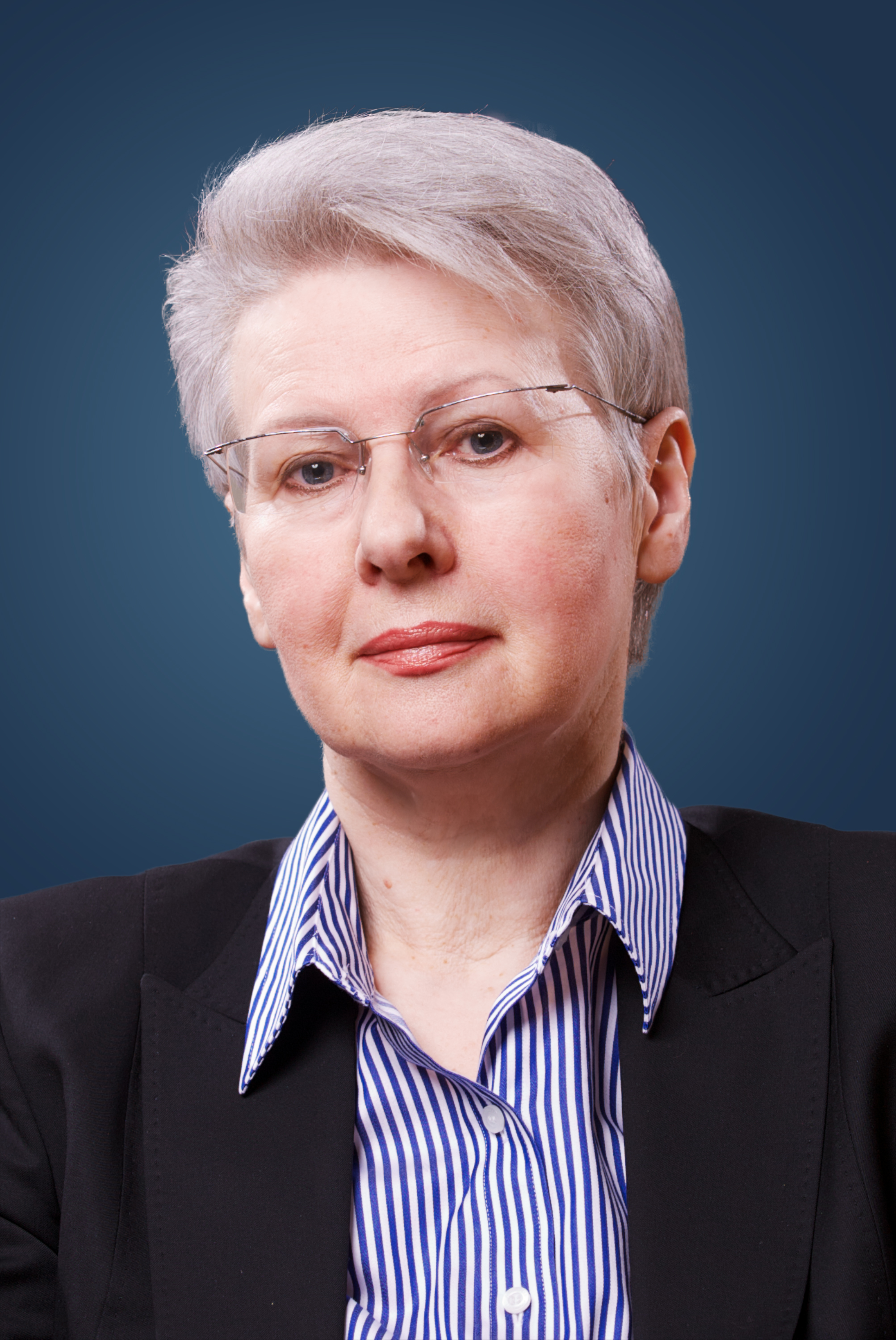
Former Senior Associate, Russian Domestic Politics and Political Institutions Program, Moscow Center
Shevtsova chaired the Russian Domestic Politics and Political Institutions Program at the Carnegie Moscow Center, dividing her time between Carnegie’s offices in Washington, DC, and Moscow. She had been with Carnegie since 1995.
Recent Work
Lilia Shevtsova
Lilia Shevtsova
Carnegie does not take institutional positions on public policy issues; the views represented herein are those of the author(s) and do not necessarily reflect the views of Carnegie, its staff, or its trustees.

European Commission President Ursula von der Leyen is about to give her annual address on the state of the EU. Here’s what she won’t—but should—say.

Rym Momtaz

The EU’s responses to two recent incidents expose the gulf between European perceptions and capabilities. Unless the union can bridge that gap, it will never become a real geostrategic power.
Rym Momtaz

European states control several Overseas Countries and Territories around the world that carry strategic, economic, and environmental weight. As great powers challenge the rules-based order, defending them is a geopolitical imperative for Europe.

Marc Pierini

In supporting Europe’s far-right, MAGA and Russia both want the same thing: a weaker EU. Europe must defend itself without abandoning the openness these forces exploit.

Armida van Rij
As we close out another season of Strategic Europe, it is worth taking stock of the deep shifts underway.
Rym Momtaz