• Research
  • Strategic Europe
  • About
  • Experts
Carnegie Europe logoCarnegie lettermark logo
EUUkraine
  • Donate
{
  "authors": [
    "Henri J. Barkey"
  ],
  "type": "legacyinthemedia",
  "centerAffiliationAll": "dc",
  "centers": [
    "Carnegie Endowment for International Peace",
    "Malcolm H. Kerr Carnegie Middle East Center"
  ],
  "collections": [
    "Arab Awakening"
  ],
  "englishNewsletterAll": "menaTransitions",
  "nonEnglishNewsletterAll": "",
  "primaryCenter": "Carnegie Endowment for International Peace",
  "programAffiliation": "MEP",
  "programs": [
    "Middle East"
  ],
  "projects": [],
  "regions": [
    "Middle East",
    "Türkiye",
    "Syria",
    "Levant"
  ],
  "topics": [
    "Political Reform"
  ]
}
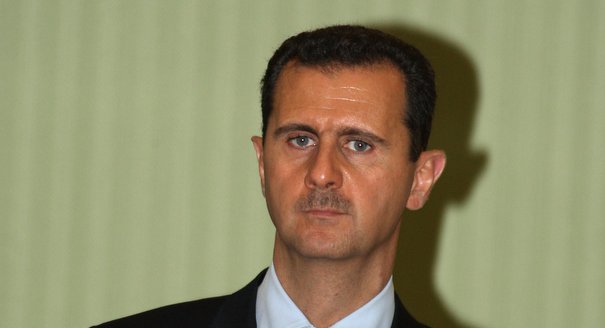
Source: Getty

In The Media

Assad Stands Alone

Syrian refugees crossing the border into Turkey are forcing Turkish Prime Minister Erdogan to rethink his relationship with Syrian President Assad and making it increasingly likely that he will chart a course on Syria that is more antagonistic toward Damascus.

Link Copied
By Henri J. Barkey
Published on Jun 14, 2011

Source: National Interest

Assad Stands AloneUntil recently, the AKP government saw its burgeoning relations with Damascus as the model success story for its improved foreign policy—a foreign policy that sought renewed political and economic engagement in the Middle East and its periphery. This is a long way from the days when a belligerent Turkey threatened war unless Syria agreed to stop harboring the insurgent Kurdistan Workers’ Party leader, Abdullah Öcalan, in 1998.

Ten years later, Turkish-Syrian relations had blossomed. Erdogan and Syrian strongman Bashar Assad, who had assumed power after his father’s demise in 2000, had developed a strong and close personal relationship. Erdogan appeared to take the young Bashar under his wing, and Turkey provided critical support to the embattled Assad regime when it came under pressure to remove its troops from Lebanon after the 2005 assassination of Lebanese Prime Minister Rafik Hariri and even at the outset of the recent uprising in Syria.
 
The AKP developed a narrative of “two peoples, one state” as the leaderships held joint cabinet meetings, eliminated visa requirements and discussed economic integration. By his own admission, Foreign Minister Ahmet Davutoglu visited Syria some sixty times.
 
As protests began, Turkey made clear its preference that Assad reform his regime rather than be toppled in the way of Egypt’s Mubarak or Tunisia’s Ben Ali. Ankara certainly wanted to avoid the kind of bloodshed that has characterized the Libyan and Yemeni uprisings. Erdogan called on Assad to institute reforms, such as lifting the state of emergency and releasing political prisoners. When Bashar failed to heed his advice, the Turkish prime minister dispatched Davutoglu and his trusted intelligence chief to Damascus to offer their counsel.
 
However, by initiating a major military attack on Jisr al-Shughour, Assad may have committed a strategic blunder. For the residents of a town near the Turkish border, it was only natural that they would seek safety next door. The sight of the refugees streaming into Turkey forced Erdogan’s hand. While the Turkish government has set up three refugee camps housing some five thousand displaced persons, the fact of the matter is that there are many who have not registered with Turkish officials and many more waiting to cross over. All these refugees come with their own tales of horror that seep into the Turkish press, making it all the more difficult to ignore their plight.
 
Assad, therefore, has lost the only friend willing to stand up for him other than the regime in Tehran. What is more, Erdogan, unlike the Iranian leaders, commands a great deal of respect both on the Arab street and in Western capitals. Erdogan must have come to the realization that the Ba’ath regime in Syria is doomed. Assad may survive for a while and spill more blood in the process, but he has eschewed his legitimacy. The fallout will be a prolonged downturn in Syria’s fiscal and political health. For Turkey, which prizes economic relations because of its need to develop export markets, the troubles in Damascus obviously augur poorly for future commercial linkages. Bashar has already hinted that he would be willing to jettison free-trade agreements to maintain the support of the critical Sunni business establishment.
 
All of this has brought Turkey closer to its Western allies. The last thing Ankara wants to do is repeat the mistakes of Libya, where crowds attacked the Turkish consulate in Benghazi and burned its flag in protest of Turkey’s perceived support for Qaddafi. In Syria, if Assad’s demise is only a matter of time, then Turkey has to be cognizant of the sentiments of those who will replace him down the line.
 
It is noteworthy that Erdogan referred to the need for a UN Security Council resolution condemning Assad. President Obama and Erdogan talked often on the telephone about the Syrian crisis. Unlike Libya, where they were at odds, on Syria there is a clear mutual realization that what is needed is an orderly transition. The US recognizes that Turkey has important cards to play because of proximity and recent history, and Ankara also understands that the problem is far too big to handle alone. If the Turks take the lead in calling for a tough UN Security Council resolution, it would constitute a powerful signal to any of those sitting on the fence—whether it be in Damascus, Aleppo, Delhi, Moscow or Beijing.
 
Fresh from an electoral victory, Erdogan and the AKP will find it easier to chart a course on Syria that is more antagonistic toward Damascus. What remains a puzzle is what position Ankara will assume towards Tehran if the latter decides to back Assad to the hilt.

About the Author

Henri J. Barkey

Former Visiting Scholar, Middle East Program

Barkey served as a member of the U.S. State Department Policy Planning Staff, working primarily on issues related to the Middle East, the Eastern Mediterranean, and intelligence from 1998 to 2000.

    Recent Work

  • Article
    Winners and Losers in Turkey’s Election

      Henri J. Barkey

  • Article
    The Road to Turkey’s June Elections: Crises, Strategies, and Outcomes

      Henri J. Barkey

Henri J. Barkey
Former Visiting Scholar, Middle East Program
Henri J. Barkey
Political ReformMiddle EastTürkiyeSyriaLevant

Carnegie does not take institutional positions on public policy issues; the views represented herein are those of the author(s) and do not necessarily reflect the views of Carnegie, its staff, or its trustees.

More Work from Carnegie Europe

  • Commentary
    Strategic Europe
    The EU Needs a Third Way in Iran

    European reactions to the war in Iran have lost sight of wider political dynamics. The EU must position itself for the next phase of the crisis without giving up on its principles.

      Richard Youngs

  • Commentary
    Strategic Europe
    Europe on Iran: Gone with the Wind

    Europe’s reaction to the war in Iran has been disunited and meek, a far cry from its previously leading role in diplomacy with Tehran. To avoid being condemned to the sidelines while escalation continues, Brussels needs to stand up for international law.

      Pierre Vimont

  • Turkey Erdogan Caucasus Central Asia
    Article
    How Turkey Can Help the Economies of the South Caucasus to Diversify

    Over the past two decades, regional collaboration in the South Caucasus has intensified. Turkey and the EU should establish a cooperation framework to accelerate economic development and diversification.

      • Feride Inan
      • Güven Sak
      • Berat Yücel

      Feride İnan, Güven Sak, Berat Yücel

  • Commentary
    Strategic Europe
    Can Europe Still Matter in Syria?

    Europe’s interests in Syria extend beyond migration management, yet the EU trails behind other players in the country’s post-Assad reconstruction. To boost its influence in Damascus, the union must upgrade its commitment to ensuring regional stability.

      Bianka Speidl, Hanga Horváth-Sántha

  • Commentary
    Strategic Europe
    Europolis, Where Europe Ends

    A prophetic Romanian novel about a town at the mouth of the Danube carries a warning: Europe decays when it stops looking outward. In a world of increasing insularity, the EU should heed its warning.

      Thomas de Waal

Get more news and analysis from
Carnegie Europe
Carnegie Europe logo, white
Rue du Congrès, 151000 Brussels, Belgium
  • Research
  • Strategic Europe
  • About
  • Experts
  • Projects
  • Events
  • Contact
  • Careers
  • Privacy
  • For Media
  • Gender Equality Plan
Get more news and analysis from
Carnegie Europe
© 2026 Carnegie Endowment for International Peace. All rights reserved.