

Article
Marina Ottaway, Omar Hossino
{
  "authors": [
    "Marina Ottaway"
  ],
  "type": "legacyinthemedia",
  "centerAffiliationAll": "dc",
  "centers": [
    "Carnegie Endowment for International Peace",
    "Carnegie Europe",
    "Malcolm H. Kerr Carnegie Middle East Center"
  ],
  "collections": [
    "Arab Awakening"
  ],
  "englishNewsletterAll": "menaTransitions",
  "nonEnglishNewsletterAll": "",
  "primaryCenter": "Carnegie Endowment for International Peace",
  "programAffiliation": "MEP",
  "programs": [
    "Middle East"
  ],
  "projects": [],
  "regions": [
    "North Africa",
    "Egypt",
    "Tunisia",
    "Maghreb"
  ],
  "topics": [
    "Political Reform"
  ]
}
Source: Getty
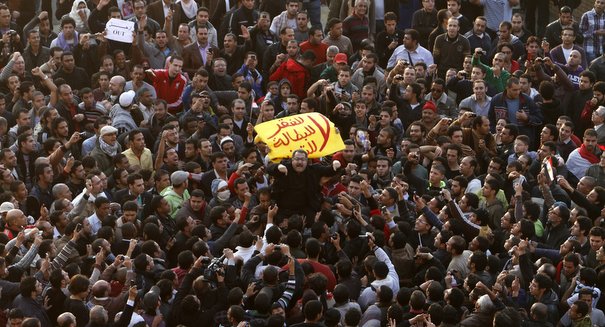
The transitional governments in both Egypt and Tunisia must negotiate with their respective political parties and protesters to forge an understanding of what must be done in the next few months and what will have to wait until after elections.
Source: National Interest

Countries in transition face contradictory imperatives: they need to move fast to elect legitimate governments that can implement real reforms, but they need time to achieve some consensus about the fundamental principles that should underpin the new political system and to enact laws to regulate elections and the formation of political parties. Finding a balance is a difficult task. The experience of Tunisia and Egypt provides important lessons.
Both countries opted originally for rapid movement toward elections, with Tunisia choosing July 14 as the election date and Egypt's Supreme Council of the Armed Forces (SCAF) pledging to complete the election process in six months. With such a short timetable, the limited legitimacy of the interim governments did not appear to be too serious a problem because they were not expected to do more than organize elections.
But the timetable slipped, partly for technical reasons—a lot needs to be done to hold credible elections in countries that had none in the past—and partly for political ones—the new parties emerging from the uprising begged for more time to organize. Elections were moved from July 14 to October 23 in Tunisia; in Egypt, the government has just announced that it has nominated a judge to form an election commission that will start work on September 14, with voting to take place about two months later.
The delay is putting new pressure on the transitional governments. Governance cannot be in abeyance forever. Decisions need to be made, measures enacted. People are tired of waiting; they want to see change; they want officials of the old regime to be brought to justice; they demand economic improvement. And they are sending a clear message by taking to the streets again. This is initiating a vicious circle. Governments have less legitimacy than ever, yet they are expected to act. And they are feeling directly under attack, which is beginning to prompt an authoritarian response.
Egypt in particular is teetering between authoritarianism and the diktats of the street. Under pressure, the SCAF and government are reverting to positions reminiscent of the Mubarak government—trying to ban protests, stipulating which organizations can receive outside funding and, most dangerously, floating the idea that the new constitution must make the military the guarantor of Egyptian democracy. The latter is an oxymoron modeled on the Turkish constitution of 1960 that created a legacy from which Turkey is still trying to extricate itself painfully today.
But the protesters’ demands are equally dangerous. They want selected ministers to be fired now and those responsible for the deaths of protesters in February to be brought to justice immediately. What Egypt needs, however, is not ad hoc decisions taken to pacify protesters. It needs a legitimate government set up on the basis of clear criteria and a transitional justice mechanism that avoids revenge and witch hunts but deals with accusations against officials of the old regime on the basis of law and political consensus. Instead, it is getting a hastily decided cabinet reshuffle already rejected by protesters and the sudden dismissal of hundreds of high-ranking police officers, a move that smacks of political expediency rather than due process.
The lesson of Tunisia and Egypt for countries likely to enter transition soon is that it is impossible—as well as unadvisable—to organize elections in a few months. Too much needs to happen first—constitutional amendments, new laws, new parties and some consensus on principles. But a slower process requires a clear roadmap and timetable, with benchmarks and deadlines, not a vague process left to the whims of governments with scant legitimacy and of impatient crowds. Such a process should ideally be agreed upon early on.
Tunisia and Egypt did not do so and are paying the price now in the form of increasingly chaotic situations. The two governments must at least announce a roadmap and timetable to cover the period between now and the elections, negotiating with political parties and protesters an understanding of what must be done in the next few months and what will have to wait until after elections. They cannot allow the street to dictate in an arbitrary fashion what the government must do, but they cannot expect that people will forever accept the equally arbitrary decisions taken by interim governments.
Former Senior Associate, Middle East Program
Before joining the Endowment, Ottaway carried out research in Africa and in the Middle East for many years and taught at the University of Addis Ababa, the University of Zambia, the American University in Cairo, and the University of the Witwatersrand in South Africa.
Recent Work
Marina Ottaway, Omar Hossino
Marina Ottaway
Carnegie does not take institutional positions on public policy issues; the views represented herein are those of the author(s) and do not necessarily reflect the views of Carnegie, its staff, or its trustees.
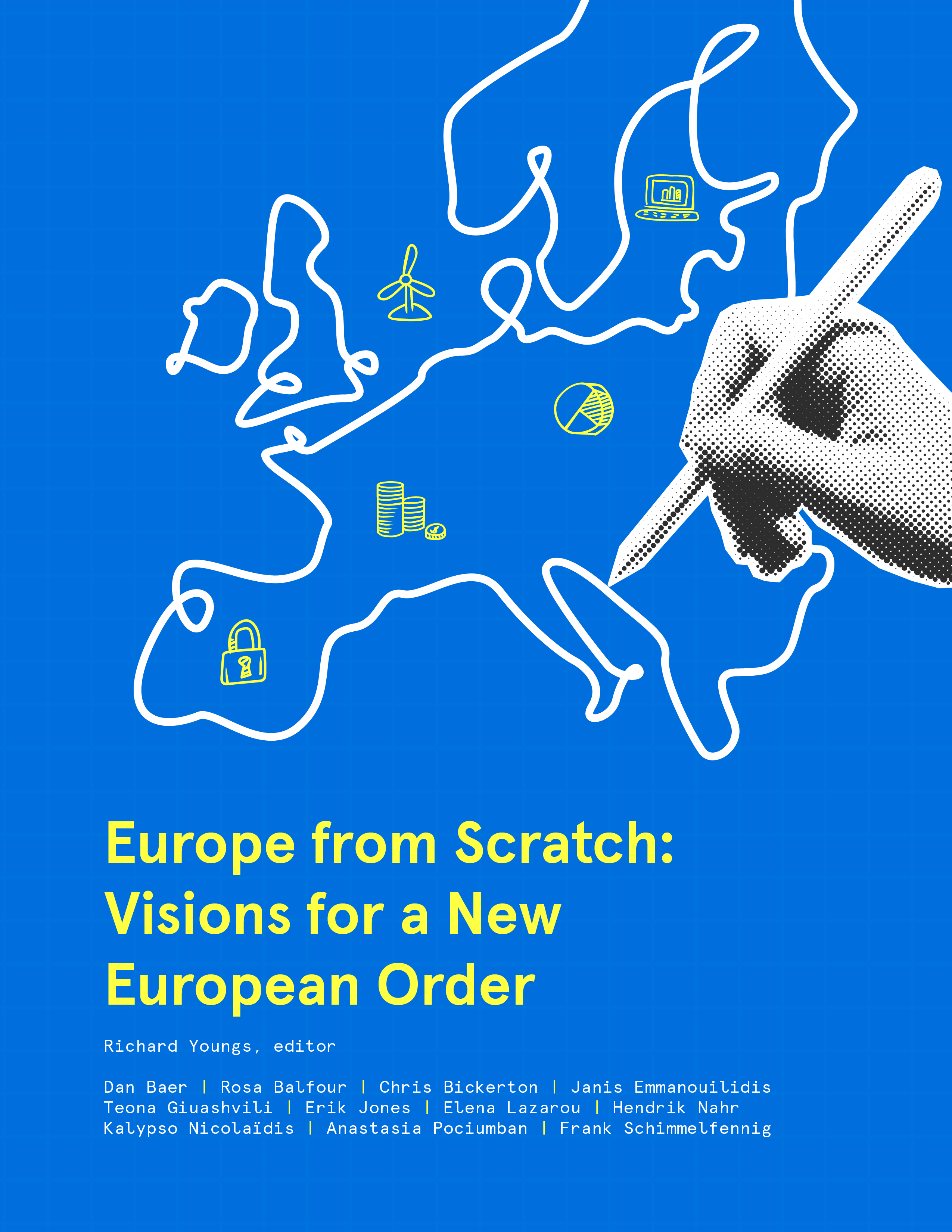
As the EU confronts profound challenges, several leaders have called for fundamental reform to the union’s model—but only modest, superficial changes have resulted. What if Europe really could be reimagined from zero today: What should such a redesigned European order look like?

Richard Youngs, ed.
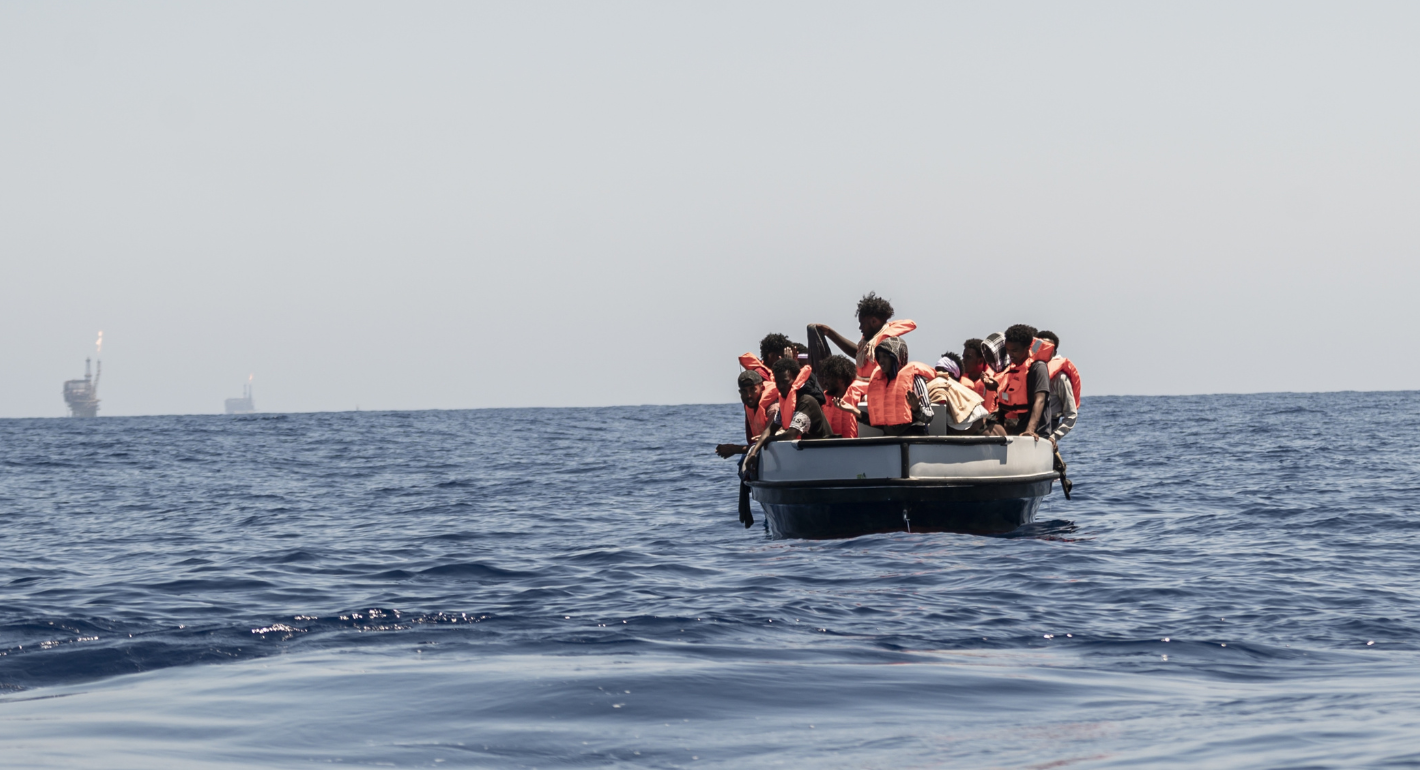
The EU’s new migration policy is not suited to today’s realities. With climate change increasingly becoming a driver of displacement, Europe needs to rethink its deterrence-focused approach.

Shana Tabak
Preparing candidate countries for EU membership is no longer enough. As the enlargement process becomes a reality, the union must also prepare its own societies.

Iliriana Gjoni
Countries face several hurdles in joining the EU, including the final stage of ratifying their accession treaties. Procedural reforms and substantive adjustments could help move the process forward.

Stefan Lehne
Europe has an interest in supporting Armenian leader Nikol Pashinyan as he tries to make peace with neighbors and loosen ties with Russia. But it is depersonalized support in the long term, not quickfire flash, that will win the day.

Thomas de Waal