• Research
  • Strategic Europe
  • About
  • Experts
Carnegie Europe logoCarnegie lettermark logo
EUUkraine
  • Donate
{
  "authors": [
    "Karim Sadjadpour"
  ],
  "type": "legacyinthemedia",
  "centerAffiliationAll": "dc",
  "centers": [
    "Carnegie Endowment for International Peace",
    "Malcolm H. Kerr Carnegie Middle East Center"
  ],
  "collections": [],
  "englishNewsletterAll": "menaTransitions",
  "nonEnglishNewsletterAll": "",
  "primaryCenter": "Carnegie Endowment for International Peace",
  "programAffiliation": "MEP",
  "programs": [
    "Middle East"
  ],
  "projects": [],
  "regions": [
    "Middle East",
    "Iran",
    "Gulf",
    "Levant"
  ],
  "topics": [
    "Security",
    "Political Reform",
    "Nuclear Policy"
  ]
}
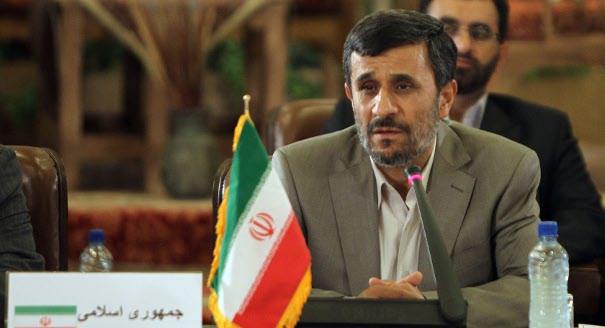
Source: Getty

In The Media

Concern Elevates That Israel Will Strike Iran

As speculation increases that Iran is inching closer to acquiring nuclear weapons, rhetoric regarding war may just be an effort to strengthen diplomacy.

Link Copied
By Karim Sadjadpour
Published on Feb 8, 2012

Source: NPR's Morning Edition

As speculation that Iran is inching closer to acquiring nuclear weapons increases, talks of Israeli airstrikes continue to ratchet up. Speaking on NPR’s Morning Edition, Carnegie's Karim Sadjadpour asserted that Israel worries that Iran is moving close to reaching the threshold of a “zone of immunity” where airstrikes would be ineffective at setting the nuclear weapons program back. While the Obama administration worries about Iran actually having a nuclear weapon, Sadjadpour said that “in Israel, the redline is even more stringent. They don’t even want the Iranians to have the capability.” Much of the chatter regarding war may just be an effort to strengthen diplomacy, Sadjadpour added. While the Chinese view the sanctions against Iran as inimical to their energy interests, a war against Iran would affect their energy interests much more dramatically. 

This interview was originally aired on NPR's Morning Edition.

About the Author

Karim Sadjadpour

Senior Fellow, Middle East Program

Karim Sadjadpour is a senior fellow at the Carnegie Endowment for International Peace, where he focuses on Iran and U.S. foreign policy toward the Middle East.

    Recent Work

  • Q&A
    What’s Keeping the Iranian Regime in Power—for Now

      Aaron David Miller, Karim Sadjadpour, Robin Wright

  • Q&A
    How Washington and Tehran Are Assessing Their Next Steps

      Aaron David Miller, David Petraeus, Karim Sadjadpour

Karim Sadjadpour
Senior Fellow, Middle East Program
Karim Sadjadpour
SecurityPolitical ReformNuclear PolicyMiddle EastIranGulfLevant

Carnegie does not take institutional positions on public policy issues; the views represented herein are those of the author(s) and do not necessarily reflect the views of Carnegie, its staff, or its trustees.

More Work from Carnegie Europe

  • Commentary
    Strategic Europe
    Taking the Pulse: Is France’s New Nuclear Doctrine Ambitious Enough?

    French President Emmanuel Macron has unveiled his country’s new nuclear doctrine. Are the changes he has made enough to reassure France’s European partners in the current geopolitical context?

      • Rym Momtaz

      Rym Momtaz, ed.

  • Commentary
    The Iran War’s Dangerous Fallout for Europe

    The drone strike on the British air base in Akrotiri brings Europe’s proximity to the conflict in Iran into sharp relief. In the fog of war, old tensions in the Eastern Mediterranean risk being reignited, and regional stakeholders must avoid escalation.

      Marc Pierini

  • Commentary
    Strategic Europe
    The EU Needs a Third Way in Iran

    European reactions to the war in Iran have lost sight of wider political dynamics. The EU must position itself for the next phase of the crisis without giving up on its principles.

      Richard Youngs

  • Commentary
    Strategic Europe
    Europe on Iran: Gone with the Wind

    Europe’s reaction to the war in Iran has been disunited and meek, a far cry from its previously leading role in diplomacy with Tehran. To avoid being condemned to the sidelines while escalation continues, Brussels needs to stand up for international law.

      Pierre Vimont

  • Commentary
    Strategic Europe
    Macron Makes France a Great Middle Power

    France has stopped clinging to notions of being a great power and is embracing the middle power moment. But Emmanuel Macron has his work cut out if he is to secure his country’s global standing before his term in office ends.

      • Rym Momtaz

      Rym Momtaz

Get more news and analysis from
Carnegie Europe
Carnegie Europe logo, white
Rue du Congrès, 151000 Brussels, Belgium
  • Research
  • Strategic Europe
  • About
  • Experts
  • Projects
  • Events
  • Contact
  • Careers
  • Privacy
  • For Media
  • Gender Equality Plan
Get more news and analysis from
Carnegie Europe
© 2026 Carnegie Endowment for International Peace. All rights reserved.











