

Commentary
European Commission President Ursula von der Leyen is about to give her annual address on the state of the EU. Here’s what she won’t—but should—say.
Rym Momtaz
{
  "authors": [
    "Mykola Siruk",
    "Lilia Shevtsova"
  ],
  "type": "legacyinthemedia",
  "centerAffiliationAll": "",
  "centers": [
    "Carnegie Endowment for International Peace",
    "Carnegie Russia Eurasia Center"
  ],
  "collections": [],
  "englishNewsletterAll": "",
  "nonEnglishNewsletterAll": "",
  "primaryCenter": "Carnegie Russia Eurasia Center",
  "programAffiliation": "",
  "programs": [],
  "projects": [],
  "regions": [
    "Caucasus",
    "Russia"
  ],
  "topics": [
    "Political Reform",
    "Domestic Politics"
  ]
}
Source: Getty
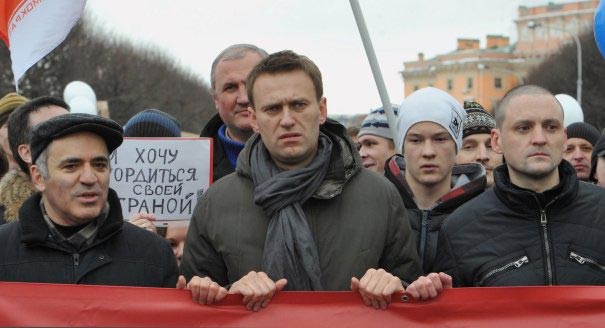
It is not enough to urge Vladimir Putin to leave office. The Russian opposition must also seek the elimination of the autocratic model of power that Putin represents, and push for real constitutional political reform.
Source: Day

“I would say that the situation with the radio station Ekho Moskvy and with Aleksandr Lebedev who is one of the owners of Novaya Gazeta who also helps the Raisa Gorbachev Foundation and is related to Mikhail Gorbachev completely reflects the authorities’ desire to close the ventlight before the elections. They have clearly shown their autocratic logic that cannot hold even a gulp of fresh air. They understand perfectly well that if the freedom of speech exists, even if it is limited, in the independent and uncontrolled editions, it will lead to the further atrophy of this state machine.
“Of course, you are right, it is a tendency that is unlikely to stop since after Putin is elected president he will not have any restraints he had before the election and that he would like to preserve.”“I do not think that Venediktov is trying to play up to Putin now. Venediktov is a reasonable person heading the project Ekho Moskvy in hard times. Naturally, he can do some tactical things but he has to have the strategic vector. Ekho Moskvy exists since it has a very serious basis: audience’s confidence and possibility to present pluralistic opinions to the society. If he openly supports Putin, especially in the situation when Putin’s power is losing its legitimacy, he might stain his reputation and the reputation of Ekho Moskvy. However, it might be surprising but if we speak about his phrase: ‘I am sick and tired of the slogan ‘Putin, go away!’, I would support Venediktov. I am also tired of the slogan ‘Putin must go away!’ since it is just a slogan, the same as ‘Honest elections’ and it can mean only one thing: Putin, go away, let someone new come to your place. However, if someone else comes to the Kremlin with the current government system we will have the same elected or appointed monarchy and autocracy. That is why for me a more reasonable, adequate, and strategic slogan in the current situation is not the one ‘Down with Putin!’ or ‘Putin, go away!’ but the slogan ‘Down with autocracy’ that implies urging Putin to leave and requires the constitutional political reform. The slogans ‘Putin, go away!’ or ‘Down with Putin!’ fit into the model of the old Russian mentality and perception of the politics as one’s personal power.”
“It is true that Aleksei Navalny is a politician of the new generation. For many people he is the dream of the new Russian society that wants to see new people. It is natural that the society looks at all new faces with hope. Thank God, such people appear. They are the people of the new generation. I did not hear what he said but it is very regrettable if he really touched upon Ukraine and its independence, using this pseudo-Soviet approach that Ukraine cannot be an independent state and we all should live as fraternal nations. It means that he has stayed in the past as for such an important question as the determination of the essence of the new Russian state. Unfortunately, he has failed the test of imperialism, of the neo-imperialistic syndrome. In principle, one of the main guarantees of Russia’s movement towards the liberal democracy is reconsidering Russians’ attitude to the former Soviet republics that are new independent states, recognizing their sovereignty and identity – it is the only way to get rid of the imperialism even without the new liberal look. If Navalny is unable to do so it is very said and regrettable. We can only hope that he will evolve in the European direction since saying this about Ukraine Navalny is moving to the absolutely opposite direction, to the opposite direction from Europe. In this case there is no difference between him and Putin’s team as for the foreign policy.”
Mykola Siruk
Former Senior Associate, Russian Domestic Politics and Political Institutions Program, Moscow Center
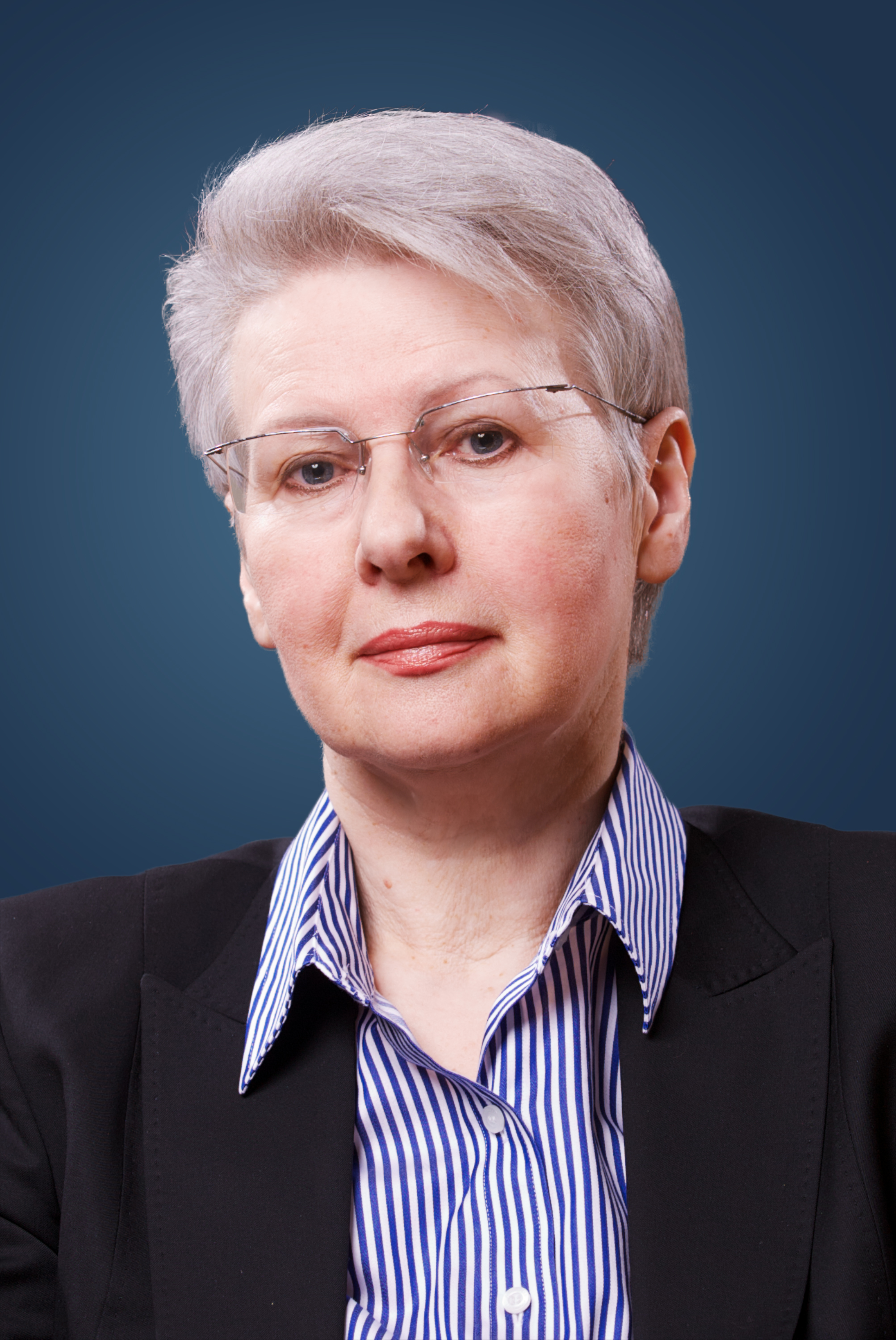
Shevtsova chaired the Russian Domestic Politics and Political Institutions Program at the Carnegie Moscow Center, dividing her time between Carnegie’s offices in Washington, DC, and Moscow. She had been with Carnegie since 1995.
Carnegie does not take institutional positions on public policy issues; the views represented herein are those of the author(s) and do not necessarily reflect the views of Carnegie, its staff, or its trustees.

European Commission President Ursula von der Leyen is about to give her annual address on the state of the EU. Here’s what she won’t—but should—say.

Rym Momtaz

The EU’s responses to two recent incidents expose the gulf between European perceptions and capabilities. Unless the union can bridge that gap, it will never become a real geostrategic power.
Rym Momtaz

European states control several Overseas Countries and Territories around the world that carry strategic, economic, and environmental weight. As great powers challenge the rules-based order, defending them is a geopolitical imperative for Europe.

Marc Pierini

In supporting Europe’s far-right, MAGA and Russia both want the same thing: a weaker EU. Europe must defend itself without abandoning the openness these forces exploit.

Armida van Rij

As we close out another season of Strategic Europe, it is worth taking stock of the deep shifts underway.
Rym Momtaz