

Commentary
Catherine Fieschi
{
  "authors": [
    "Catherine Fieschi"
  ],
  "type": "commentary",
  "blog": "Strategic Europe",
  "centerAffiliationAll": "",
  "centers": [
    "Carnegie Endowment for International Peace",
    "Carnegie Europe"
  ],
  "englishNewsletterAll": "",
  "nonEnglishNewsletterAll": "",
  "primaryCenter": "Carnegie Europe",
  "programAffiliation": "",
  "regions": [
    "Europe",
    "Western Europe",
    "France"
  ],
  "topics": [
    "EU",
    "Democracy",
    "Domestic Politics",
    "Subnational Affairs"
  ]
}
Source: Getty
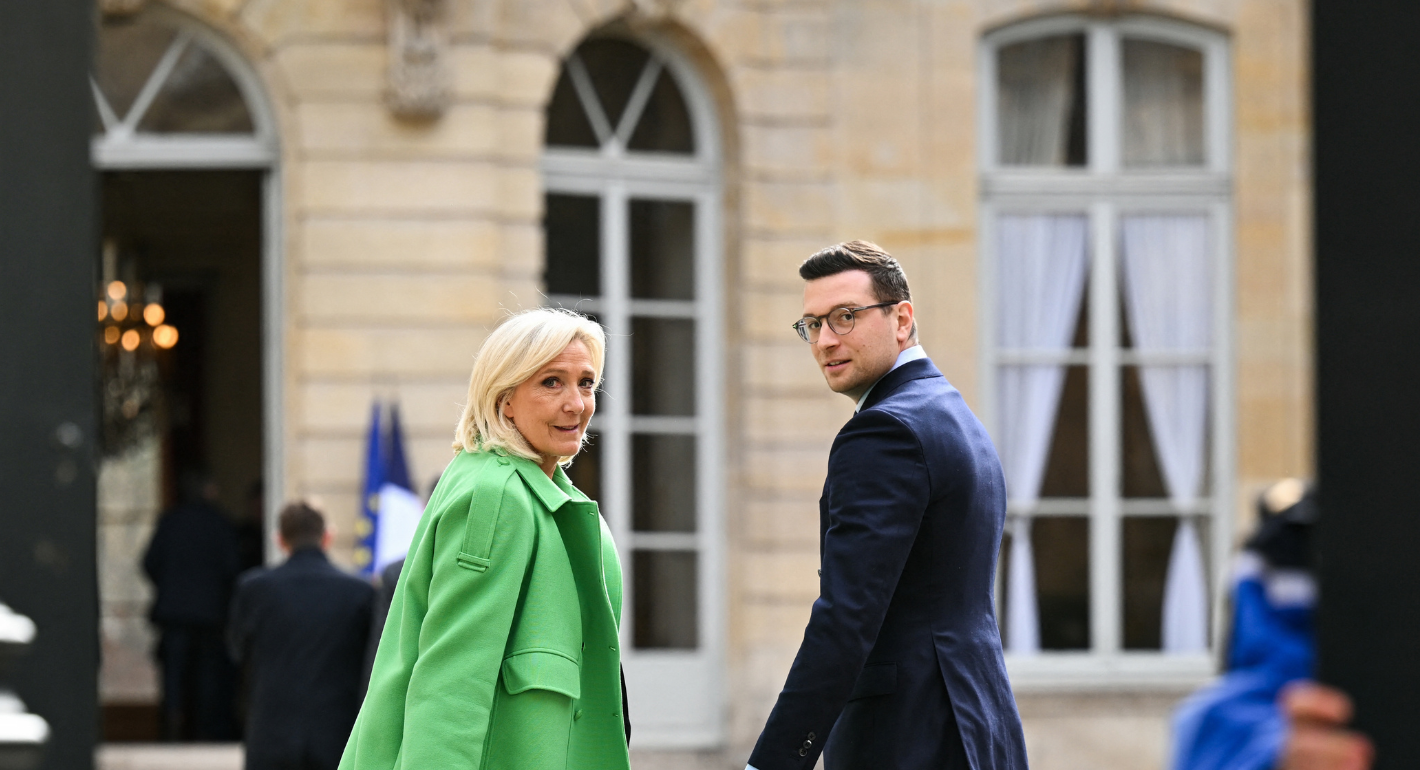
The far right failed to win big in France’s municipal elections. But that’s not good news for the country’s left wing, which remained disunited while the broader right consolidated its momentum ahead of the 2027 presidential race.
In France’s March 2026 municipal elections, the old saying that all politics is local was on full display. In much of the country, the decisive variable was not ideology but familiarity: the mayor as a known quantity, a problem-solver, and a local broker.
Ninety-six percent of communes elected their councils and mayors in the first round of voting, and 88.5 percent of the incumbents who ran were reelected. Mainstream parties on the right and left, with long histories in local politics, held up well.
But—short of being a dress rehearsal—beneath the continuity, these elections reveal some important political dynamics that could impact the hotly-awaited 2027 presidential election.
The real story of these elections may be twofold: a slide to the right for the electorate, and territorial consolidation by the far right while the left is fragmented.
First, there’s growing permeability between the conservative Republican (LR) and far-right National Rally (RN) electorates. Second, the center—embodied by French President Emmanuel Macron’s Renaissance, former prime minister Édouard Philippe’s Horizons, and former prime minister François Bayrou’s Modem—has slid to the right as well.
In the second round of voting, where the fields of candidates are reduced to the front-runners, RN first-round voters saw no problem switching to LR candidates, while other voters made the opposite move, voting for farther-right candidates when they looked like the better vehicle against the left. In Marseille, RN candidate Franck Allisio peeled away part of the traditional right-wing electorate despite losing the mayoral race overall. In Nice, Éric Ciotti defected from the LR to the RN and won his race—offering a clear demonstration that a right–far-right combination can work. Formal alliances may still scandalize parts of the LR leadership, but their voters appear far less squeamish.
And while the RN failed to win in the major cities it targeted like Marseille, Toulon, or Nîmes, it is unwise to still talk about the far-right being subject to an electoral glass ceiling. The party steadily expanded its electoral base. It garnered around 2.5 million votes, won about sixty communes of more than 3500 residents, and now has more than 3000 municipal councillors. That counts as territorial consolidation.
With Macron constitutionally unable to run for a third term of office, the alliance of center parties—Renaissance, Horizon, Modem—struggled to impose themes or a narrative ahead of the election. The president has also gone out of his way to block the emergence of a successor figure who might solidify his legacy once his term expires. The void is glaring. But a second issue plagues the center: It, too, seems to be sliding right. Only some of the center wins in the local elections belong specifically to Renaissance, while Édouard Philippe’s Horizons is better placed to cash in nationally than the Élysée’s fading apparatus. Philippe’s reelection as mayor of Le Havre with 47.7 percent of the vote was therefore more than local housekeeping: It was a reminder that post-Macron centrism—whatever that is—is likely to mirror Philippe’s center right, not the center left.
A poll published after the municipal elections clearly points to the fact that the RN is far ahead of the competition in people’s 2027 voting intentions, and that the only candidate able to (barely) beat it in the second round hails from the right. Although the poll was relatively self-serving and commissioned by the Édouard Philippe team, it was conducted by the reputable pollster Elabe, so should not be dismissed.
For now, no left-wing figure even comes close: Various polls place Jean-Luc Mélenchon’s far-left France Unbowed (LFI) party at only ten or eleven percent in the first round. This seems low for a man who notoriously thrives on the campaign trail, and whose numbers were similar eighteen months out from the 2022 presidential campaign in which he came third in the first round with just under 22 percent. While Mélenchon remains the only left-wing personality likely to make it to round two in 2027, the past year seems to have solidified public attitudes against him, and his presence in the presidential run-off would almost guarantee an RN win.
And that is the second key point: The picture of a right-leaning France leaves the left in shambles for next year’s contest. While their historic local roots still delivered for the Socialist party in municipal elections, their national profile is badly damaged by their on-again, off-again relationship with LFI.
The Socialists and the Greens joined forces with LFI to block the RN in the 2024 legislative election—but LFI’s particular combination of maximum disruption, barely-disguised flirtation with antisemitism, and recent deadly street violence in Lyon has made them a toxic partner in the eyes of much of the electorate. But what they do exceptionally well is convert small advances into maximum political visibility. It remains a junior partner on the left in local office, far behind the Socialists, but behaves rhetorically as if it were hegemonic. At the national level, it now trails behind the Socialist party, but wields enough electoral and rhetorical power to tempt the Socialists into reluctant coalitions. The latter’s confusing line on alliances with LFI over the past year has done nothing to endear it to voters and continues to keep them in limbo—disunited a year out from a crucial election.
2027 will be a presidential contest—personalized and theatrical. Municipal campaigns test implantation; presidential campaigns test incarnation. For that reason, it is not obvious that being highly visible in this sequence will help the contenders now circling the Élysée. Philippe has banked his mayoral legitimacy, Ciotti has demonstrated the electoral viability of right–far-right convergence, and Mélenchon has once again managed to turn limited local results into maximum political presence. But exposure cuts both ways: It also ties these candidates to the compromises and ambiguities of the municipal moment. Those who stayed more aloof—former prime minister Gabriel Attal, certainly, and perhaps former president François Hollande—may yet discover that discretion was the wiser investment.
Subscribe to Strategic Europe, delivered every Tuesday and Thursday!

Visiting Scholar, Carnegie Europe
Catherine Fieschi is a visiting scholar at Carnegie Europe and the author of Populocracy (2019).
Recent Work
Catherine Fieschi
Catherine Fieschi
Carnegie does not take institutional positions on public policy issues; the views represented herein are those of the author(s) and do not necessarily reflect the views of Carnegie, its staff, or its trustees.

With its public finances in shambles, the far right polling at 35 percent ahead of the 2027 presidential election, and a growing protest movement, is France’s crisis a threat to the EU’s geopolitical awakening?

Rym Momtaz, ed.

The domestic impacts of how long it is taking to end the war in Ukraine have pushed the French electorate to the political extremes and compromised the country’s diplomatic capacity.
Rym Momtaz
Far-right leader Marine Le Pen can—and will—run in France’s next presidential election. What does the outcome of her appeal against a 2025 embezzlement conviction mean for the country’s political future?
Catherine Fieschi
Western Europe’s dual-use infrastructure melted down during its latest heat wave. If a predicted hot weather event can take the continent by surprise, what chance does it have to withstand unexpected geopolitical crises?
Rym Momtaz
The Franco-German relationship is on the rocks again. But unlike previous moments of tension, the epochal changes on the world stage require that both step up investment in their bilateral ties.
Rym Momtaz