

Commentary
The European Commissioner for Trade is headed to China. But after President Xi’s bridge-building visit to Washington, can a more isolated EU overcome Beijing’s stranglehold on critical raw materials? Who will blink first?
Rym Momtaz, ed.
{
  "authors": [
    "Zhang Chuanjie"
  ],
  "type": "legacyinthemedia",
  "centerAffiliationAll": "",
  "centers": [
    "Carnegie Endowment for International Peace",
    "Carnegie China"
  ],
  "collections": [
    "U.S.-China Relations",
    "China’s Foreign Relations"
  ],
  "englishNewsletterAll": "",
  "nonEnglishNewsletterAll": "",
  "primaryCenter": "Carnegie China",
  "programAffiliation": "",
  "programs": [],
  "projects": [],
  "regions": [],
  "topics": [
    "Economy"
  ]
}
Source: Getty
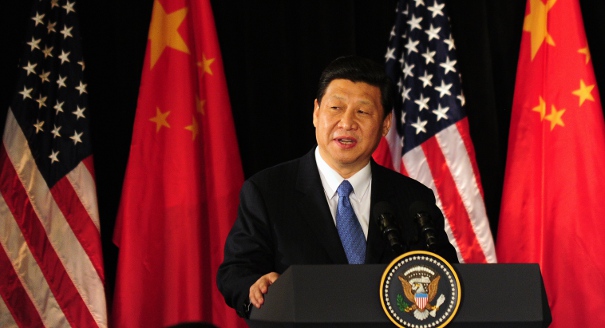
Xi Jinping’s visit to the United States provided Beijing and Washington with the opportunity to enhance relations and engage in dialogue to help resolve more challenging issues.
Source: CNTV
Speaking on CNTV, Carnegie’s Zhang Chuanjie elaborated on the importance of Xi Jinping’s visit to the United States, particularly in light of the upcoming presidential elections in the United States and leadership transition in China. “Both countries will experience some leadership changes this year and this is the first time in the history of the U.S.-China relationship,” Zhang said.
Zhang asserted that since Nixon’s visit some 40 years ago, the U.S.-China relationship has undergone tremendous changes and is affected by challenges and competition between the two nations. Nevertheless, strong trade links have helped keep U.S.-China relations on track, he concluded.

Zhang Chuanjie
Former Resident Scholar, Carnegie-Tsinghua Center for Global Policy
Zhang Chuanjie was a resident scholar at the Carnegie-Tsinghua Center until June 2020.
Carnegie does not take institutional positions on public policy issues; the views represented herein are those of the author(s) and do not necessarily reflect the views of Carnegie, its staff, or its trustees.

The European Commissioner for Trade is headed to China. But after President Xi’s bridge-building visit to Washington, can a more isolated EU overcome Beijing’s stranglehold on critical raw materials? Who will blink first?

Rym Momtaz, ed.

The domestic impacts of how long it is taking to end the war in Ukraine have pushed the French electorate to the political extremes and compromised the country’s diplomatic capacity.
Rym Momtaz

A summer of escalation in the Black Sea has hurt Ukraine economically and is exacerbating world food security. A truce is needed—as is a broader reframing of Europe’s Ukraine strategy.

Thomas de Waal

As geopolitical rivalry weaponizes global supply chains, the EU’s true vulnerability lies in emerging-risk imports. For these goods, suppliers are growing more concentrated, substitution more difficult, and political risk is looming.

Sinan Ülgen

The EU is putting together a new security strategy to meet today’s myriad challenges. But for any proposal to be effective, the union needs to grapple with its identity and ambitions.

Pierre Vimont